
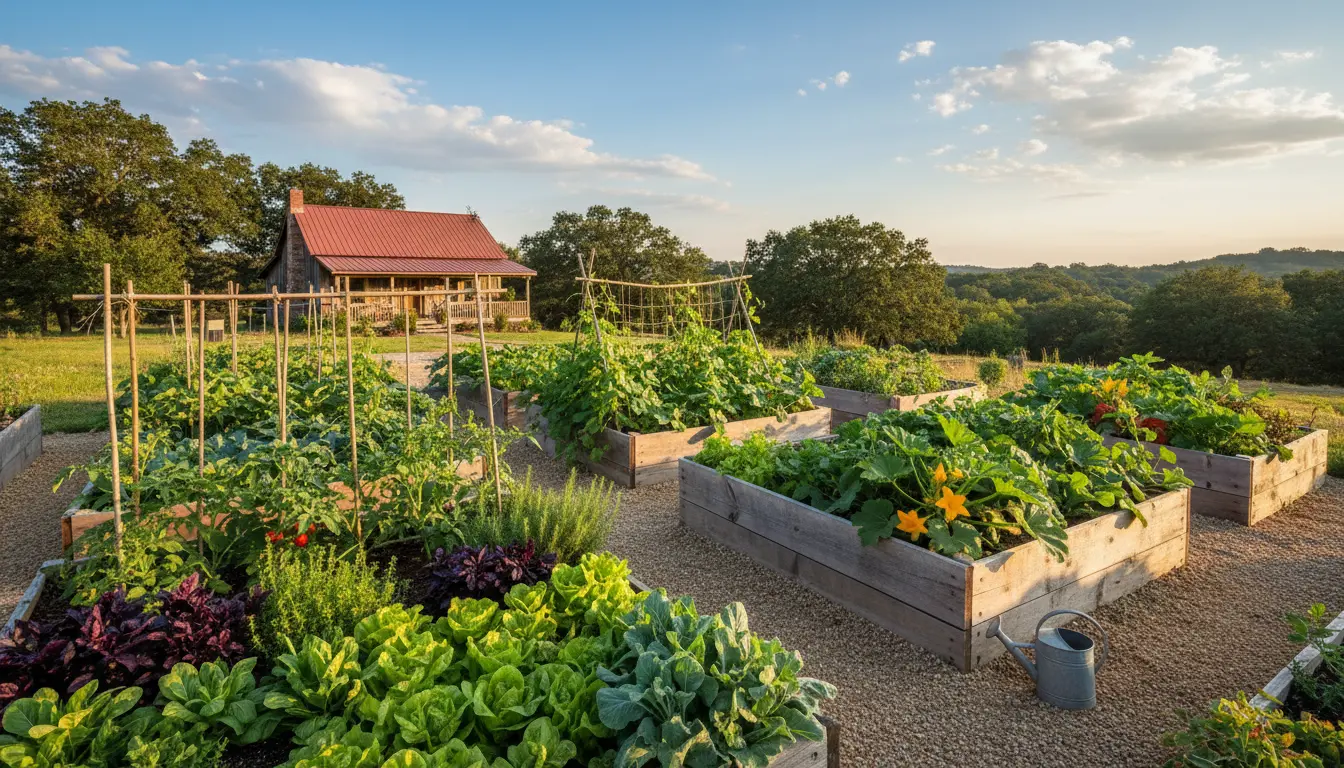
Choose Where to Start a Vegetable Garden
Pick a site that gets at least six hours of direct sunlight each day. Good light is the single most important factor for vegetable success.
Consider access to water and soil drainage. Avoid low spots that collect water and locations far from a hose or tap.
Plan Your Garden Layout and Size
Decide whether to use in-ground rows, raised beds, or containers. For beginners, a single 4×8 foot raised bed keeps work manageable and yields well.
Sketch a simple layout showing paths and bed locations. Leave 18 to 24 inches for paths around beds so you can reach plants easily.
What to Grow First
Start with easy, productive vegetables like tomatoes, peppers, lettuce, radishes, and bush beans. These crops are forgiving and give quick feedback on how your garden is doing.
- Leafy greens: Lettuce, spinach, Swiss chard
- Root crops: Carrots, radishes, beets
- Fruit-bearing: Tomatoes, peppers, cucumbers
- Legumes: Bush beans, peas
Prepare Soil for Planting
Test your soil or use basic observations to assess texture and drainage. Most vegetables prefer loose, well-draining soil with organic matter.
Improve poor soil by adding compost and a balanced organic fertilizer. For raised beds, mix two parts topsoil, one part compost, and one part coconut coir or well-rotted manure.
Soil Preparation Steps
- Clear grass and weeds from the area.
- Loosen soil to at least 8 inches deep.
- Incorporate 2–4 inches of compost across the planting area.
- Rake level and water once to settle the soil.
Planting: Seeds vs Seedlings
Decide whether to sow seeds directly or transplant seedlings. Direct sowing is cheaper and works well for root crops and many greens.
Transplants give a head start for warm-season crops like tomatoes and peppers. Harden off seedlings by gradually exposing them to outdoor conditions for a week before planting.
Planting Tips
- Follow seed packet or plant tag spacing recommendations to avoid overcrowding.
- Plant deeper for long-rooted crops like carrots and beets; shallow for lettuce and herbs.
- Use mulch to conserve moisture and suppress weeds once plants are established.
Watering and Irrigation
Consistent moisture is critical for healthy vegetables. Water deeply and less frequently to encourage strong root systems.
Aim for 1 to 1.5 inches of water per week, including rainfall. Increase frequency during hot, dry periods.
Simple Irrigation Options
- Hand watering with a soaker hose or long-handled wand
- Drip irrigation lines for targeted, water-efficient delivery
- Automated timers to keep schedules consistent
Pest and Disease Management
Use preventive strategies first: crop rotation, proper spacing, clean tools, and healthy soil. These reduce pest and disease pressure.
When pests appear, identify them before treatment. Hand-pick beetles or use row covers for young plants. Use organic controls like insecticidal soap or neem oil when needed.
Maintenance: Weeding, Feeding, and Pruning
Weed regularly to reduce competition for nutrients and water. Mulch helps suppress weeds and stabilize soil temperature.
Feed plants with a balanced fertilizer or side-dress with compost midseason for heavy feeders like tomatoes.
Common Tasks Checklist
- Weekly: Check soil moisture, remove weeds, inspect for pests
- Monthly: Add compost, adjust supports for vining crops
- As needed: Prune suckers on indeterminate tomatoes, thin crowded seedlings
Harvesting and Storing Your Vegetables
Harvest regularly to encourage more production. Pick leafy greens when young and tender, and harvest tomatoes when fully colored and slightly soft.
Store produce properly: cool and dry root crops, refrigerate leafy greens, and ripen tomatoes at room temperature if needed.
Small Case Study: One Raised Bed, Big Results
Sarah, a city renter, started a 4×8 raised bed on a sunny balcony. In her first season she planted tomatoes, basil, lettuce, and bush beans.
By following a watering schedule and adding compost every month, she harvested fresh salad greens for six months and enough tomatoes to can four jars of sauce. The focused bed reduced maintenance and improved success.
Final Tips to Start a Vegetable Garden Successfully
- Start small and expand after you learn what works in your space and climate.
- Keep simple records of planting dates, varieties, and yields to improve next season.
- Join a local gardening group or extension service for region-specific advice.
Starting a vegetable garden is a step-by-step process that rewards planning and simple, consistent care. Use the steps above to build a productive garden tailored to your space and schedule.