
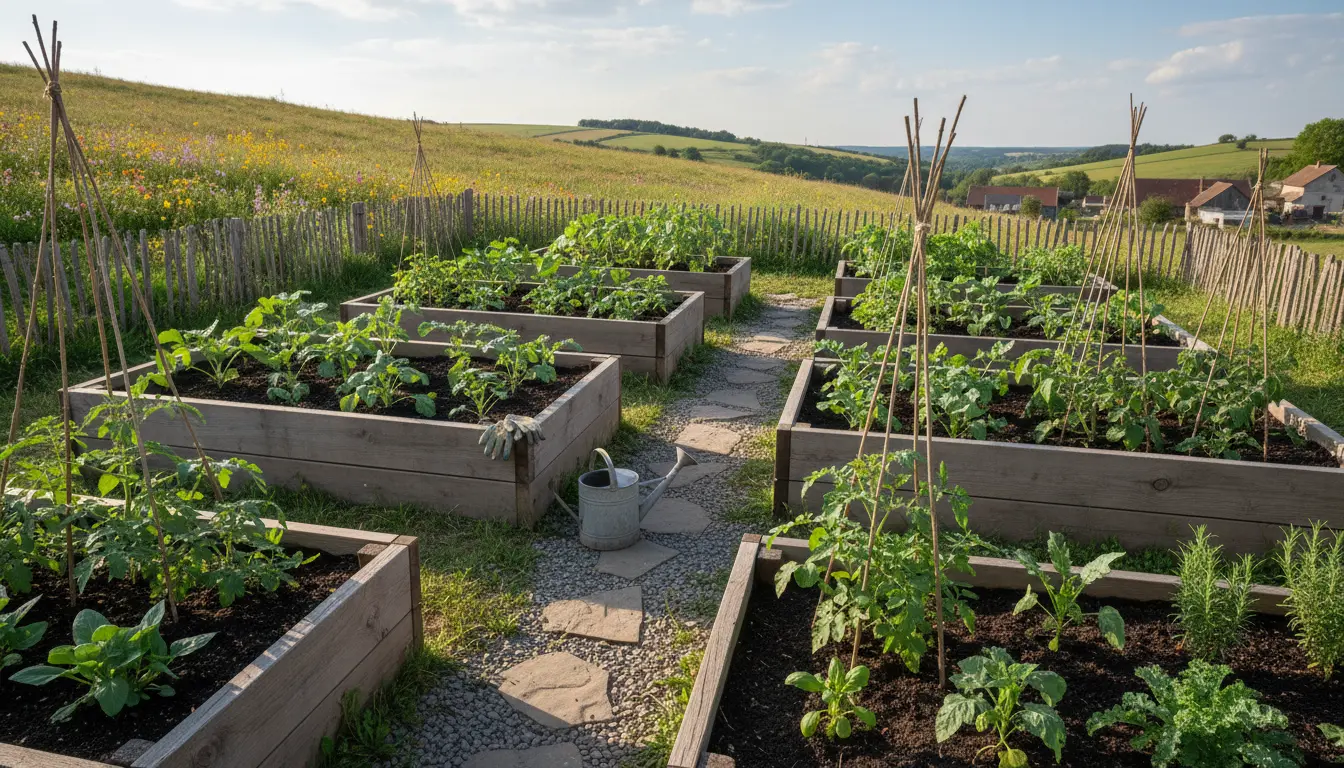
Overview: Start a Raised Bed Vegetable Garden
A raised bed vegetable garden is an efficient way to grow more food in less space. Raised beds warm faster, drain better, and give you control over soil quality.
This guide shows practical steps to plan, build, plant, and maintain a successful raised bed vegetable garden in any yard or small space.
Why Choose a Raised Bed Vegetable Garden
Raised beds reduce soil compaction and improve root growth for vegetables. They also make gardening accessible because beds are easier to reach and manage.
Use raised beds to extend your growing season and limit weeds. They are ideal in urban yards, patios, or where native soil is poor.
Planning Your Raised Bed Vegetable Garden
Start by deciding bed size and location. Common bed widths are 3 to 4 feet so you can reach the center from either side.
Length can vary, but 4 to 8 feet is practical. Taller beds (12–24 inches) give room for deeper roots and better drainage.
Selecting Location for Raised Bed Vegetable Garden
Choose a spot with at least 6 hours of sun daily for most vegetables. Morning sun is especially valuable for tomato and pepper production.
Consider proximity to water and ease of access for maintenance and harvesting.
Materials and Tools
Common materials include rot-resistant lumber, cedar, composite boards, or concrete blocks. Avoid pressure-treated wood that may leach chemicals into the soil.
Essential tools: tape measure, level, drill or hammer, and a shovel. You will also need soil and compost delivery or a wheelbarrow for transport.
Building the Bed and Preparing Soil
Build a simple rectangular frame and place it on a level spot. If the ground is uneven, use a level to shim the sides for stability.
Consider lining the bottom with cardboard to suppress weeds if you place the bed on existing grass or weeds.
Soil Mix for Raised Bed Vegetable Garden
Good soil is the key. Use a mix of topsoil, compost, and a light amendment such as coconut coir or peat for moisture retention.
A common ratio: 50% topsoil, 30% compost, 20% aeration material (perlite, coarse sand, or coconut coir). Adjust based on your local soil and available materials.
Planting Strategy
Plan plant spacing and crop choices before planting. Group plants by height and water needs to simplify care.
Use succession planting to extend harvests. Plant a second crop as soon as early crops are harvested.
- Leafy greens: plant every 2–3 weeks for continuous harvest.
- Root vegetables: sow in blocks for better yields.
- Vining crops: use trellises at the back of the bed to save space.
Companion Planting Examples
Tomatoes pair well with basil to deter pests. Beans fix nitrogen and work well with corn or squash in mixed beds.
Watering and Maintenance
Raised beds can dry faster than ground beds, so consistent watering is important. Aim for deep, infrequent watering to encourage strong roots.
Install soaker hoses or drip irrigation for even moisture and water savings. Mulch with straw or wood chips to reduce evaporation and suppress weeds.
Pest and Disease Management
Monitor plants weekly. Hand-pick pests like slugs and caterpillars and use row covers for early-season protection.
Rotate crops yearly to reduce disease build-up and avoid planting the same family in the same bed two years in a row.
Seasonal Care and Winter Preparation
In autumn, remove spent plants and add a layer of compost to replenish nutrients. Cover beds with mulch or a cold frame for winter protection.
In mild climates, consider planting winter greens or cover crops like clover to protect soil and add organic matter.
Raised beds can warm up 2 to 4 degrees Fahrenheit earlier in spring than in-ground beds, allowing earlier planting for many vegetables.
Small Real-World Case Study
Case study: A homeowner built a 4×8 foot raised bed, 12 inches deep, in a sunny backyard. They filled it with a 50/30/20 topsoil-compost-coir mix.
First season: planted 8 tomato plants, 12 lettuce heads, 8 pepper plants, and a trellised row of beans. They used drip irrigation and mulch.
Results: Tomatoes produced 25–35 lbs total, beans yielded successive harvests for 2 months, and lettuce was continuous due to succession planting. The bed required weekly monitoring and minor pest control only twice.
Quick Checklist to Start a Raised Bed Vegetable Garden
- Pick a sunny location with good access to water.
- Choose bed size (3–4 ft wide recommended).
- Select safe building materials and assemble the frame.
- Fill with a quality soil mix and incorporate compost.
- Plan crops, plant, and install irrigation if possible.
- Mulch, monitor pests, and rotate crops annually.
Final Tips for Success with a Raised Bed Vegetable Garden
Start small to learn spacing, watering, and local pests. Keeping beds manageable reduces labor and increases enjoyment.
Record what you plant and when you harvest. Notes will improve yields in following seasons and help you refine your soil mix and crop choices.
With simple planning and regular, short maintenance tasks, a raised bed vegetable garden can produce reliable, healthy food and make gardening easier and more productive.