
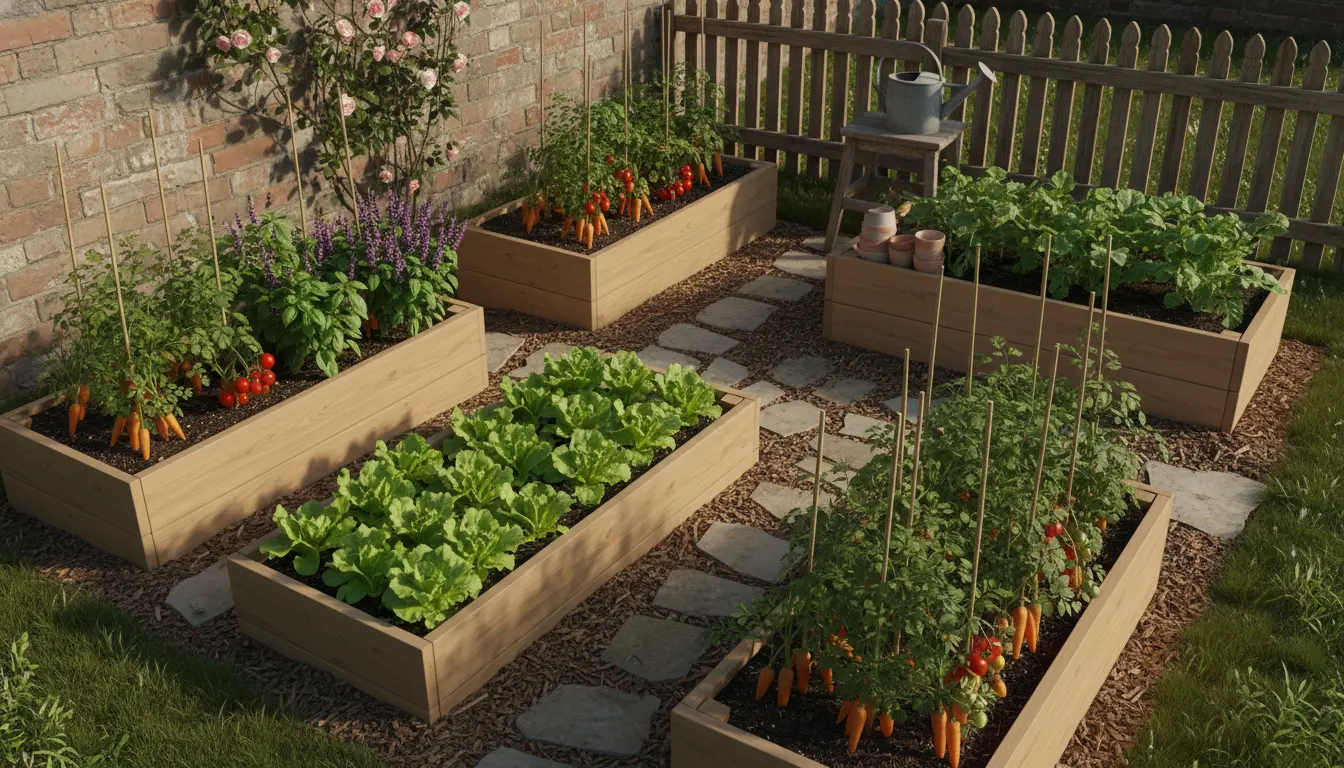
Overview: Why a Small Vegetable Garden Works
Starting a small vegetable garden is a practical way to grow fresh food, save money, and learn basic gardening skills. Small gardens fit patios, balconies, and tiny yards and require less time than larger plots.
This guide explains clear steps to plan, build, and maintain a productive small vegetable garden, using easy-to-follow methods for beginners.
Plan Your Small Vegetable Garden
Begin with realistic goals. Decide whether you want continuous salad greens, a few tomato plants, or herbs for cooking. Your goals shape the space, containers, and seed choices.
Sketch a simple layout and list the vegetables you want to grow. Small gardens benefit from compact, high-yield varieties.
Choose the Right Location for a Small Vegetable Garden
Select a spot that gets at least six hours of sunlight daily for most vegetables. If full sun is not available, focus on leafy greens and herbs that tolerate partial shade.
Check access to water and avoid areas with poor drainage or strong winds.
Decide Between Containers and Raised Beds
Containers are ideal for balconies and small patios. Choose pots at least 12 inches deep for vegetables. Use quality potting mix and plan regular watering.
Raised beds give more growing area in a compact footprint. A 4×4 or 4×8 raised bed is manageable and productive for beginners.
Prepare Soil and Planting Mix
Good soil is the key to a healthy small vegetable garden. Aim for a loose, fertile mix rich in organic matter.
For in-ground or raised beds, amend existing soil with compost and a balanced organic fertilizer. For containers, use a premium potting mix with compost added.
- Test soil pH if possible; most vegetables prefer pH 6.0 to 7.0.
- Add 2 to 4 inches of compost and mix into the top 6 to 8 inches of soil.
- Use slow-release organic fertilizer at planting and side-dress during the season.
Pick Vegetables Suited to a Small Vegetable Garden
Choose crops that give high yield in limited space. Use container-friendly or compact varieties labeled ‘bush’ or ‘patio’.
- Leafy greens: lettuce, spinach, kale
- Root crops: radishes, baby carrots
- Compact fruiting plants: patio tomatoes, dwarf peppers
- Herbs: basil, parsley, chives
Succession Planting for Continuous Harvest
Succession planting maximizes small spaces. Sow fast-growing crops every 2 to 3 weeks to avoid gaps in production.
Interplant slow growers with quick crops (for example, carrots between lettuce rows) to use space efficiently.
Watering and Fertilizing a Small Vegetable Garden
Consistent moisture is essential. Small gardens and containers dry out faster than large beds, so check soil moisture daily in hot weather.
- Water at the soil level early in the morning to reduce evaporation.
- Use mulch to retain moisture and suppress weeds.
- Feed with a balanced liquid fertilizer every 3 to 4 weeks for containers; use slow-release for beds.
Pest and Disease Management
Keep pest control simple and preventive. Healthy plants resist many problems.
- Rotate crops year to year if possible to reduce disease buildup.
- Inspect plants weekly and remove damaged leaves or pests by hand.
- Use floating row cover for early-season insect protection on brassicas and salad greens.
A single 4×8 raised bed can yield over 100 pounds of produce in a season with good planning and succession planting.
Harvesting and Ongoing Care
Harvest regularly to encourage more production. Pick leafy greens early in the morning for best flavor.
Keep beds tidy, replace spent crops, and add compost in fall to prepare for the next season.
Small Vegetable Garden Case Study: A 4×4 Raised Bed
Maria, a city renter, built a 4×4 raised bed on her balcony. She used a mix of compost and topsoil and planted:
- 2 patio tomato plants
- 4 pepper seedlings
- Rows of lettuce for succession planting
- Basil and parsley in corners
By using succession planting and regular feeding, Maria harvested fresh salad greens weekly and collected 10 to 12 pounds of tomatoes and peppers through the season. She spent 15 to 20 minutes per day on routine care, making this solution practical and rewarding for a busy schedule.
Quick Checklist to Start Your Small Vegetable Garden
- Choose the location and type: container or raised bed.
- Select compact, high-yield varieties.
- Prepare soil with compost and appropriate nutrients.
- Plan succession planting for continuous harvest.
- Water consistently and mulch to conserve moisture.
- Monitor pests and practice simple prevention steps.
Final Tips for Success
Start small and expand as you gain confidence. Keep records of what you plant, dates, and yields. Small changes in variety choice, spacing, or water routine often improve results quickly.
With simple planning and weekly care, a small vegetable garden can supply fresh produce and valuable gardening experience all season long.