
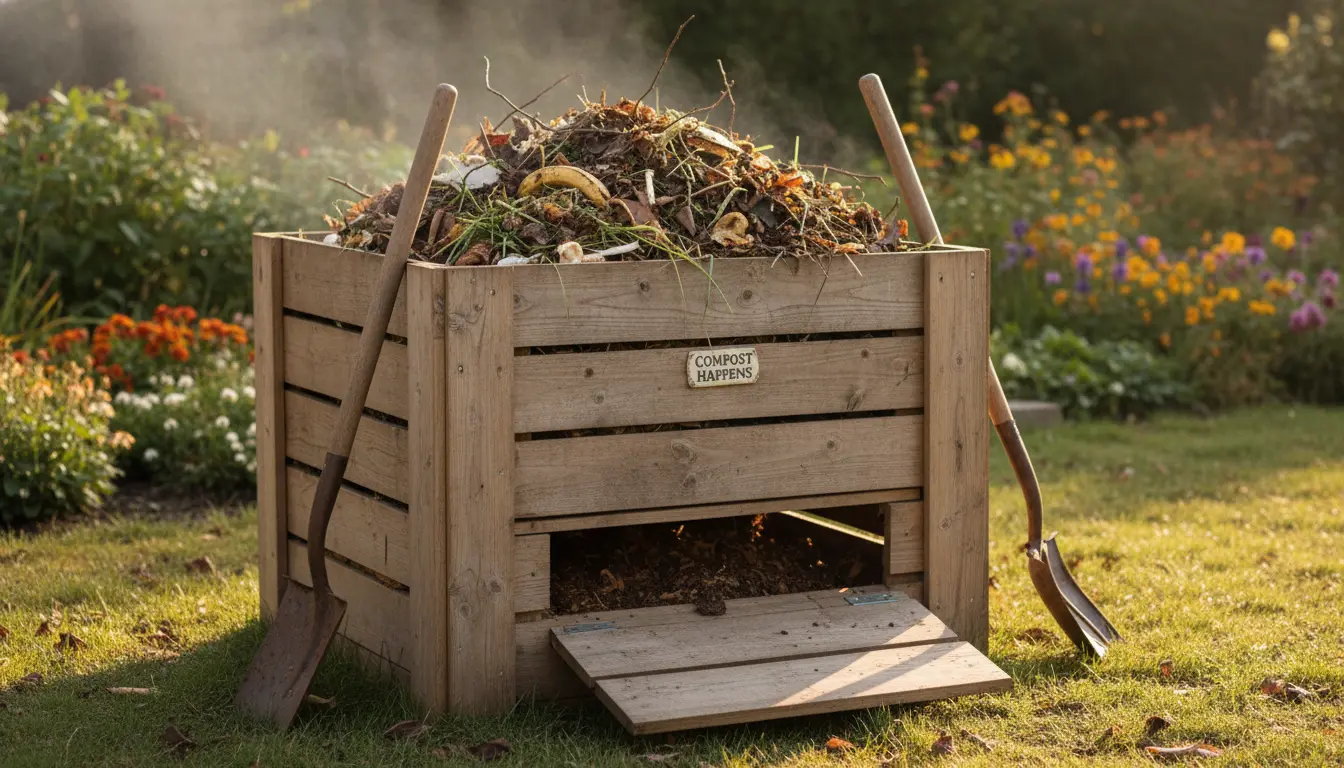
Why Home Composting Matters
Home composting turns kitchen and yard waste into nutrient rich material for gardens. It reduces trash, lowers landfill methane, and improves soil health.
Beginners can start with simple methods and scale up over time. This guide covers practical steps, common problems, and an easy case study to help you begin.
What You Need for Home Composting
Start with a few basic items and common sense. You do not need specialized tools to compost successfully.
- Compost container: a bin, tumbler, or simple heap in a corner of the yard.
- Carbon materials: dry leaves, shredded paper, straw, cardboard.
- Nitrogen materials: fruit and vegetable scraps, coffee grounds, grass clippings.
- Water source: keep the pile moist but not soaked.
- Garden fork or pitchfork for turning, optional but helpful.
Choose a Composting Method
Different methods suit different spaces and time commitments. Choose one that fits your routine.
Cold Composting
Cold composting is low maintenance. Add materials over time and wait many months for breakdown.
This method works well when patience is okay and you do not need finished compost quickly.
Hot Composting
Hot composting requires balancing greens and browns, moisture, and regular turning. It produces finished compost in weeks to months.
Use a bin and aim for a pile at least 3 feet wide to maintain heat.
Tumbler or Enclosed Bin
Tumblers make turning easy and are cleaner for small yards. They speed up decomposition and reduce pests when used properly.
Choose a size that fits your household waste volume.
Basic Steps to Start Home Composting
Follow these simple steps to get a healthy compost pile going. Keep each step short and easy to follow.
- Pick a spot with partial shade and good drainage.
- Place a layer of coarse browns like twigs to help airflow.
- Add alternating layers of greens and browns. Aim for about 3 parts browns to 1 part greens by volume.
- Moisten the pile so it feels like a wrung out sponge.
- Turn the pile every 1 to 2 weeks if hot composting, or leave it undisturbed for cold composting.
Troubleshooting Common Problems
Composting issues are usually simple to fix. Check these common problems first.
Bad Odor
Smelly compost usually means too much nitrogen or poor airflow. Add dry browns and turn the pile to introduce oxygen.
Pests or Fruit Flies
Avoid adding meat, dairy, or oily foods to your home compost. Bury food scraps under a layer of browns and use a closed bin if animals are a problem.
Pile Too Dry or Too Wet
If the pile is dry, add water and more greens. If it is soggy, add dry browns and improve drainage.
What to Compost and What to Avoid
Knowing what to add makes composting easier and safer. Use common sense with unfamiliar items.
- Good to compost: fruit and vegetable scraps, coffee grounds, eggshells, yard trimmings, paper towels, shredded cardboard.
- Avoid: meat, dairy, bones, oils, diseased plants, pet waste from carnivores.
- Be cautious: citrus and onion can be composted but add in moderation and balance with browns.
Composting 1 ton of organic waste can reduce greenhouse gas emissions by up to 3 tons of carbon dioxide equivalent compared with landfilling that waste.
How to Use Finished Compost
Finished compost should be dark, crumbly, and smell earthy. Use it to boost garden beds and potted plants.
- Top dress: Spread a 1 to 2 inch layer around plants to improve soil and retain moisture.
- Soil mix: Mix compost with garden soil for planting new beds or potting mixes.
- Mulch: Use coarse compost as mulch to suppress weeds and feed soil slowly.
Small Real World Case Study
Linda, a city apartment renter with a balcony garden, started a small tumbler in spring. She collected kitchen scraps in a sealed container and emptied it into the tumbler twice a week.
Within four months, Linda had dark compost she mixed into three balcony pots. She reduced her weekly trash by about 30 percent and reported healthier-looking basil and tomatoes.
Practical Tips for Success
Small habits make composting easier and more reliable. Keep these tips in mind as you start.
- Chop larger scraps to speed decomposition.
- Keep a kitchen caddy for scraps to avoid missed opportunities.
- Record pile size and turning schedule to learn what works for your climate.
- Be patient: decomposition time varies with method and season.
Final Checklist Before You Begin Home Composting
Use this quick checklist to ensure you are ready to start. It keeps the first weeks simple and focused.
- Choose a bin or pile location with good drainage.
- Gather initial brown and green materials.
- Decide on a turning schedule if using hot composting.
- Monitor moisture and temperature in the first month.
Home composting is a low cost, high impact action anyone can start. Begin with small, steady changes and adapt your system as you learn. Over time you will produce rich compost, reduce waste, and improve your soil naturally.