
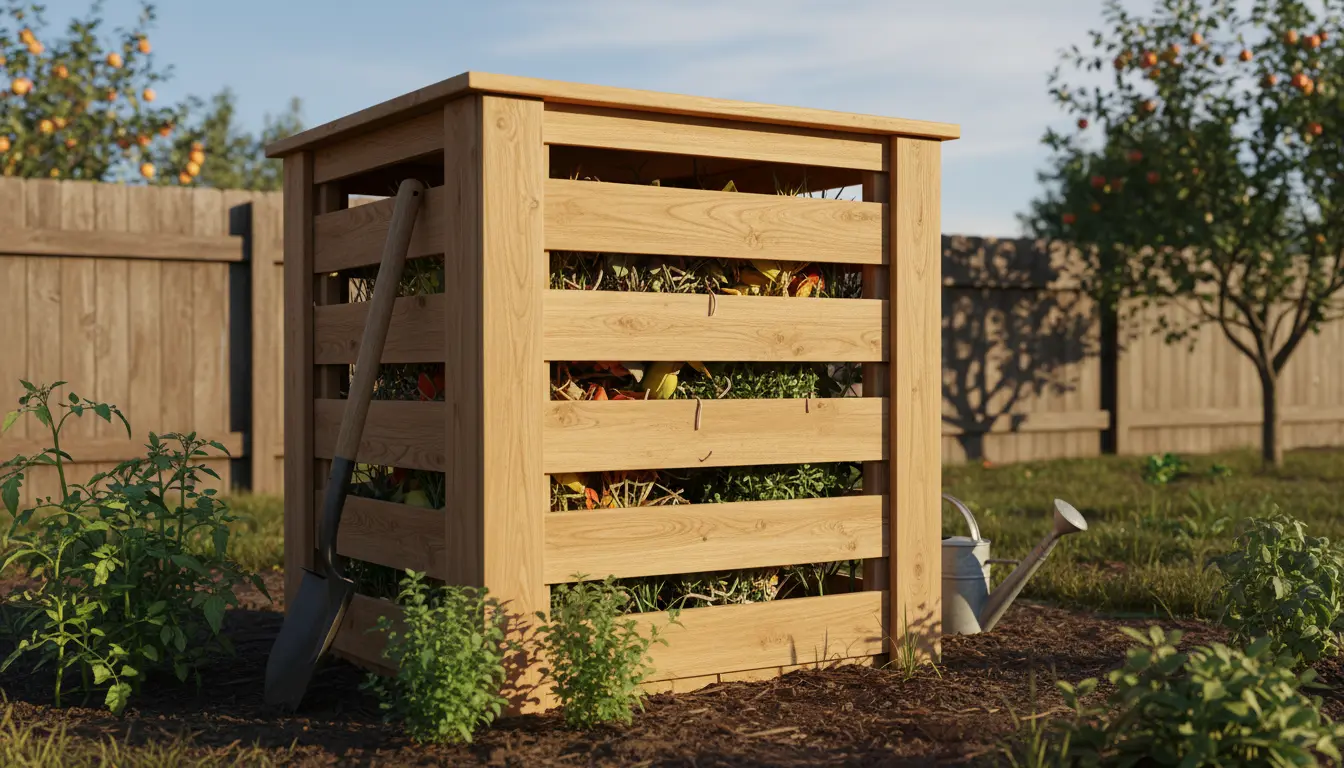
Why composting at home matters
Composting at home reduces kitchen and yard waste, lowers landfill emissions, and creates a free soil amendment for gardens and pots. It also helps retain water in soil and improves plant health without chemical fertilizers.
This guide gives practical, step-by-step advice for beginners so you can start composting with confidence and minimal cost.
Choose the right compost system for composting at home
Pick a system that fits your space, budget, and effort level. Common options include open piles, tumblers, and stationary bins.
- Open compost pile: Cheapest and simple. Works well if you have space, but can look untidy and attracts pests if not managed.
- Compost bin: Enclosed and neater. Bins retain heat and moisture better than an open pile.
- Tumbler: Easy to turn and faster to compost. Best for small spaces and regular stirring.
Basic materials for composting at home
Compost needs two types of materials: greens and browns. Balance these to promote decomposition and avoid odors.
- Greens (nitrogen-rich): fruit and vegetable scraps, coffee grounds, fresh grass clippings, plant trimmings.
- Browns (carbon-rich): dry leaves, straw, shredded paper, cardboard, wood chips.
A good rule of thumb is roughly 2–3 parts browns to 1 part greens by volume. Adjust as needed based on smell and moisture.
Step-by-step: How to start composting at home
Follow these steps to set up a working compost pile or bin.
- Place your bin or designate a spot with good drainage and partial sun. Avoid full shade and direct constant sun.
- Start with a 4–6 inch base layer of coarse browns (twigs or straw) to help air flow and drainage.
- Add alternating layers of greens and browns. Keep layers thin to encourage mixing and microbial activity.
- Keep the pile moist like a wrung-out sponge. Add water during dry spells and cover if it gets too wet from rain.
- Turn or mix the pile every 1–2 weeks to add oxygen and speed decomposition. Tumblers can be rotated more frequently.
Managing moisture and aeration for composting at home
Moisture and oxygen control are the two most important factors for success.
- If the pile smells sour or like ammonia, it is too wet or too rich in greens; add more browns and turn it.
- If the pile is dry and decomposition is slow, add water and some fresh greens to restart microbial activity.
- Turning introduces oxygen and keeps aerobic microbes active, which reduces odors and speeds up composting.
Troubleshooting common problems in composting at home
Beginners often face the same issues. Use quick fixes to keep compost healthy.
- Bad smells: Add browns, mix, and avoid meat, dairy, or oily foods.
- Pests: Bury food scraps under browns, use a bin with a lid, and avoid feeding meat and pet waste.
- Slow decomposition: Increase surface area by chopping materials, add water, and turn more often.
How to tell when compost is ready
Finished compost looks dark, crumbly, and smells earthy. Most home systems produce usable compost in 2–12 months depending on management and temperature.
Use a sieve to remove large pieces and return them to the bin for further breakdown. Finished compost should not be hot in the center.
Using finished compost from composting at home
Apply compost to garden beds as a top dressing, mix it into potting soil, or use it to enrich lawn and vegetable plots.
- Mix 1–3 inches into garden beds before planting.
- Use 10–30% compost in container mixes for better water retention.
- Top-dress established plants in spring or fall with a thin layer.
Composting at home can cut household waste by up to 30 percent and returns nutrients to soil that would otherwise be lost to landfill. Worm composting (vermicomposting) works well in small spaces and produces rich vermicompost in as little as a few months.
Small case study: Suburban family starts composting at home
A family of four in a suburban home began using a 200-liter bin and a kitchen caddy for scraps. They balanced greens and browns and turned the bin weekly with a pitchfork.
Within six months they produced enough compost to amend two raised vegetable beds. Their garden yields improved, and the household reduced weekly trash volume by one bag.
Quick tips and best practices for composting at home
- Chop larger items to speed breakdown.
- Keep a small countertop caddy to collect scraps and reduce trips outside.
- Avoid adding meat, dairy, fat, diseased plants, and pet waste to a standard home compost.
- Consider a worm bin for indoor composting and fast, nutrient-rich results.
Composting at home is a low-cost, high-impact habit. With a little attention to balance, moisture, and turning, you can transform kitchen and yard waste into valuable soil and reduce your environmental footprint.