
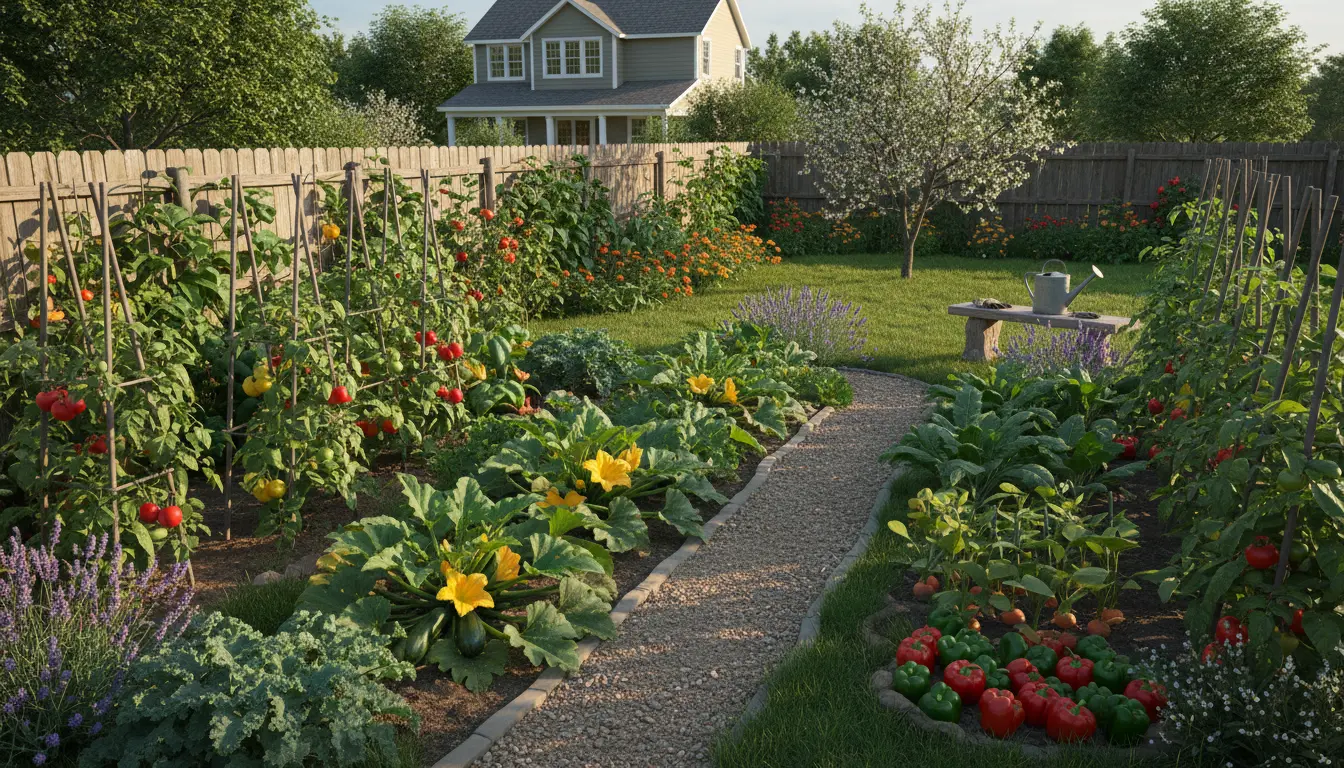
Starting a vegetable garden at home is practical and rewarding. This guide walks you through planning, soil preparation, planting, and basic maintenance with clear steps you can follow on a small budget.
Plan Where to Start Your Vegetable Garden
Good planning reduces wasted time and expense. Choose a location that receives at least 6 hours of direct sunlight daily and has access to water.
Consider these planning tips:
- Sun: Full sun for most vegetables, partial shade for leafy greens.
- Size: Start small — a 4×8 foot raised bed or a few containers is manageable.
- Soil access: Avoid compacted or waterlogged areas.
- Proximity: Place beds near your kitchen for easy harvesting.
Prepare Soil for a Healthy Vegetable Garden
Soil quality determines plant health. Focus on structure, fertility, and drainage before planting.
Follow these steps to prepare soil:
- Test soil pH using a home kit. Most vegetables prefer pH 6.0–7.0.
- Add organic matter: 2–3 inches of compost mixed into the top 6–8 inches of soil.
- Improve drainage: For heavy clay, mix in coarse sand or compost; for sandy soil, add compost and mulch to retain moisture.
- Consider raised beds if soil is poor or drainage is bad.
Soil Example: Amending a New Bed
Mix one part compost with two parts existing soil. Incorporate evenly to a depth of 8 inches. Water and let settle for a week before planting.
Choose Vegetables for Your Garden
Select vegetables by space, climate, and your eating preferences. Beginners benefit from reliable, easy-to-grow crops.
Good starter vegetables:
- Leafy greens: Lettuce, spinach, Swiss chard.
- Root crops: Carrots, radishes, beets.
- Vining/support: Tomatoes, beans, cucumbers (with stakes or trellis).
- Quick growers: Radishes and salad greens for fast results.
Crop Layout Tips for Your Vegetable Garden
Plan rows or blocks. Use companion planting where helpful — for example, basil near tomatoes may deter pests and improve flavor.
Planting Steps for a Productive Vegetable Garden
Follow seed packet or plant tag instructions for planting depth and spacing. Start with seedlings for tomatoes and peppers, seeds for carrots and beans.
Basic planting steps:
- Prepare beds and mark rows or squares.
- Sow seeds or transplant seedlings at recommended spacing.
- Water gently after planting to settle the soil.
- Mulch around plants to conserve moisture and suppress weeds.
Watering and Feeding Your Vegetable Garden
Consistent watering and timely feeding improve yields. Deep, infrequent watering encourages strong roots.
Watering and feeding guidelines:
- Water early morning to reduce evaporation and disease risk.
- Aim for 1–1.5 inches of water per week, more in hot weather.
- Use a slow soaker hose or drip irrigation for efficiency.
- Fertilize with balanced organic fertilizer at planting and mid-season if needed.
Pest and Disease Management in a Vegetable Garden
Preventive practices reduce problems. Inspect plants regularly and act early when you see pests or disease.
Integrated pest tips:
- Encourage beneficial insects by planting flowers like marigolds or dill.
- Use row covers to protect seedlings from insects and birds.
- Remove diseased leaves and avoid overhead watering to lower fungal risk.
- Apply organic controls such as insecticidal soap or neem oil when necessary.
Harvesting and Rotating Crops in a Vegetable Garden
Harvest vegetables at peak ripeness for best flavor and to encourage continued production.
Rotation and maintenance tips:
- Rotate families each year to reduce soil-borne disease build-up.
- Succession plant: Sow new seeds every few weeks for continuous harvest.
- Clean up plant debris at season end to reduce pests over winter.
Many common vegetables like lettuce and radishes can be ready to harvest in 4–6 weeks from sowing, giving quick rewards for new gardeners.
Small Real-World Example: A 4×8 Vegetable Garden Case Study
Case study: Sarah, a beginner gardener, built a 4×8 raised bed and followed this plan. She planted tomatoes, lettuce, carrots, and bush beans.
Results after one season:
- Tomatoes produced steady fruit with staking and weekly feedings.
- Lettuce was harvested multiple times by cutting outer leaves, extending yield.
- Carrots and beans filled gaps and required minimal care.
She spent about 4 hours per week on watering, weeding, and harvesting. The garden supplied fresh produce for her family and reduced grocery costs.
Quick Checklist to Start Your Vegetable Garden
- Choose a sunny site and determine garden size.
- Test and amend soil with compost.
- Select easy crops and plan spacing.
- Plant seeds/seedlings and mulch around plants.
- Water consistently and monitor for pests.
- Harvest regularly and rotate crops next season.
Starting a vegetable garden at home is an achievable project with clear steps and modest investment. With planning, soil preparation, and simple maintenance, you can grow reliable, fresh produce even in small spaces.