
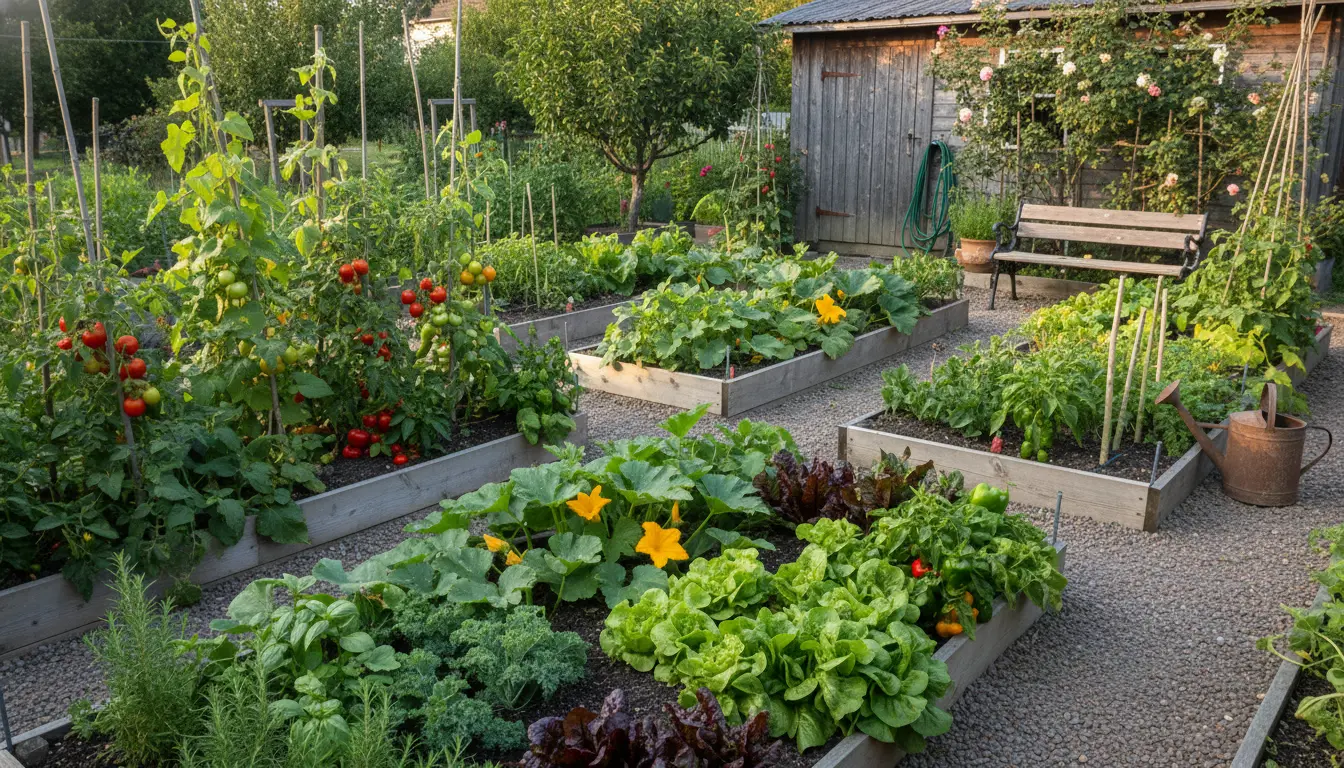
Why Start a Vegetable Garden
Growing your own vegetables saves money, improves food quality, and connects you with seasonal cycles. A small, well-planned garden can produce a steady supply of fresh produce.
This guide shows practical, step-by-step methods to start a vegetable garden whether you have a backyard bed or a small balcony.
Choose the Right Location
Vegetables need sunlight, good drainage, and easy access to water. Start by watching potential spots for a few days to see how much sun they get.
Key factors to evaluate:
- Sunlight: Aim for 6–8 hours of direct sun for most vegetables.
- Drainage: Avoid low spots that collect water after rain.
- Access: Place the garden near a water source and a path for easy care.
Decide Between Ground Beds and Containers
Ground beds work well for large, long-term gardens. Containers are ideal for patios, balconies, and poor soil conditions.
Container tips:
- Use pots at least 12 inches deep for most vegetables.
- Choose a high-quality potting mix, not garden soil.
- Ensure drainage holes and use saucers to protect surfaces.
Prepare Soil and Improve Fertility
Healthy soil is the foundation of a productive garden. Test soil pH with a simple kit and aim for pH 6.0–7.0 for many vegetables.
Steps to improve soil:
- Add 2–4 inches of compost to beds each year.
- Mix in well-rotted manure or a balanced organic fertilizer per package rates.
- Consider raised beds to control soil quality and warmth.
Soil Example
If your soil is heavy clay, add sand and compost to improve drainage. Sandy soil benefits from organic matter to retain moisture.
Select Vegetables for Your Skill Level
Choose easy, forgiving vegetables when starting out. Fast-growing crops give quick rewards and build confidence.
- Beginner-friendly choices: lettuce, radishes, cherry tomatoes, bush beans, and herbs like basil.
- Plan crops by season: cool-season (lettuce, spinach) and warm-season (tomatoes, peppers).
Planting Basics and Timing
Follow seed packet or plant tag instructions for planting depth and spacing. Start with seedlings for longer-season crops to speed harvests.
General tips:
- Thin seedlings so plants have room to mature.
- Stagger plantings of lettuce or radishes every 2–3 weeks for continuous harvests.
Watering and Mulching
Consistent moisture encourages steady growth and reduces stress. Water deeply at the base rather than overhead to limit disease.
Mulch provides multiple benefits:
- Reduces evaporation and maintains even soil moisture.
- Suppresses weeds and stabilizes soil temperature.
- Use straw, shredded leaves, or wood chips around plants.
Pest and Disease Management
Monitor plants regularly and act early. Many issues are easier to manage in small amounts than after they spread.
Management strategies:
- Handpick large pests like caterpillars and slugs.
- Use row covers to protect young plants from birds and insects.
- Practice crop rotation and remove diseased plants promptly.
Seasonal Care and Maintenance
Weed, water, and harvest throughout the season. Prune indeterminate tomatoes and support vining plants with stakes or trellises.
End-of-season tasks:
- Remove spent plants to prevent pests overwintering.
- Add compost and mulch for winter protection.
Many common kitchen scraps make great compost. Vegetable peels, coffee grounds, and eggshells add nutrients, but avoid meat and dairy to prevent pests.
Harvesting Tips
Harvest regularly to encourage continued production. Pick leafy greens when young and sweet; harvest beans when pods are firm but before they bulge.
Store produce properly to extend freshness: cool, dry places for root vegetables and refrigeration for most greens and berries.
Small Case Study: Balcony to Table in One Season
Anna, an apartment resident, converted a sunny 6-foot balcony into a vegetable garden with containers and a vertical trellis. She started with three 14-inch containers: one for cherry tomatoes, one for mixed herbs, and one for lettuce and radishes.
Practical results:
- Tomatoes produced weekly harvests from July to October.
- Lettuce was harvested leaf-by-leaf every two weeks, reducing waste.
- Herbs were used fresh and dried, saving on grocery trips.
Her key practices were regular watering in the morning, feeding containers monthly with diluted organic fertilizer, and using a small fan to improve air circulation and reduce mildew.
Common Mistakes to Avoid
- Overwatering: soggy soil leads to root rot. Check soil moisture before watering.
- Planting too close: overcrowded plants struggle and invite disease.
- Neglecting soil tests: pH imbalance can limit nutrient uptake even with fertilizer.
Quick Start Checklist
- Pick a sunny location and decide between bed or containers.
- Test and amend soil with compost.
- Choose 3–5 beginner vegetables suited to your climate.
- Plant at correct depth and space; water and mulch.
- Monitor pests, harvest regularly, and add compost each season.
Starting a vegetable garden is a manageable project with visible rewards. Begin small, learn from each season, and gradually expand as you gain confidence.