
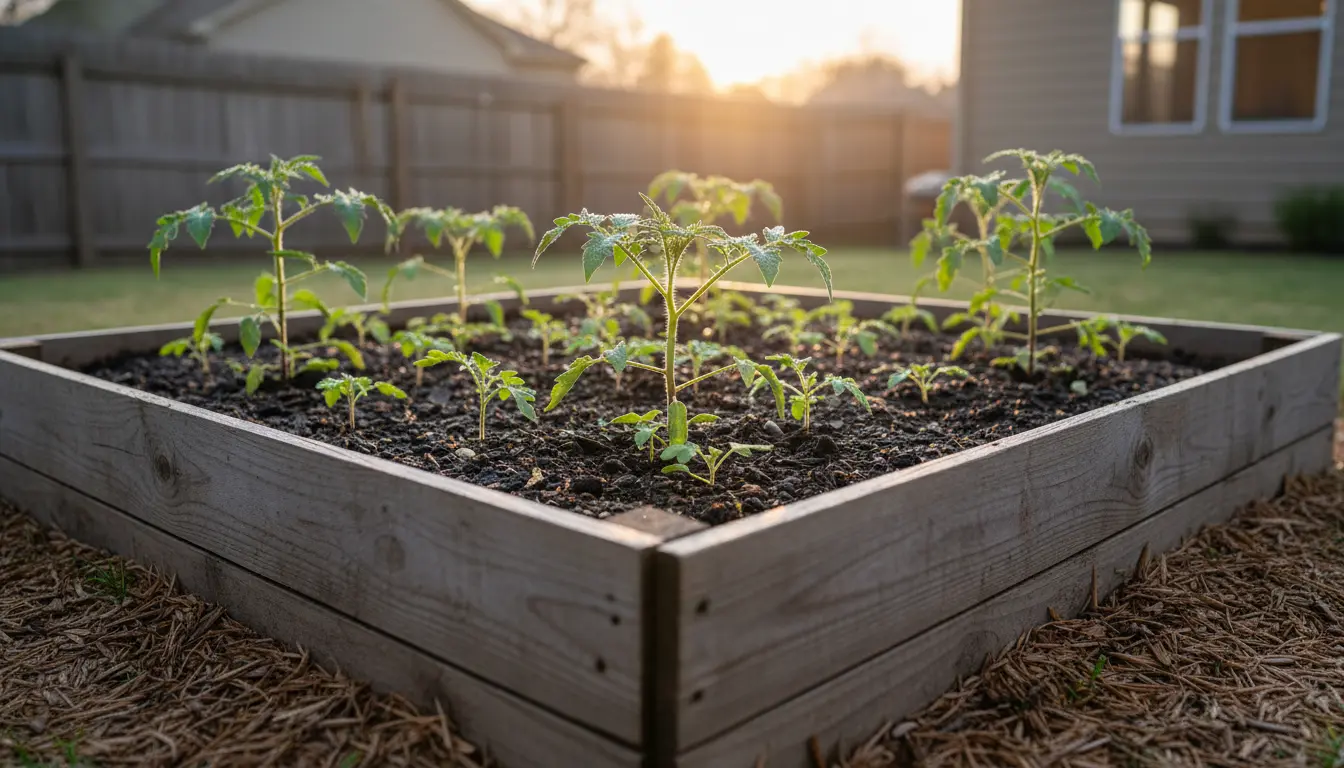
Why Start a Vegetable Garden at Home
Starting a vegetable garden at home saves money, improves meal quality, and gives control over what goes into your food. It can fit small patios, balconies, or backyard plots, and scales to suit time and budget.
Start a Vegetable Garden: Plan Your Space
Assess sunlight, space, and access to water before you begin. Most vegetables need 6–8 hours of direct sunlight and easy watering access.
- Choose a flat, well-drained area with good light.
- Decide between containers, raised beds, or in-ground plots.
- Measure available space and plan rows or beds accordingly.
Start a Vegetable Garden: Pick the Right Layout
Layout affects maintenance and yield. Raised beds and containers are best for small spaces and beginners because they control soil quality and drainage.
Consider paths and plant spacing to allow easy harvesting and airflow.
Start a Vegetable Garden: Choose Vegetables for Beginners
Choose low-maintenance, fast-growing crops to build confidence. Focus on vegetables that match your climate and season.
- Easy spring/summer picks: lettuce, radishes, bush beans, cherry tomatoes, zucchini.
- Cool-season options: spinach, kale, peas, carrots.
- Start with 3–5 varieties to keep care simple.
Start a Vegetable Garden: Use Seeds or Seedlings
Seeds are inexpensive and give many plant options, while seedlings (transplants) offer a faster start. For beginners, buy healthy seedlings for tomatoes and peppers and start salad greens from seed.
Start a Vegetable Garden: Prepare Soil and Fertility
Good soil is the foundation of a productive garden. Aim for loose, well-draining soil rich in organic matter.
- Test soil pH with a simple kit; most vegetables prefer pH 6.0–7.0.
- Work in compost at planting time—about 2–3 inches over the bed.
- Use balanced organic fertilizer if soil tests show nutrient gaps.
Start a Vegetable Garden: Improve Heavy or Sandy Soils
For clay soil, add coarse sand and organic matter to improve drainage. For sandy soil, add compost and composted manure to increase water retention and nutrients.
Start a Vegetable Garden: Planting and Spacing
Follow seed packet or plant tag spacing recommendations to avoid overcrowding. Proper spacing reduces disease and increases yields.
- Group plants with similar water needs together.
- Use vertical supports for vining crops like peas and cucumbers.
- Succession plant fast crops (e.g., lettuces, radishes) every 2–3 weeks for continuous harvest.
Start a Vegetable Garden: Mulch and Weed Control
Apply 2–3 inches of organic mulch (straw, shredded leaves) to conserve moisture and suppress weeds. Pull weeds when small to prevent root competition.
Start a Vegetable Garden: Watering and Care
Consistent watering is key. Most vegetables need about 1 inch of water per week, adjusted for heat and rainfall.
- Water at the soil level rather than overhead to reduce leaf disease.
- Use drip irrigation or soaker hoses for efficiency and consistency.
- Check soil moisture with a finger; water when the top 1–2 inches feel dry.
Start a Vegetable Garden: Pest and Disease Management
Monitor plants weekly for pests and signs of disease. Early detection keeps problems small and manageable.
- Remove affected leaves and dispose of them; don’t compost diseased material.
- Encourage beneficial insects (ladybugs, lacewings) with flowering herbs like dill or cilantro.
- Use row covers for early-season insect control if necessary.
Start a Vegetable Garden: Harvesting and Storage
Harvest vegetables at peak ripeness for best flavor and nutrition. Frequent harvesting often encourages more production, especially with greens and beans.
- Pick lettuce and leafy greens before they bolt for tender leaves.
- Tomatoes are best harvested when color is even and slightly soft to the touch.
- Store harvests properly: root vegetables in cool, dark places and leafy greens in the fridge wrapped in a damp cloth.
Simple Real-World Example
Case study: A small urban family converted a 4 x 8 foot raised bed to vegetables. They planted cherry tomatoes, basil, lettuce, and bush beans. With weekly watering and compost added twice during the season, they harvested fresh salad greens within five weeks and steady tomatoes by mid-summer.
Outcome: The family reduced grocery lettuce purchases by half and reported better meal quality. The bed took about 2 hours per week to maintain during peak season.
Quick Checklist to Start a Vegetable Garden
- Choose a sunny spot and measure available space.
- Select 3–5 beginner-friendly vegetables for your season.
- Prepare soil with compost and test pH if possible.
- Plant seeds or seedlings with correct spacing and mulch.
- Water consistently, monitor pests, and harvest regularly.
Starting a vegetable garden at home is achievable with modest time and planning. Begin small, learn from each season, and expand as confidence and time allow.