
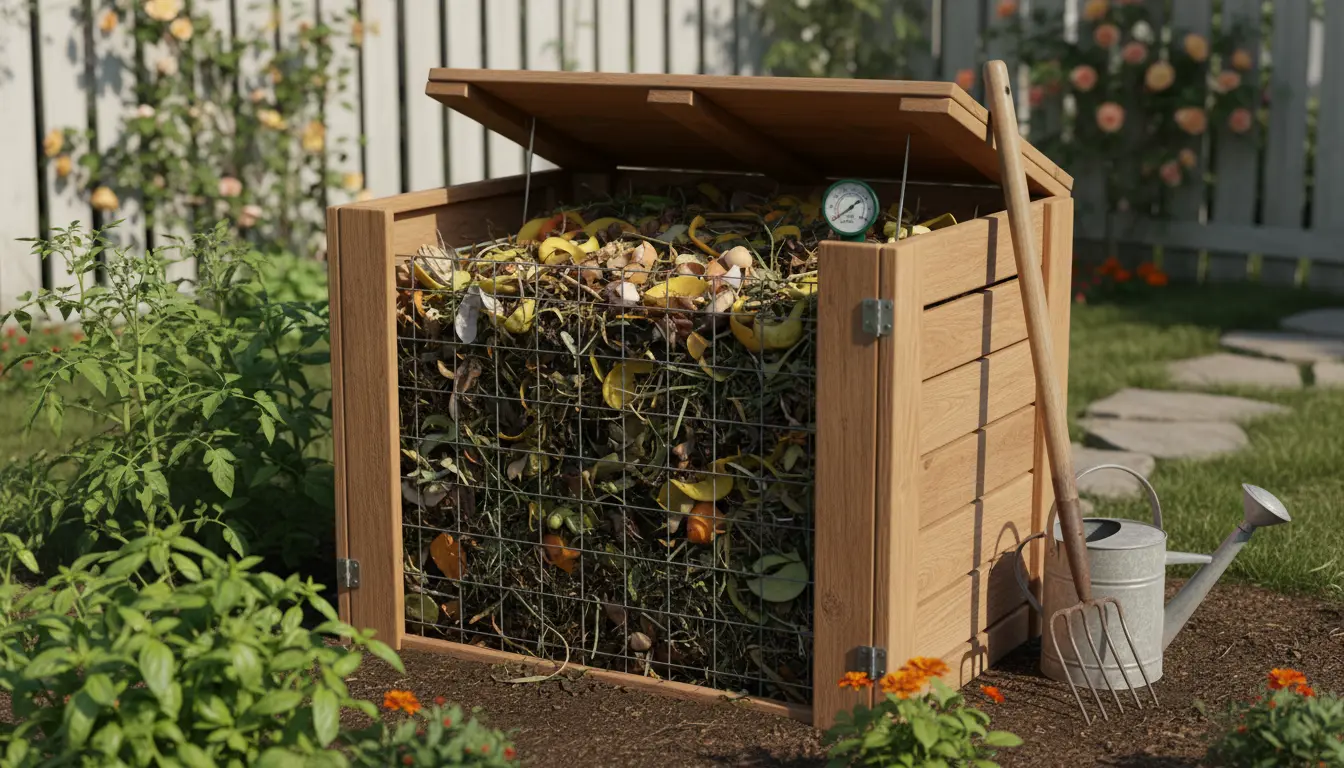
What Is Home Composting?
Home composting is the controlled breakdown of organic kitchen and yard waste into nutrient-rich material for soil. It reduces landfill waste and creates a soil amendment for plants and gardens.
Why Choose Home Composting
Composting lowers your household waste and returns nutrients to soil, improving plant health. It is a low-cost, low-effort way to practice sustainability at home.
Basic Materials for Home Composting
To start composting at home, gather the right balance of materials. Use a mix of browns (carbon) and greens (nitrogen).
- Greens: fruit and vegetable scraps, coffee grounds, fresh grass clippings.
- Browns: dry leaves, shredded paper, cardboard, straw.
- Optional: soil or finished compost to add microbes.
How to Start Home Composting
Choose a suitable container or pile for your compost. Containers can be a bin, tumbler, or a simple open pile depending on space and local rules.
Step 1: Pick a Location
Place the bin on bare soil in a partially shaded area if possible. This supports drainage and access for soil organisms.
Step 2: Layer Materials
Start with a 4-inch layer of browns for drainage. Alternate layers of greens and browns, aiming for roughly a 2:1 ratio of browns to greens by volume.
Step 3: Maintain Moisture and Aeration
Compost should feel like a wrung-out sponge. Turn the pile every 1-2 weeks to add oxygen and speed decomposition.
Common Home Composting Methods
Select a method that fits your living situation and time available. Each method has different advantages for speed, smell, and effort.
- Cold Composting: Low effort, slower breakdown, good for yard waste.
- Hot Composting: Faster decomposition, requires more frequent turning and balanced materials.
- Tumbler Composting: Easy turning, contained, suitable for small yards or patios.
- Bokashi/Indoor Fermentation: Ferments food waste for indoor or apartment use before burying or adding to a compost pile.
Troubleshooting Home Composting
Problems are usually easy to fix by adjusting moisture, aeration, or material balance. Below are common issues and solutions.
- Bad smell: Add more browns and turn the pile to increase air.
- Pests: Avoid putting meat, dairy, or oily foods in the bin and secure the lid.
- Slow breakdown: Chop materials smaller, add water if dry, and turn regularly.
Adding a handful of garden soil to new compost layers introduces beneficial microbes that speed up decomposition.
How to Tell When Compost Is Ready
Finished compost is dark, crumbly, and smells earthy. It should no longer show recognizable food scraps and will warm less when turned.
Using Finished Compost
Incorporate finished compost into garden beds, use it as potting mix amendment, or top-dress lawns. It improves soil structure and nutrient content.
Small Real-World Case Study
Sara lives in a small townhouse and started composting with a 40-liter tumbler. She added kitchen scraps and shredded cardboard, turning twice a week.
After four months she produced 20 liters of compost and reduced her weekly trash by an estimated 35 percent. Her herb containers grew more vigorously when she mixed 20 percent compost into potting soil.
Tips for Apartment or Small-Space Home Composting
If outdoor space is limited, use a compact tumbler or bokashi bucket indoors. Keep a sealed kitchen caddy and empty it regularly to the main composter.
- Use bokashi for meat and dairy before transferring to soil or compost.
- Freeze scraps if you cannot empty frequently to reduce odors.
- Partner with neighbors or a community garden if home space is unavailable.
Benefits of Consistent Home Composting
Regular composting cuts household waste, lowers landfill methane, and saves money on fertilizers. It also builds healthier soil for better plant resilience.
Final Checklist to Start Home Composting
- Choose a container and location.
- Collect both browns and greens.
- Maintain moisture and turn the pile regularly.
- Monitor for pests and odors and adjust as needed.
- Harvest finished compost and apply to soil.
Home composting is a practical skill anyone can learn. Start small, observe your pile, and adapt techniques to fit your space and lifestyle.