
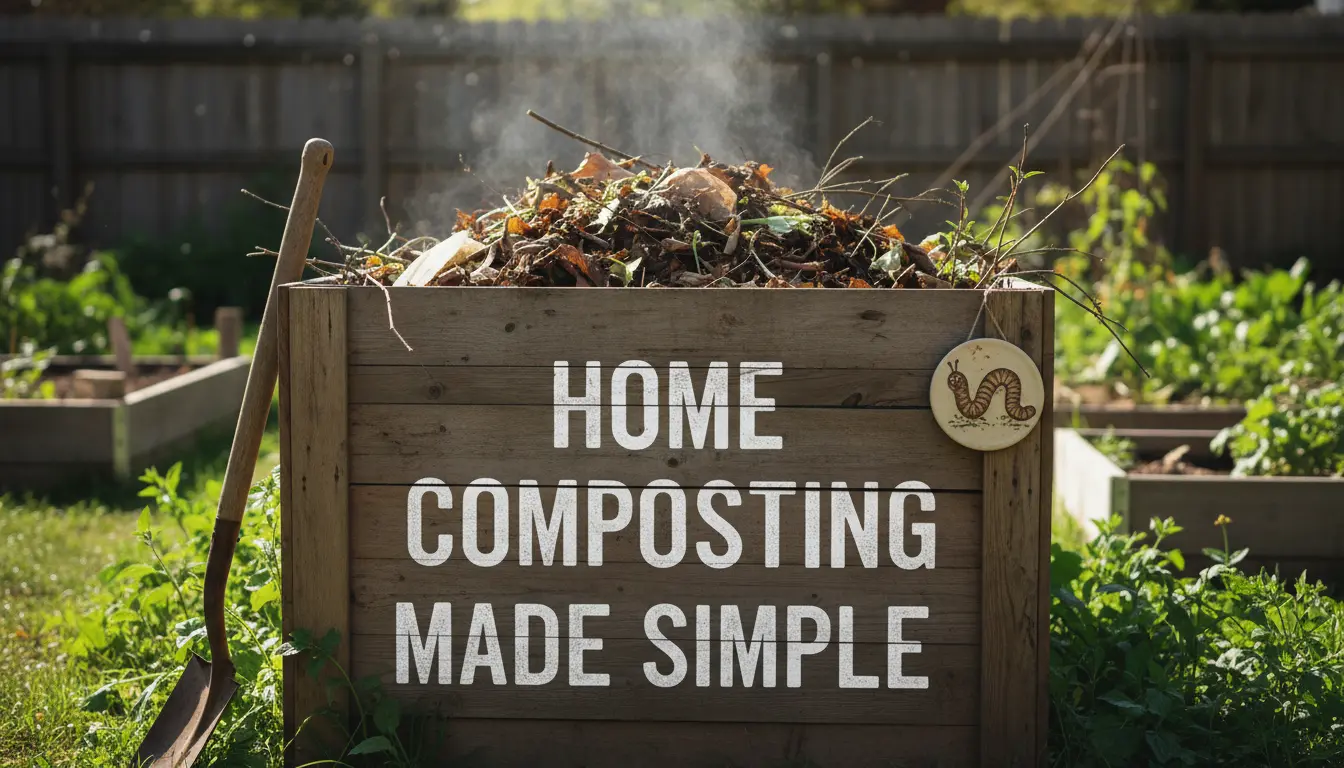
Getting Started with Home Composting
Home composting turns kitchen and yard waste into a useful soil amendment. This guide covers practical steps so beginners can set up and maintain a successful compost system.
Why Choose Home Composting
Composting reduces landfill waste and creates nutrient-rich compost for plants. It also saves money on soil conditioners and improves garden soil structure.
Basic Principles of Home Composting
Home composting relies on a balance of carbon and nitrogen, moisture, and aeration. Aim for a mix of “browns” (carbon) and “greens” (nitrogen) to support decomposition.
Key Components for Home Composting
- Browns: dry leaves, shredded paper, cardboard.
- Greens: vegetable scraps, coffee grounds, grass clippings.
- Air: occasional turning to supply oxygen.
- Water: damp but not soggy, like a wrung-out sponge.
Choosing a Compost Bin for Home Composting
Select a container that fits your space and composting goals. Options include tumblers, stationary bins, and open piles for larger yards.
Bin Options and Why They Work
- Tumbler: fast, contained, easy to turn; good for small patios or balconies.
- Stationary bin: low cost and simple; suits medium yards.
- Open pile: best for large gardens; needs more space and management.
Step-by-Step Setup for Home Composting
Setting up a home compost system is simple and quick. Follow these steps to start turning waste into compost.
- Pick a bin and location: choose a level, partially shaded spot with good drainage.
- Layer materials: start with coarse browns on the bottom for airflow.
- Add greens and browns: keep roughly a 3:1 ratio of browns to greens by volume.
- Maintain moisture: water lightly when layers feel dry.
- Turn occasionally: mix every 1–2 weeks to introduce oxygen and speed decomposition.
What You Can and Cannot Compost at Home
Knowing what to add avoids pests and odors. Keep a short list near your bin as a reminder.
Safe Items for Home Composting
- Fruit and vegetable scraps
- Coffee grounds and filters
- Eggshells (crushed)
- Yard waste like grass clippings and leaves
- Shredded paper and cardboard
Items to Avoid in a Home Compost Bin
- Meat, fish, and dairy (attract pests)
- Oily foods and greasy cardboard
- Diseased plants or invasive weeds with seeds
- Pet feces from carnivores
Troubleshooting Common Home Composting Problems
Most issues relate to balance or aeration. Simple fixes usually solve the problem quickly.
- Bad smell: add dry browns and turn more often to increase airflow.
- Too dry: add water and green materials to rehydrate the pile.
- Slow decomposition: chop materials smaller and maintain a better brown:green ratio.
- Pests: avoid adding meat and bury food scraps under brown layers.
Home composting can reduce household waste by up to 30 percent. Even small urban compost systems can divert significant organic matter from landfills.
Using Finished Compost in Your Garden
Finished compost looks dark, crumbly, and earthy. It can be used as a top dressing, soil amendment, or mixed into potting soil.
Apply a thin layer around plants or mix 10–30 percent compost into garden beds to improve soil fertility and water retention.
Small Real-World Case Study
Case study: Sarah, an apartment dweller, started a 35-liter tumbler on her balcony. She added food scraps and shredded paper, turning the tumbler twice a week.
In six months she produced about 20 liters of usable compost. She used it to pot herbs and noticed healthier growth and reduced need for store-bought soil mixes.
Tips to Keep Home Composting Simple
- Keep a small counter bucket with a lid to collect scraps and prevent odors.
- Chop or shred material to speed breakdown.
- Record turns and moisture checks in a simple notebook or app.
- Start small and scale up as you gain confidence.
Final Checklist for Home Composting Beginners
- Choose the right bin for your space.
- Balance browns and greens and maintain moisture.
- Avoid problem items that attract pests.
- Turn and monitor your compost regularly.
With a small investment of time and a basic setup, home composting quickly becomes a routine that benefits your garden and the environment. Start with one bin and adjust your process as you learn what works best for your home.