
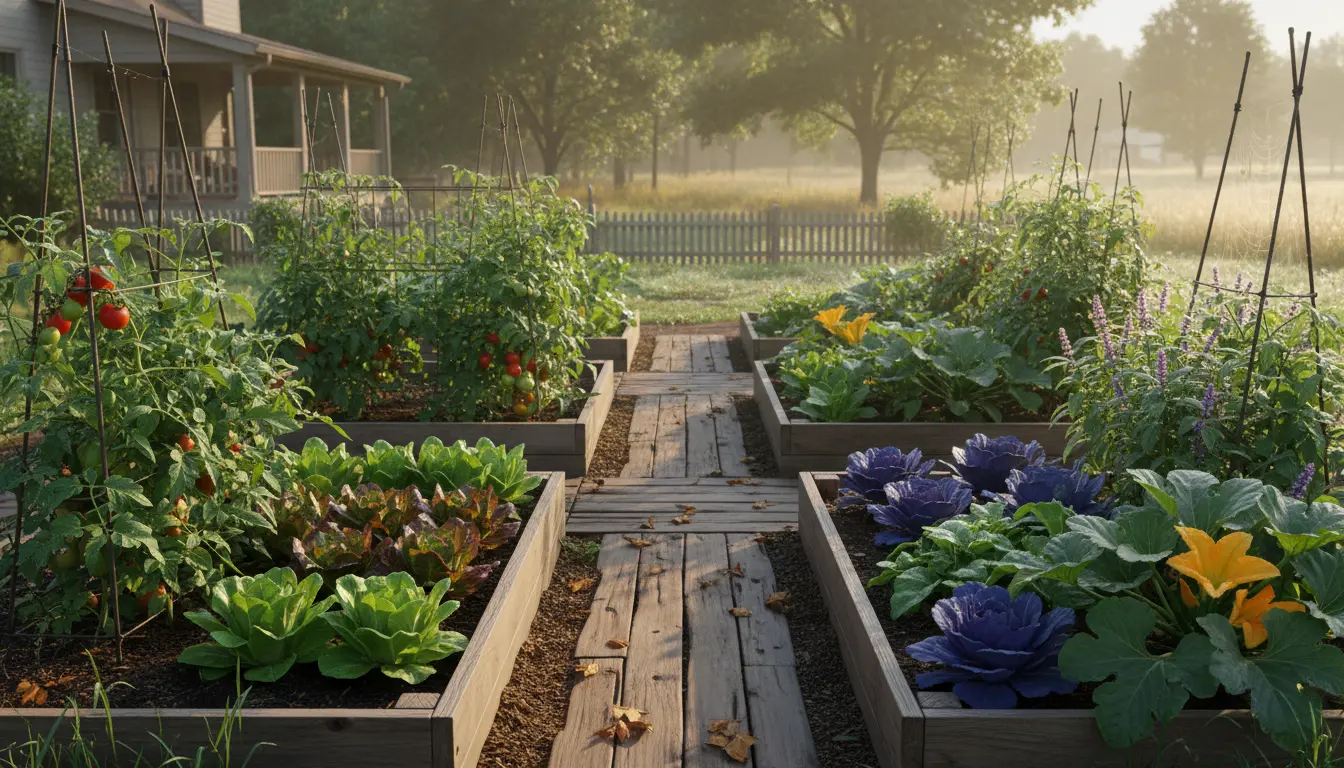
Overview of starting a vegetable garden
Starting a vegetable garden is a practical way to grow fresh food and learn how plants respond to local conditions. This guide covers planning, soil preparation, planting, care, and troubleshooting so you can start a productive garden with confidence.
Planning your vegetable garden
Good planning reduces wasted time and increases yields. Pick a location with at least 6 hours of daily sun and easy access to water.
Decide on size based on time and space. A 4×8 foot raised bed is a manageable starter area for most beginners.
Choosing crops for your vegetable garden
Select vegetables suited to your climate and season. Beginners usually have success with lettuce, radishes, tomatoes, beans, and herbs.
Consider these factors when choosing crops:
- Growing season length and frost dates
- Space and vertical options (trellises for peas and beans)
- Daily maintenance needs like staking and harvesting
Preparing soil for a vegetable garden
Soil quality determines long-term success more than any other single factor. Start by testing pH and basic nutrients using a home test kit.
Most vegetables prefer a pH between 6.0 and 7.0. If your soil is outside that range, amend it based on test results.
Improving soil structure and fertility
Incorporate organic matter like compost or well-rotted manure to improve drainage and nutrient content. Aim for 2–4 inches of compost tilled into the top 6–8 inches of soil.
Use these simple steps to improve poor soil:
- Add 3–4 inches of compost to clay or sandy soils.
- Mulch with straw or leaves to reduce evaporation and suppress weeds.
- Use cover crops in off-season to rebuild organic matter and reduce erosion.
Planting and spacing in a vegetable garden
Correct spacing prevents disease and maximizes light. Follow seed packet or plant tag spacing recommendations closely.
Group plants with similar water and light needs together. Use companion planting to deter pests and improve growth where practical.
Planting examples for a small garden
- Tomatoes: 24–36 inches apart, stake or cage each plant.
- Lettuce: 6–8 inches apart in rows or blocks for easier harvesting.
- Beans: 2–3 inches apart for bush types; 4–6 inches with trellis for pole types.
Watering and maintenance for a vegetable garden
Consistent watering is crucial for uniform growth and reliable harvests. Water deeply and less frequently rather than shallow daily watering.
Install a drip irrigation or soaker hose to deliver water at the base of plants and reduce leaf wetness that spreads disease.
Regular maintenance tasks
- Weeding: Remove weeds weekly to reduce competition for nutrients.
- Mulching: Keep a 2–3 inch mulch layer to conserve moisture and cool roots.
- Fertilizing: Side-dress with compost or a balanced organic fertilizer mid-season if growth slows.
Common problems and solutions in a vegetable garden
Pests, diseases, and nutrient deficiencies are common but manageable. Early detection reduces crop loss.
Use integrated pest management: monitor, choose resistant varieties, and use physical barriers or targeted organic controls where necessary.
Troubleshooting quick tips
- Yellowing leaves: Check soil moisture and consider a nitrogen deficiency.
- Stunted plants: Test soil for compaction and low fertility.
- Holes in leaves: Look for slugs, caterpillars, or beetles and handpick or use traps.
Planting in blocks rather than single rows can increase yields by improving pollination and reducing wind damage. Blocks also make efficient use of space and reduce pathways that encourage weeds.
Small case study: A 3-month balcony vegetable garden
Sarah, a city renter, used three 12-inch containers and a railing planter to grow salad greens and cherry tomatoes. She averaged daily 15 minutes of care, watering with a can and harvesting weekly.
Results: Within three months she harvested multiple salads per week, saved money on produce, and improved her understanding of local microclimate. Key wins were choosing compact varieties and using liquid fertilizer every two weeks.
Seasonal timeline for a vegetable garden
Follow a simple seasonal checklist to keep tasks manageable and timely. Plan seed starting, transplanting, and harvest windows around local frost dates.
- Early spring: Test soil, start cool-season seeds, prepare beds.
- Late spring: Transplant warm-season crops after last frost.
- Summer: Maintain watering, staking, and pest control.
- Fall: Harvest, plant cover crops, and add compost for winter.
Final tips for a productive vegetable garden
Start small, learn from each season, and adjust plant choices based on what worked. Keep a simple garden journal with planting dates, varieties, and harvest notes.
Enjoy the process: gardening is a practical skill that improves with hands-on experience.