
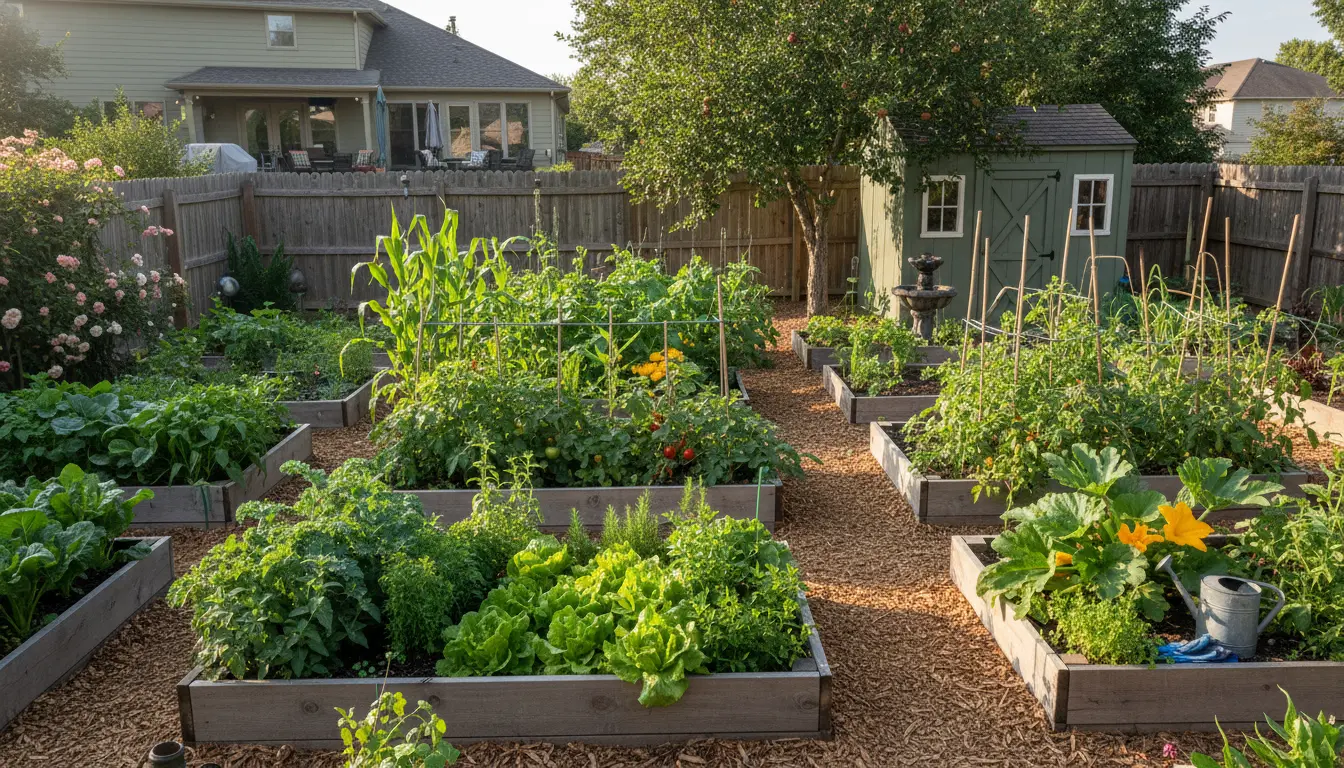
Why a Home Vegetable Garden?
Growing vegetables at home saves money, improves food freshness, and gives you control over how food is produced. A small garden can supply herbs and salad greens, while a larger one can produce tomatoes, beans, and root crops for months.
This guide explains practical steps to start a home vegetable garden, with clear actions and simple tips you can use right away.
Plan Your Garden: Choose Site and Size
Pick a sunny spot that gets at least 6 hours of direct sun daily. If sun is limited, select crops that tolerate partial shade like leafy greens and peas.
Decide on garden size based on time and space. Beginners often start with one or two raised beds or a few containers on a balcony.
- Full sun: most vegetables (tomatoes, peppers, cucumbers)
- Partial shade: lettuce, spinach, arugula
- Container-friendly: herbs, cherry tomatoes, bush beans
Prepare Soil for a Healthy Home Vegetable Garden
Good soil is the foundation of a productive garden. Test soil if possible, or improve it by adding organic matter.
For beds and containers, use a mix of topsoil, compost, and coarse sand or perlite for drainage.
- Aim for loose, crumbly soil that holds moisture but drains well.
- Add 2 to 3 inches of compost each season to maintain fertility.
Soil Steps
- Clear weeds and debris from the site.
- Loosen soil to 8–12 inches depth for most vegetables.
- Work in compost and a balanced organic fertilizer if needed.
Choose Vegetables Based on Climate and Season
Select plants suited to your USDA hardiness zone or local climate. Cool-season crops grow in spring and fall, while warm-season crops need summer heat.
Beginner-friendly vegetables include tomatoes, lettuce, radishes, bush beans, and herbs like basil and parsley.
Examples of Easy Crops
- Leafy greens: fast-growing and harvestable multiple times
- Radishes: mature in 3–4 weeks
- Bush beans: low maintenance and productive
- Tomatoes: need staking but reward with high yield
Start Seeds or Buy Seedlings
Starting from seed is cheaper and gives more variety, but seedlings (transplants) are faster for beginners. Follow seed packet instructions for planting depth and spacing.
Label rows or containers to avoid confusion, and keep seedlings protected from late frosts and pests.
Watering and Maintenance for a Successful Home Vegetable Garden
Consistent watering matters more than frequent shallow watering. Aim for deep, less frequent watering to encourage strong roots.
- Water early morning to reduce evaporation and disease risk.
- Use mulch to retain moisture and suppress weeds.
- Monitor for pests and remove damaged leaves promptly.
Watering Schedule Example
Young seedlings: light daily moisture. Established plants: 1–2 times per week depending on heat and soil.
Common Pest and Disease Tips
Integrated pest management (IPM) keeps problems small. Start with cultural controls like crop rotation, cleanliness, and proper spacing.
- Inspect plants weekly for insects or signs of disease.
- Use row covers for early-season insect protection.
- Handpick slugs or use traps if needed.
Succession Planting and Harvesting
To keep a steady supply, practice succession planting: sow small batches of seeds every few weeks for crops like lettuce, radishes, and beans.
Harvest frequently to encourage more production and to use what you grow while freshest.
Small Real-World Case Study
Case Study: A suburban family converted two 4×8 raised beds into a productive space. In the first year they planted tomatoes, bush beans, lettuce, and herbs. By rotating crops and adding compost each season, they harvested salads weekly from May to October and canned 20 jars of tomatoes.
What worked: raised beds improved drainage, staking tomatoes saved space, and succession planting filled gaps after early crops finished.
Simple Tools and Supplies
You don’t need expensive gear. A basic set of tools keeps work efficient and comfortable.
- Hand trowel and fork
- Watering can or hose with nozzle
- Pruners and gloves
- Compost or good-quality potting mix
Final Checklist to Start a Vegetable Garden
- Choose a sunny site and pick a manageable size.
- Prepare soil and add compost.
- Select easy crops for your season and space.
- Plant seeds or seedlings and label them.
- Water deeply, mulch, and monitor pests weekly.
Starting a home vegetable garden is a step-by-step process that rewards planning and simple maintenance. Begin small, learn from each season, and expand as you gain confidence.