
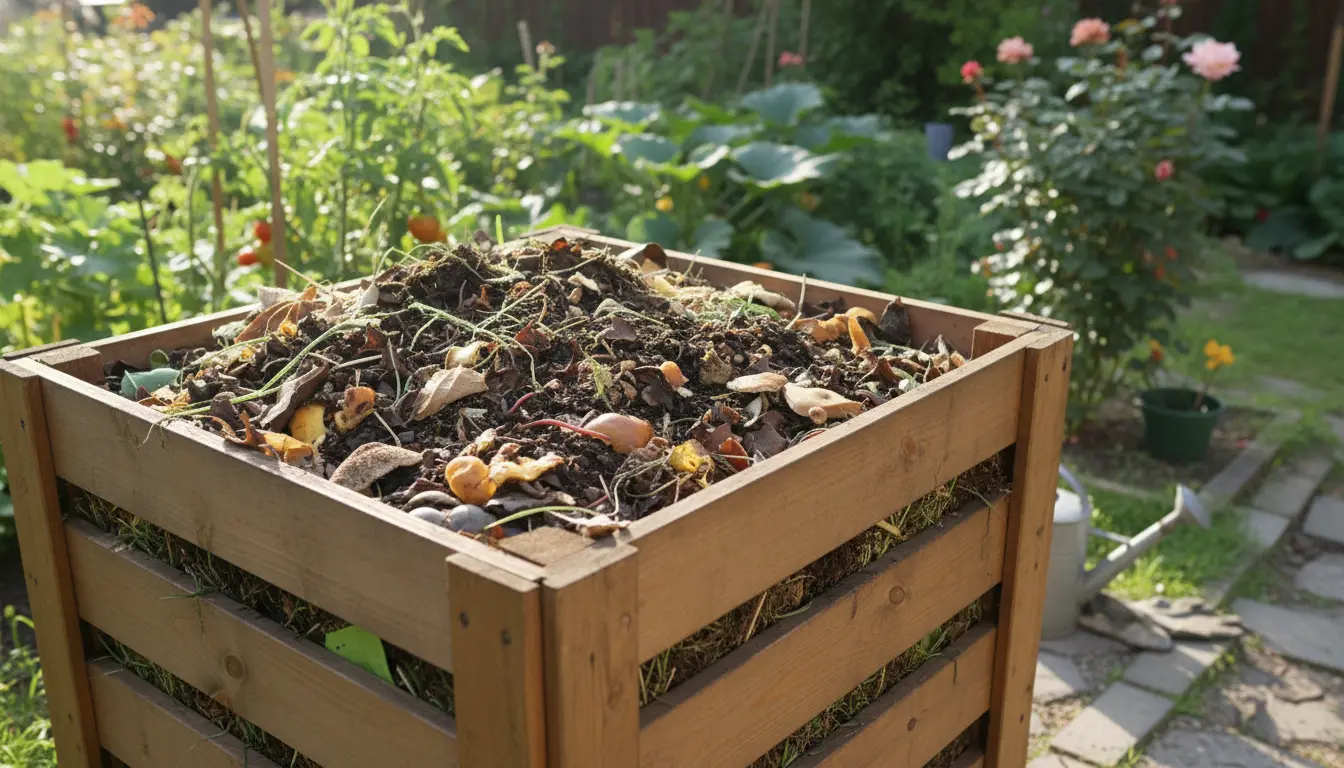
Why Home Composting Matters
Home composting reduces household waste and creates nutrient-rich material for gardens. It cuts landfill volume and lowers methane emissions from organic waste.
For beginners, composting is a practical, low-cost way to improve soil and reduce trash. The process relies on basic biology: microbes break down organic matter into compost.
How to Start Home Composting
Starting home composting requires a bin, a mix of materials, and basic maintenance. Follow the steps below to set up a simple, reliable system.
Choose a Container for Home Composting
Select a bin that fits your space and budget. Options include a tumbler, a wooden or wire bin, or a simple heap if you have a yard.
Consider these points when choosing a container:
- Size: 3x3x3 feet is a common recommended minimum for stable heat.
- Access: Make sure you can add materials and remove finished compost easily.
- Aeration: Bins with ventilation help speed decomposition.
Pick a Spot and Prepare the Base
Place the bin on soil or grass to allow worms and organisms to enter. A shaded location reduces moisture loss and extreme temperatures.
Ensure easy access for turning and adding materials. Avoid placing it too close to doors or neighbors if odor control is a concern.
What to Compost: Greens and Browns
Balance “greens” (nitrogen-rich) and “browns” (carbon-rich). A good rule is roughly 2 parts browns to 1 part greens by volume.
- Greens: vegetable scraps, coffee grounds, fresh grass clippings.
- Browns: dry leaves, straw, shredded paper, cardboard.
Avoid meats, dairy, oily foods, and diseased plants to prevent pests and odors.
Moisture, Aeration, and Turning
Keep the pile as damp as a wrung-out sponge. Too dry slows decomposition; too wet causes odor.
Turn or mix the pile every 1–2 weeks to supply oxygen. Aeration helps microbes work faster and prevents anaerobic smells.
Troubleshooting Common Home Composting Problems
Beginners often encounter odors, slow breakdown, or pests. These issues are usually simple to fix with adjustments to balance and aeration.
Problem: Bad Smell
Cause: too much moisture or too many greens. Solution: add browns, mix the pile, and improve drainage.
Problem: Slow Decomposition
Cause: pile is too cold, too dry, or lacks nitrogen. Solution: add water, more greens, and increase turning frequency.
Problem: Pests or Rodents
Cause: food scraps like meat or dairy. Solution: remove offending items, bury scraps in the center, or use a closed bin or tumbler.
Maintenance Schedule for Home Composting
Keep maintenance simple with a few routine tasks that take minutes each week. A steady schedule improves results without much effort.
- Weekly: Add kitchen scraps and a handful of browns. Turn the pile if possible.
- Monthly: Check moisture and adjust. Break up large clumps to improve airflow.
- Every 2–3 months: Harvest finished compost from the bottom or side of the bin.
Compost can reduce your household waste volume by up to 30 percent and return nutrients to soil without chemical fertilizers.
Small Real-World Example
Case study: A two-person household started a backyard tumbler in spring. They collected kitchen scraps in a counter caddy and added dry leaves weekly.
After four months of turning and monitoring moisture, they produced usable compost for container plants and cut their food waste by over half. They reported fewer grocery bag odors and healthier potted herbs.
Practical Tips and Examples
Use these simple tips to keep home composting effective and low-effort.
- Save eggshells in a small mesh bag to add calcium without attracting pests.
- Shred cardboard and paper to speed carbon layering.
- Mix grass clippings with leaves to prevent matting and improve airflow.
When Is Compost Ready?
Finished compost is dark, crumbly, and smells earthy. It typically takes 2–6 months depending on materials and care.
Use finished compost as a soil topper, mix it into potting soil, or add it to garden beds to improve structure and fertility.
Conclusion: Keep It Simple and Consistent
Home composting for beginners succeeds with a few basics: the right bin, a balance of greens and browns, adequate moisture, and occasional turning. Small, consistent actions yield rich compost and less waste.
Start small, observe results, and adjust as needed. Composting is a practical habit that benefits both your garden and the environment.