
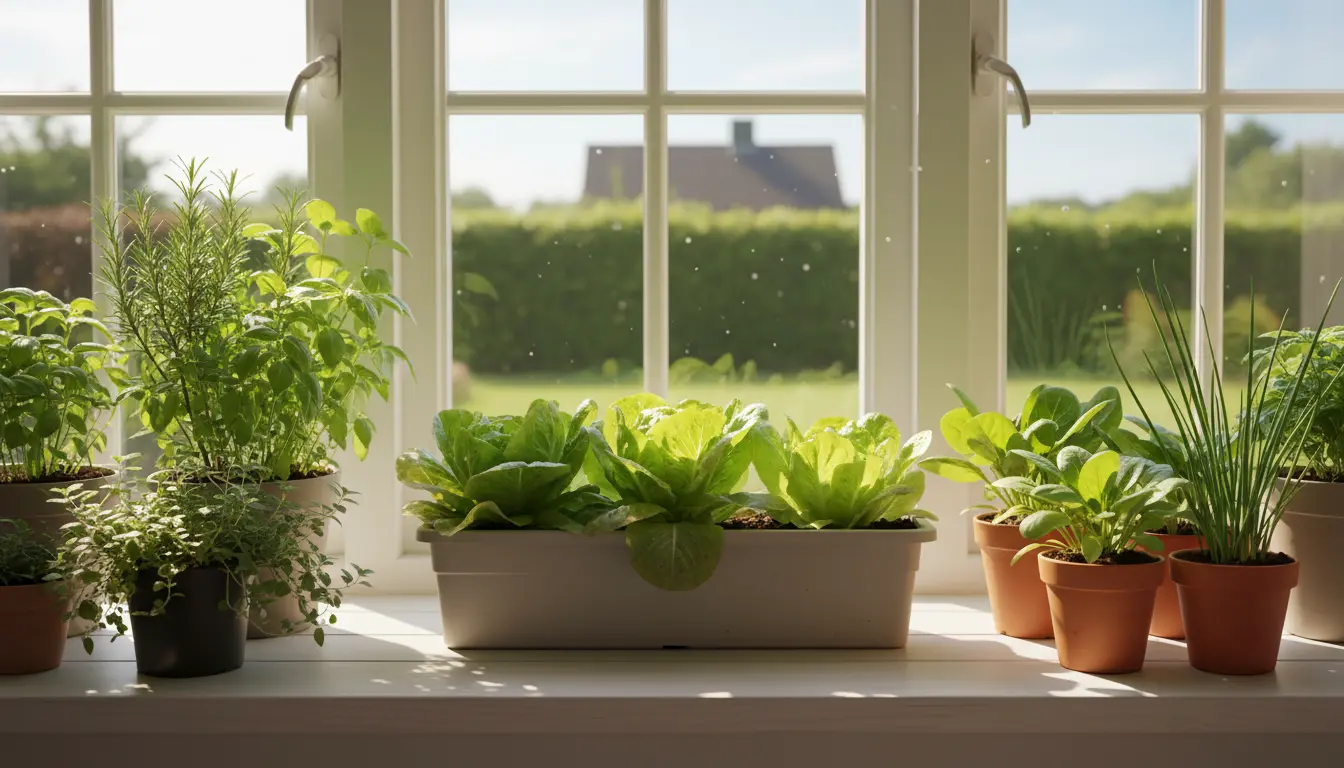
Overview of an Indoor Vegetable Garden
An indoor vegetable garden lets you grow fresh produce year-round in a small space. This guide gives practical steps for planning, planting, and keeping an indoor vegetable garden productive.
Why Choose an Indoor Vegetable Garden
Growing vegetables indoors reduces grocery trips and gives you control over pests and weather. It is ideal for apartments, cold climates, or anyone wanting a steady supply of herbs and salad greens.
Planning Your Indoor Vegetable Garden
Good planning saves time and money. Start by assessing light, space, and your goals for harvest frequency and types of vegetables.
Assess Light and Space
Measure how many hours of direct and indirect light your chosen area gets each day. Most leafy vegetables need 8–12 hours of bright light; fruiting plants need more consistent light.
Decide on one of these common layouts: a sunny windowsill, a countertop grow station, a multi-tier shelf with grow lights, or a small floor arrangement with containers.
Choose Vegetables for Indoor Growth
Select plants suited to containers and indoor conditions. Favor quick-growing and compact varieties for best success.
- Leafy greens: lettuce, spinach, arugula
- Herbs: basil, chives, parsley, cilantro
- Compact fruiting: cherry tomatoes, dwarf peppers
- Root crops: radishes, baby carrots (in deep pots)
Lighting for an Indoor Vegetable Garden
Light is the single most important factor for indoor vegetable success. Most homes lack enough natural light for productive vegetable growth.
Types of Grow Lights
LED grow lights are energy-efficient and provide the full light spectrum plants need. Fluorescent lights can work for seedlings and leafy greens but may be less efficient for larger setups.
Position lights 6–12 inches above plants for seedlings and 12–24 inches for mature plants. Use timers to provide consistent light cycles.
Soil, Containers, and Watering
Healthy soil and the right container size improve yields and reduce maintenance. Use container mixes designed for vegetables, not garden soil.
Container Guidelines
- Leafy greens and herbs: 6–8 inch deep containers
- Tomatoes and peppers: 5–10 gallon containers
- Root vegetables: deep pots (8–12 inches)
Ensure containers have drainage holes and use saucers to protect indoor surfaces.
Watering Practices
Water when the top inch of soil feels dry. Overwatering is a common issue that leads to root rot. Consider self-watering pots or a simple wick system for consistent moisture.
Fertilizing and Soil Health
Indoor plants rely on you for nutrients. Use a balanced liquid fertilizer on a schedule or a slow-release granular fertilizer mixed into the potting mix.
Follow label rates to avoid nutrient burn. Rotate potted plants and replace the top 1–2 inches of soil each season to prevent salt buildup.
Pest Control and Maintenance
Pests can appear even indoors. Regular inspection and early action keep infestations manageable.
- Inspect leaves weekly for aphids, whiteflies, or mites.
- Use neem oil or insecticidal soap for small infestations.
- Maintain airflow with a small fan to reduce fungal issues.
Prune spent leaves and harvest regularly to encourage new growth and prevent overcrowding.
Did You Know?
Many common herbs such as basil and chives can produce usable harvests within 4–6 weeks from seed when grown indoors under proper light.
Small Real-World Example
Case study: Maria, an apartment resident in Portland, set up a three-tier shelf with LED lights by a north-facing window. She grew basil, lettuce, and a dwarf cherry tomato variety in 6–10 inch containers.
In three months she harvested a steady supply of salad greens and basil, reducing her grocery herb purchases by about 60%. Minimal space and modest lighting costs made the setup pay back in reduced food spending and fresh meals.
Seasonal Tips for an Indoor Vegetable Garden
Rotate crops to maintain soil health and avoid continuous planting of one species in the same container. Seedlings started in late winter can provide early spring harvests when outdoor gardening is not yet possible.
Keep a planting calendar and label containers with sow and harvest dates to track performance.
Simple Troubleshooting for Common Problems
Yellowing leaves often indicate overwatering or nutrient deficiency. Slow growth usually points to insufficient light.
- If leaves are limp and discolored, check drainage and reduce watering.
- If plants become leggy, increase light intensity or move lights closer.
- If pests persist, isolate affected plants and treat with safe, plant-friendly controls.
Quick Checklist to Start Your Indoor Vegetable Garden
- Choose a sunny spot or install LED grow lights.
- Select compact, quick-growing vegetables and herbs.
- Use quality potting mix and containers with drainage.
- Set a watering and fertilizing schedule.
- Inspect plants weekly for pests and prune as needed.
Starting an indoor vegetable garden is practical and rewarding. With proper light, the right containers, and consistent care, even small indoor spaces can yield fresh produce and herbs year-round.