
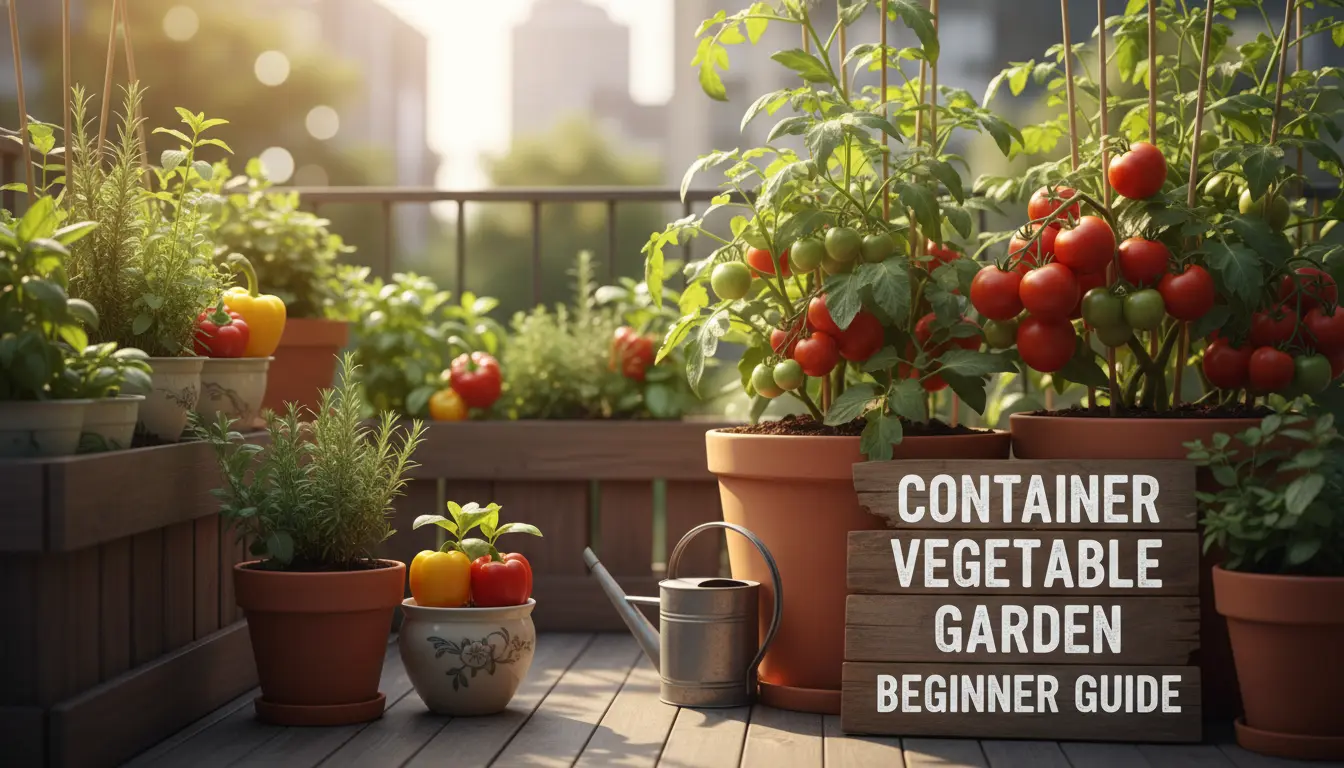
Why Choose a Container Vegetable Garden
Container vegetable gardens let you grow fresh produce in small spaces like balconies, patios, or narrow yards. They are easier to manage for watering, soil control, and pest prevention than in-ground beds.
This guide explains practical, step-by-step actions to start a container vegetable garden and get predictable results in the first season.
Choose Containers and Soil for a Container Vegetable Garden
Container size and materials
Select containers based on the plants you want to grow. Small herbs need pots 4–8 inches across, while tomatoes and peppers require 12–20 inch pots or larger.
Use containers with drainage holes and sturdy materials like plastic, wood, or glazed ceramic. Lightweight options are best for balconies where weight matters.
Soil mix for healthy vegetables
Use a high-quality potting mix, not garden soil. Potting mixes provide drainage and aeration that container-grown roots need.
- Choose mixes labeled for containers or vegetables.
- Add compost for nutrients and water retention.
- Mix in slow-release fertilizer or plan to feed regularly.
Plants in containers dry out up to three times faster than plants in the ground. Daily checks in hot weather can prevent stress and blossom drop.
Best Vegetables for Container Gardens
Some vegetables thrive in containers and are ideal for beginners. Choose varieties marked “bush” or “compact” for smaller spaces.
- Tomatoes (bush or patio varieties)
- Peppers (bell and hot peppers)
- Leafy greens (lettuce, spinach, arugula)
- Herbs (basil, parsley, chives)
- Root crops (radishes, baby carrots in deep pots)
Quick-growing options
Radishes, baby leaf lettuce, and herbs often provide harvests within a few weeks, keeping motivation high for new gardeners.
Planting, Watering, and Care
Planting steps
Fill containers with potting mix to within 1–2 inches of the rim. Plant seedlings at the same depth they were in their nursery pots.
Firm the soil gently and water thoroughly to settle roots and remove air pockets.
Watering routine
Set a consistent watering schedule based on pot size and weather. Smaller pots may need daily watering in summer; larger pots can be watered every 2–3 days.
- Check moisture by inserting a finger 1–2 inches into the soil.
- Water until you see water draining from the bottom.
- Consider self-watering containers or drip lines for hands-off care.
Fertilizing and pruning
Feed vegetables with a balanced liquid fertilizer every 2–4 weeks, or follow the instructions on a slow-release product. Overfeeding can harm plants, so follow package rates.
Pinch back leggy herbs and remove yellowing leaves to maintain airflow and reduce disease risk.
Common Problems and Solutions for Container Vegetable Gardens
Containers can present specific challenges like rapid drying, nutrient depletion, and root crowding. Watch plants daily for early signs of stress.
- Disease: Improve airflow, avoid overhead watering, and remove affected leaves.
- Pests: Handpick insects, use insecticidal soap, or introduce beneficial insects for control.
- Poor growth: Check drainage and refresh topsoil or repot if roots are circling.
Case Study: Balcony Tomato Success
Maria, an apartment dweller, grew cherry tomatoes on a south-facing balcony in three 18-inch pots. She used a potting mix with compost and a slow-release fertilizer.
By watering every other day and supporting plants with stakes, she harvested fruit in 10 weeks. Regular pruning and feeding reduced disease and improved airflow.
Result: Six healthy plants produced over 40 pints of cherry tomatoes across a single season, proving that limited space can yield abundant produce with consistent care.
Practical Checklist to Start Your Container Vegetable Garden
- Select location with 6+ hours of sun for most vegetables.
- Pick appropriate container sizes and ensure drainage.
- Buy quality potting mix and compost.
- Choose compact or bush varieties for small spaces.
- Establish a watering and feeding routine.
- Plan for support like stakes or cages for heavy plants.
Final Tips for a Successful Container Vegetable Garden
Start small to learn microclimate and sun patterns around your space. One or two types of vegetables let you master care routines before expanding.
Keep a quick journal of watering, feeding, and pests; small notes help refine timing and improve yields in the next season.
With the right containers, soil, and consistent care, a container vegetable garden can supply fresh flavors and bright color to any small space.