
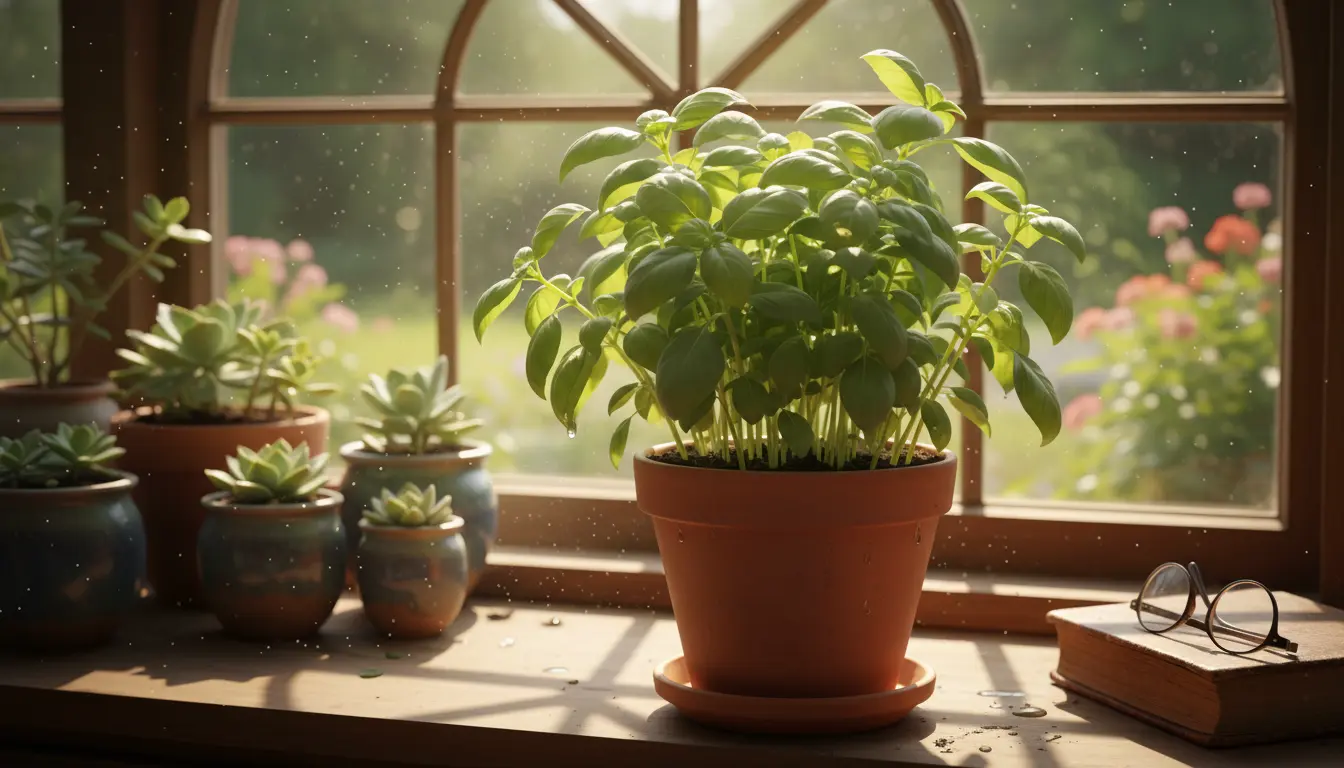
Basil is one of the easiest culinary herbs to grow inside, but success depends on light, soil, and simple care routines. This guide explains how to grow basil indoors with step-by-step, practical advice you can use today.
Why grow basil indoors
Growing basil indoors gives you fresh leaves year-round and keeps herbs close to the kitchen. Indoors you avoid many outdoor pests and can control light, water, and temperature more reliably.
Choosing basil varieties for indoor growing
Not all basil types perform equally inside. Choose compact varieties that tolerate container life and limited vertical space.
Best varieties to grow basil indoors
- Genovese basil – classic flavor, great for pots.
- Thai basil – compact and heat tolerant with a licorice note.
- Greek basil – small leaves and a bushy habit ideal for windowsills.
- Lemon basil – aromatic and stays relatively compact.
How to grow basil indoors: Light and location
Basil needs strong light to stay compact and flavorful. Place plants where they get 6–8 hours of bright light or use supplemental grow lights.
Options for location include a south- or west-facing windowsill or a spot under LED grow lights. Rotate pots weekly for even growth.
Soil, pot selection, and watering to grow basil indoors
Use a well-draining potting mix designed for containers rather than garden soil. Choose pots with drainage holes and a 6–8 inch diameter for one basil plant.
Potting mix recipe
Mix equal parts high-quality potting soil, perlite, and compost for good drainage and steady nutrients. Avoid heavy mixes that retain too much water.
Watering is critical: water when the top 1 inch of soil is dry. Water thoroughly until it drains from the bottom, then let excess flow away to prevent root rot.
Feeding, pruning, and harvesting when you grow basil indoors
Feed basil every 3–4 weeks with a balanced liquid fertilizer at half strength to support steady growth. Too much nitrogen can reduce flavor, so avoid heavy feeding.
Regular pruning encourages bushy growth. Pinch or cut stems above a node once the plant has 4–6 true leaves to promote branching.
How to harvest basil indoors
- Harvest no more than one-third of the plant at a time to avoid stress.
- Pick from the top to keep the plant compact and productive.
- Use scissors and make clean cuts to reduce disease risk.
Pests and disease management when you grow basil indoors
Indoor basil faces fewer pests, but you may still see aphids, whiteflies, or fungus gnats. Inspect plants weekly and act early to prevent infestations.
Control tips include wiping leaves, using a gentle insecticidal soap, and fixing overwatering to reduce gnat problems. Good air circulation helps prevent fungal issues.
Troubleshooting common problems while you grow basil indoors
- Leggy stems: usually a sign of insufficient light; move plant to a brighter spot or add grow lights.
- Yellow leaves: often from overwatering or poor drainage; check soil and pot drainage.
- Slow growth: low light, low temperature, or lack of nutrients—adjust conditions and fertilize lightly.
Case Study: Small Apartment Basil Setup
A renter in a one-bedroom apartment used a 6-inch pot with Genovese basil on a south-facing windowsill and an 18W LED grow light. They started from seedlings and watered when the top inch dried.
Within five weeks the plant was large enough for weekly harvesting, producing enough leaves for pesto and salads. Adding a monthly half-strength fertilizer kept the flavor strong without excessive leaf growth.
Quick checklist to grow basil indoors
- Choose a compact basil variety such as Genovese or Greek basil.
- Provide 6–8 hours of bright light or use an LED grow light.
- Use a well-draining potting mix and a pot with drainage holes.
- Water only when the top inch of soil is dry and avoid waterlogging.
- Prune regularly to encourage bushy growth and harvest sensibly.
- Monitor for pests and treat early with non-toxic methods.
Final tips for those who want to grow basil indoors
Start with one or two plants to learn their needs before expanding. Keep records of light hours, watering frequency, and fertilizer use to fine-tune care for your environment.
Growing basil indoors is a low-cost way to always have fresh herbs on hand. With the right light, soil, and routine pruning, you can enjoy flavorful basil year-round.