
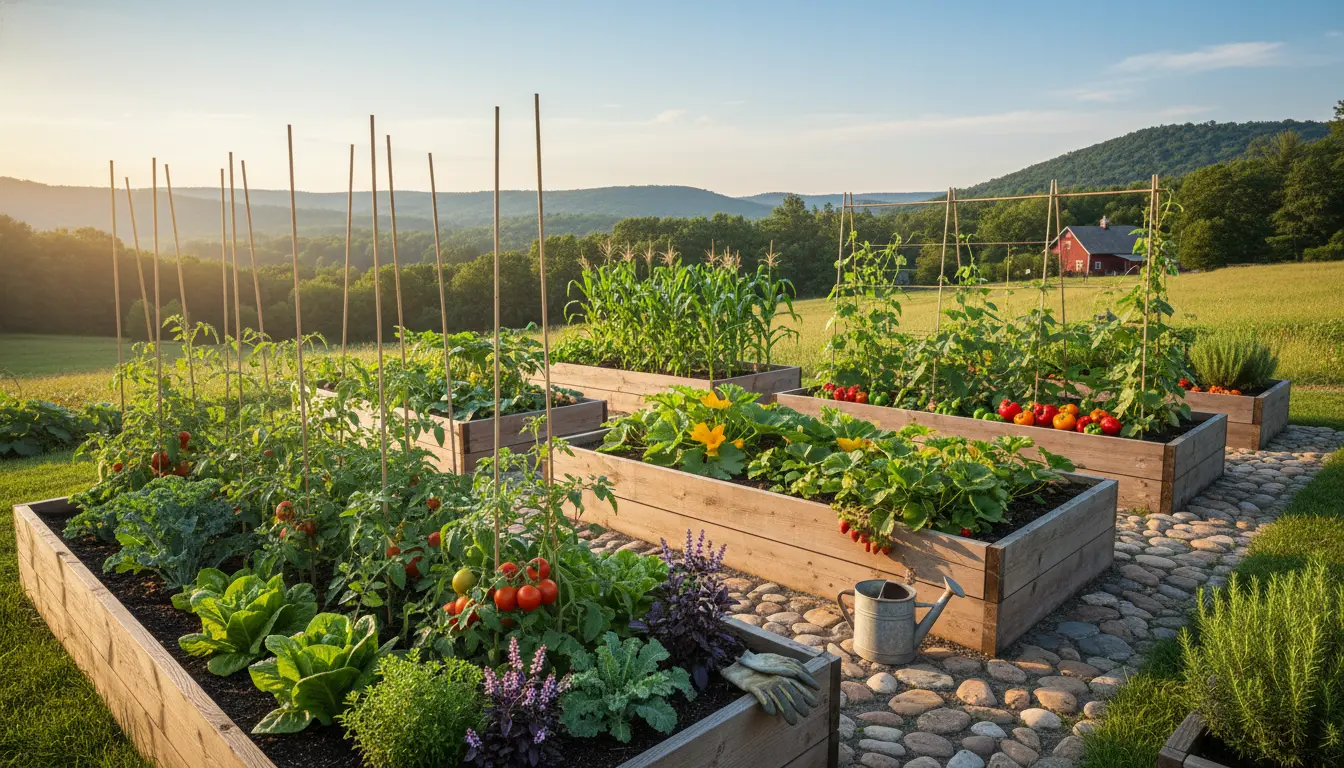
Starting a vegetable garden is straightforward when you follow practical steps and focus on the basics. This guide walks you through site selection, soil preparation, planting, maintenance, and harvesting. Use these instructions to plan a garden that fits your space and time.
Choose the Right Site to Start a Vegetable Garden
Pick a location that gets at least 6 hours of direct sunlight per day. Most vegetables need full sun for best yields.
Consider access to water, good drainage, and proximity to your house. A site near a tap or rain barrel makes daily care easier.
Site checklist
- Sun exposure: 6–8 hours preferred
- Flat or gently sloped ground with good drainage
- Access to a water source
- Away from large tree roots and heavy shade
Prepare Soil Before You Start a Vegetable Garden
Soil is the foundation of a productive vegetable garden. Test the soil pH with a kit or lab; most vegetables prefer pH 6.0–7.0.
Loosen compacted soil and add organic matter. Compost and aged manure improve texture and fertility.
Basic soil preparation steps
- Clear weeds and debris from the area.
- Loosen soil to 12 inches with a fork or tiller.
- Work in 2–4 inches of compost or composted manure.
- Rake level and water to check drainage.
Decide on Beds, Rows, or Containers to Start a Vegetable Garden
Choose a layout that matches your space and mobility. Raised beds, in-ground rows, and containers each have pros and cons.
When to pick each option
- Raised beds: Better drainage, warmer soil, easier access.
- In-ground rows: Good for large areas and root crops.
- Containers: Ideal for patios, small spaces, and control over soil.
Choose Vegetables and Planting Times
Select vegetables suited to your climate zone and the season. Begin with easy crops like lettuce, radish, beans, tomatoes, and herbs.
Use seeds or seedlings. Seeds are cheaper; seedlings give a head start for shorter seasons.
Example planting plan for a small garden
- Spring: Peas, radishes, lettuce, spinach
- Late spring to summer: Tomatoes, peppers, basil
- Summer: Beans, cucumbers, squash
- Fall: Kale, broccoli, carrots
Watering and Fertilizing When You Start a Vegetable Garden
Water deeply and less frequently to encourage strong roots. Aim for 1–1.5 inches per week, adjusted for rainfall.
Apply a balanced fertilizer or slow-release organic fertilizer at planting and mid-season according to product rates.
Watering tips
- Water at the base of plants to reduce diseases.
- Use mulch to conserve moisture and suppress weeds.
- Morning watering reduces evaporation and fungal risk.
Pest and Disease Management
Monitor plants weekly for pests and signs of disease. Early detection prevents large problems.
Use integrated pest management: hand-pick pests, use row covers, introduce beneficial insects, and apply organic treatments if needed.
Common problems and simple fixes
- Aphids: Spray with water or use insecticidal soap.
- Slugs: Use traps or diatomaceous earth around plants.
- Blight or fungal spots: Remove affected leaves and improve airflow.
Harvesting and Record-Keeping
Harvest vegetables when they are at peak flavor and size. Frequent harvesting encourages more production for crops like beans and zucchini.
Keep a simple garden journal of planting dates, varieties, yields, and problems. This helps you improve next season.
What to record
- Seed or seedling date and variety
- Watering and fertilizing schedule
- Pest issues and solutions
- Harvest dates and yields
Companion planting can reduce pests and improve yields. For example, planting basil near tomatoes can repel whiteflies and improve tomato flavor.
Small Real-World Example
Case study: Maria used a 4 x 10 foot raised bed to start a summer garden. She amended the soil with 3 wheelbarrows of compost and planted 4 tomato plants, 6 basil, 8 lettuce heads, and a row of bush beans.
In her first season she watered twice weekly, mulched with straw, and harvested a dozen tomatoes weekly at peak. She reported fewer weeds and better yields than her earlier in-ground trials.
Quick Checklist to Start a Vegetable Garden
- Pick a sunny site with water access.
- Test and improve soil with compost.
- Choose raised beds, rows, or containers.
- Select easy vegetable varieties for your zone.
- Water deeply, mulch, and monitor for pests.
- Keep simple records to improve next year.
Following these steps will help you start a vegetable garden that fits your space and goals. Begin small, learn each season, and expand as you gain confidence. With basic care and observation, a productive garden is within reach for most beginners.