
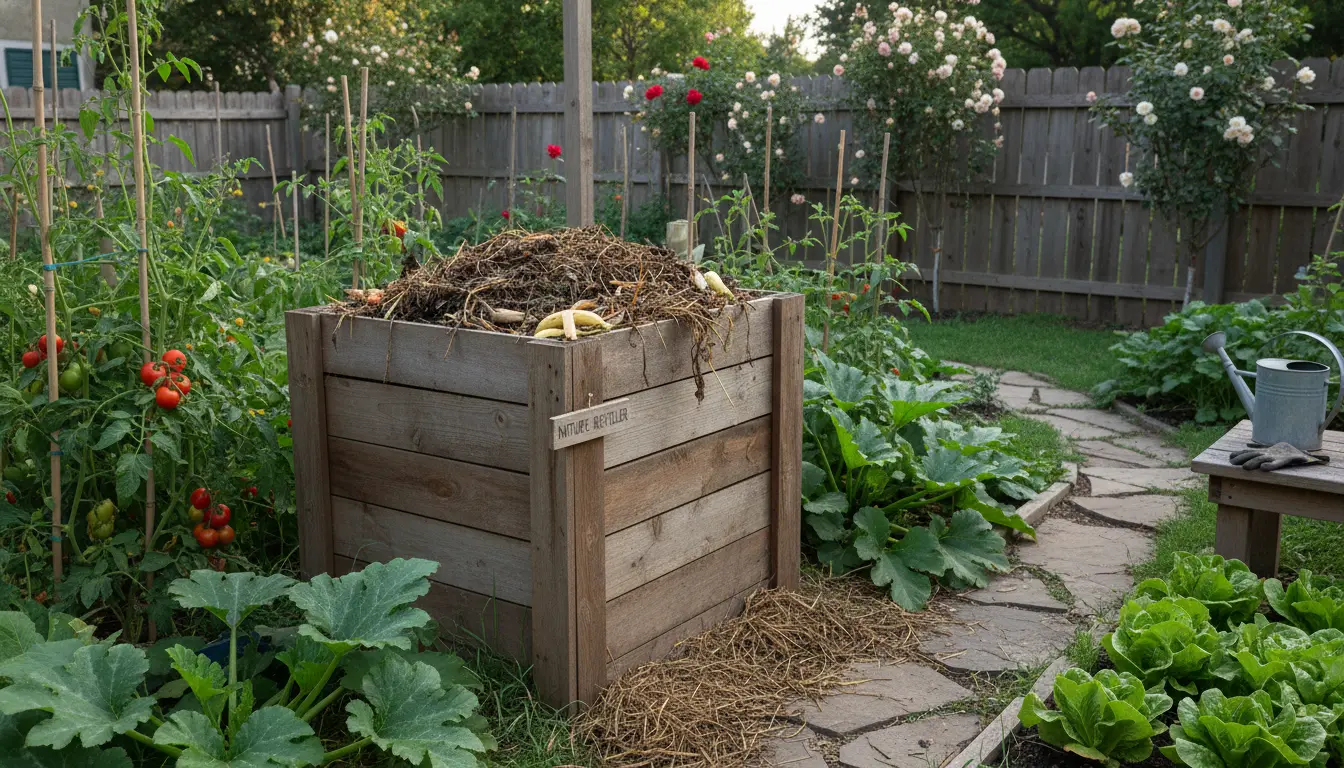
Why Start Home Composting
Home composting turns kitchen scraps and yard waste into rich soil that benefits plants and reduces trash. It is a low-cost, low-effort practice that supports healthier soil and lowers household waste hauling fees.
This guide gives clear, actionable steps to start home composting whether you have a backyard, balcony, or a small urban space.
Home Composting Basics
Composting is the aerobic breakdown of organic material by microorganisms. You provide the right mix of materials, moisture, and air, and microbes do the work.
Key elements are carbon (browns), nitrogen (greens), water, and oxygen. Balance matters more than perfect measurements.
What to Include in a Compost Bin
- Greens (nitrogen): fruit and vegetable scraps, coffee grounds, fresh grass clippings.
- Browns (carbon): dry leaves, shredded paper, cardboard, straw.
- Small amounts of garden soil to introduce microbes.
What to Avoid
- Meat, dairy, and oily foods that attract pests.
- Diseased plants and invasive weeds that might survive the composting process.
- Pet waste and treated wood products.
Choose the Right Compost Bin for Home Composting
Selecting the right bin depends on space, budget, and how fast you want finished compost. Options range from simple piles to tumblers and enclosed bins.
Common Bin Types
- Open pile: Best for large yards. It costs nothing and is easy to maintain.
- Enclosed bin: Keeps pests out and looks tidy in a backyard.
- Tumbler: Speeds up composting and makes turning easy, ideal for small yards and patios.
- Bokashi or worm bins: Good for apartments or kitchens; can handle some foods regular bins avoid.
How to Build and Maintain Your Compost
Start with a base layer of coarse browns to improve airflow. Add alternating layers of greens and browns. Aim for a ratio near 1 part greens to 2–3 parts browns by volume.
Keep the pile moist like a wrung-out sponge. Too dry and decomposition slows; too wet and it smells.
Turning and Timing
- Turn the pile every 1–2 weeks to add oxygen and speed up decomposition.
- Smaller chunks decompose faster—chop large pieces before adding.
- Compost can be ready in 2–6 months depending on conditions and bin type.
Troubleshooting Common Problems in Home Composting
If the pile smells rotten, it likely lacks air or has too many greens. Turn the pile and add browns.
If decomposition is slow, add more greens, increase moisture slightly, and turn more often. If pests are a problem, use a closed bin and avoid meat and oily foods.
Signs and Fixes
- Bad odor: Add dry browns and turn to introduce air.
- Too dry: Water lightly and mix to distribute moisture.
- Fruit flies: Bury food scraps deeper or cover with brown material.
Using Finished Compost
Finished compost looks dark, crumbly, and earthy. Use it as a soil amendment, mulch, or potting mix ingredient.
Incorporate compost into garden beds at a rate of 1–3 inches on top or 10–20% by volume when mixing into potting soil.
Small Real-World Case Study
Case study: A family of four in a suburban home started a 3-bin compost system. They used one bin for active decomposition, one for curing, and another for storage.
After six months they reduced household trash by about 30 percent and produced roughly 150 liters of finished compost used on their vegetable garden. They reported healthier plants and reduced need for store-bought fertilizer.
Practical Tips for Success with Home Composting
- Chop or shred materials to speed decomposition.
- Keep a small kitchen caddy with a tight lid to collect scraps and reduce mess.
- Balance browns and greens instead of obsessing over exact ratios.
- Position the bin in partial shade to maintain moderate temperatures and moisture.
- Label barrels or bins and keep turning tools accessible for routine maintenance.
Composting one ton of food waste can prevent about one ton of carbon dioxide equivalent emissions compared with landfilling. Home composting reduces methane production from organic waste in landfills.
Simple Starter Checklist for Home Composting
- Choose a bin: pile, enclosed bin, or tumbler.
- Gather browns: leaves, cardboard, shredded paper.
- Collect greens: kitchen scraps, fresh yard clippings.
- Layer, moisten, and turn regularly.
- Harvest finished compost and apply to your garden.
Final Notes on Home Composting
Home composting is flexible and forgiving. Start small, observe how your pile behaves, and adjust moisture, aeration, and materials as needed.
With a little routine care, home composting rewards you with better soil and less household waste.