
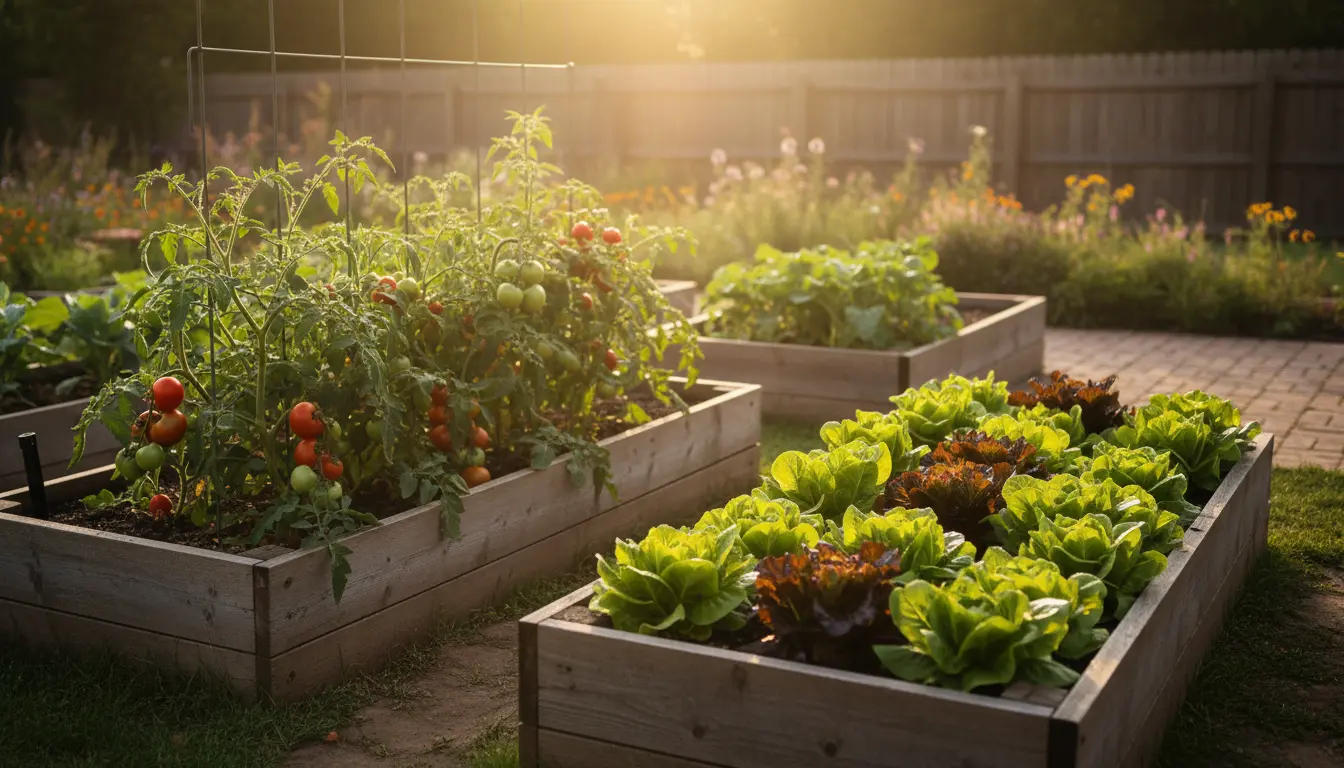
Why start a vegetable garden
Starting a vegetable garden gives you fresh produce, lowers grocery costs, and connects you to seasonal food. It also suits small spaces and can be scaled over time.
This guide shows practical steps to start a vegetable garden, with clear tasks you can follow in a single season.
How to Start a Vegetable Garden: Plan and Prepare
Good planning reduces wasted time and improves yields. Start with a simple layout and a realistic list of crops.
Decide on garden type: in-ground, raised beds, or containers. Each option affects soil needs and water management.
Choose a site to start a vegetable garden
Select a location with at least 6–8 hours of direct sun for most vegetables. Avoid low areas where water pools after rain.
Consider proximity to water, access for maintenance, and visibility for pest monitoring.
Pick your first vegetables
Choose 3–6 easy crops for your first season. Good beginner crops include tomatoes, lettuce, bush beans, radishes, and zucchini.
Pick varieties labeled “easy” or “beginner” and match planting times to your local climate.
Soil Preparation to Start a Vegetable Garden
Healthy soil is the foundation of a productive garden. Test and improve soil before planting.
A simple home soil test tells you pH and basic texture. Most vegetables prefer pH 6.0–7.0.
Improve soil for a new vegetable garden
- Add 2–4 inches of compost to improve structure and fertility.
- Work compost and a balanced organic fertilizer into the top 6–8 inches of soil.
- For raised beds, use a mix of topsoil, compost, and a light loam for good drainage and nutrient retention.
Planting Steps to Start a Vegetable Garden
Follow planting dates for your zone and use seed packets or plant tags as guides. Start with staggered sowing for a continuous harvest.
Group plants by water needs and spacing requirements for easier care.
Simple planting schedule
- Early spring: peas, spinach, radishes.
- After last frost: tomatoes, peppers, beans.
- Fall crops: kale, lettuce, carrots sown mid to late summer.
Watering and Mulching When You Start a Vegetable Garden
Consistent moisture matters more than frequent shallow watering. Aim for deep, infrequent watering to encourage strong roots.
Use drip irrigation or a soaker hose when possible to reduce disease and conserve water.
Mulching tips
- Apply 2–3 inches of organic mulch around plants to suppress weeds and retain moisture.
- Keep mulch a few inches away from stems to prevent rot and pests.
Maintenance and Common Problems After You Start a Vegetable Garden
Regular, small tasks prevent larger problems. Spend 10–20 minutes several times a week checking plants.
Control weeds early, remove diseased foliage, and monitor for pests rather than reacting only when damage is severe.
Integrated pest tips
- Use row covers for young plants to keep insects out.
- Encourage beneficial insects with flowering herbs and companion plants.
- Hand-pick large pests or use soap sprays for soft-bodied insects when necessary.
Harvesting and Storing Your Vegetables
Harvest regularly to encourage production. Pick tomatoes when they are fully colored and slightly soft to the touch.
Cool, dark storage is best for root crops and winter squashes. Use fresh greens within a week for best flavor.
Did You Know?
Did You Know? A properly prepared 10×10 foot vegetable garden can provide a family with a significant portion of fresh summer produce, often reducing grocery bills and food miles.
Small Real-World Example
Case study: In a 10×10 raised bed, a beginner gardener planted three tomato plants, four lettuce heads, a row of bush beans, and a couple of zucchini plants.
With weekly watering, compost additions twice during the season, and simple pest control (row covers early and hand removal of pests), the bed produced regular salad greens and 60–80 pounds of tomatoes by late summer.
Checklist to Start a Vegetable Garden
- Choose a sunny site with easy water access.
- Decide on garden type: in-ground, raised bed, or containers.
- Test and amend soil with compost and balanced fertilizer.
- Select 3–6 easy vegetables for your first season.
- Establish a watering and mulching routine.
- Monitor regularly for pests and diseases.
- Harvest frequently to maximize production.
Final Tips When You Start a Vegetable Garden
Start small and expand after one season. Document what worked and what didn’t in a garden notebook.
Expect learning curves; most gardeners improve yields with simple adjustments each year. Consistency and attention beat complex methods for beginners.