
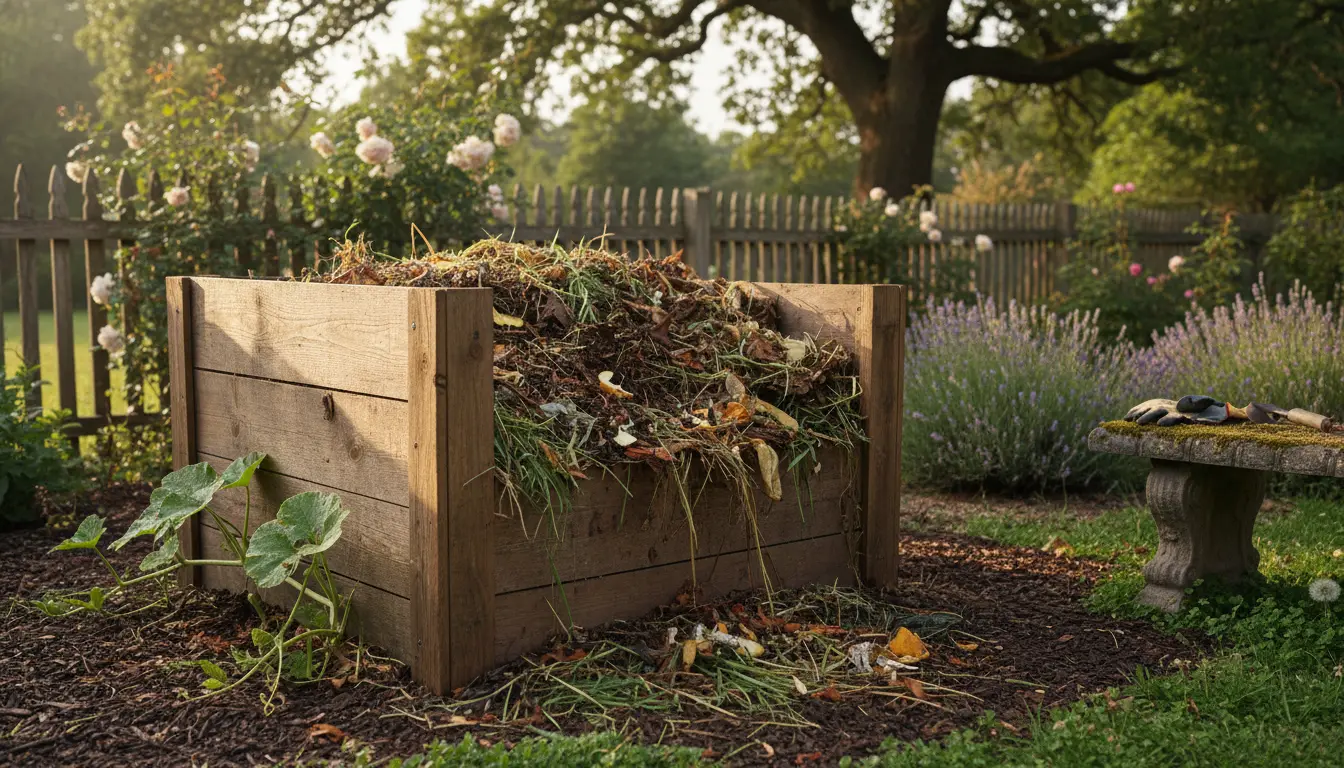
Home Composting for Beginners: Quick Overview
Home composting turns kitchen and yard waste into nutrient-rich soil. It reduces landfill waste and improves garden soil with minimal cost.
This guide explains simple steps to start and maintain a compost bin, what materials to use, and how to avoid common problems.
Choose the Right Composting Method for Home Composting for Beginners
There are several easy methods suitable for beginners. Choose one that fits your space, time, and how quickly you want compost.
- Open pile: Simple and cheap, needs space and basic turning.
- Compost bin: Neat, contained, and good for small yards or balconies.
- Tumbler: Faster results and easy turning, but costs more.
- Worm composting (vermicompost): Works indoors or in small spaces for kitchen scraps.
Setting Up a Compost Bin for Home Composting for Beginners
Placement matters. Put your bin on soil or grass to allow worms and microbes to enter. Aim for partial shade to keep moisture balanced.
Use a bin with vents or drill holes for airflow. Keep the bin accessible so you add and turn materials regularly.
What to Add: Greens and Browns
Successful compost needs a mix of green and brown materials. Balance keeps decomposition steady and odor-free.
- Greens (nitrogen): fruit and vegetable scraps, coffee grounds, grass clippings.
- Browns (carbon): dry leaves, shredded paper, cardboard, straw.
Aim for roughly a 2:1 or 3:1 ratio of browns to greens by volume. Add small pieces to speed up breakdown.
How to Build a Compost Layer
Start with a coarse base layer like twigs to promote drainage. Alternate layers of greens and browns, keeping each layer a few inches thick.
Sprinkle water occasionally to keep the pile damp like a wrung-out sponge. Avoid soaking the bin.
Maintenance Tips for Home Composting for Beginners
Maintenance is simple: monitor moisture, turn occasionally, and balance materials. These steps keep the pile active and odor-free.
- Turn the pile every 1–2 weeks to introduce oxygen and speed decomposition.
- Monitor moisture; add water if dry and more browns if too wet.
- Chop or shred large items to increase surface area and speed up composting.
Microorganisms that break down compost can raise the pile temperature to 120°F (49°C), which helps kill weed seeds and pathogens when the pile is active.
Common Problems and Solutions for Home Composting for Beginners
New composters often face a few recurring issues. Most are easy to fix with small adjustments to balance and airflow.
- Bad smells: add more browns and turn the pile to add oxygen.
- Pests: avoid meat, dairy, oily foods, and bury food scraps in the center of the pile.
- Slow decomposition: chop materials smaller, add greens for nitrogen, and maintain moisture.
- Too wet: add dry browns and increase turning to dry and aerate the pile.
How to Tell When Compost Is Ready
Finished compost is dark, crumbly, and smells earthy. Most home bins take 2–6 months depending on method and maintenance.
Screen or sift compost to remove larger undecomposed pieces; return those to the bin for further breakdown.
Using Finished Compost
Mix compost into garden beds, use as a top dressing, or blend into potting mixes. A typical application is 1–3 inches of compost spread over soil and mixed in.
Small Case Study: A City Balcony Compost Success
Anna, a city renter, started a small vermicompost bin on her balcony. She used a 10-liter bin with red worms and added only vegetable scraps and shredded paper.
In six months she produced about 15 liters of compost, reduced her kitchen waste by 60%, and used the compost to feed two balcony planters that grew herbs and cherry tomatoes.
Key actions: regular feeding, keeping the bin slightly moist, and avoiding citrus or onion overload. The system required about 10 minutes a week to maintain.
Tips and Examples to Speed Composting for Home Composting for Beginners
- Chop kitchen scraps before adding to the bin to speed breakdown.
- Use a hand fork or aerator tool to turn smaller bins more easily.
- Add finished compost or garden soil to introduce active microbes to a new pile.
- Keep a small countertop scrap container to store materials before transferring to the outdoor bin.
Final Steps and Best Practices
Start small and adjust as you learn. Composting is forgiving and improves over time with simple observation and minor changes.
Track what you add and how often you turn the pile for the first few months. This record helps you troubleshoot quickly and get consistent results.
Home composting for beginners is a practical way to reduce waste and nourish your garden. With basic setup and light maintenance, anyone can create valuable compost at home.