
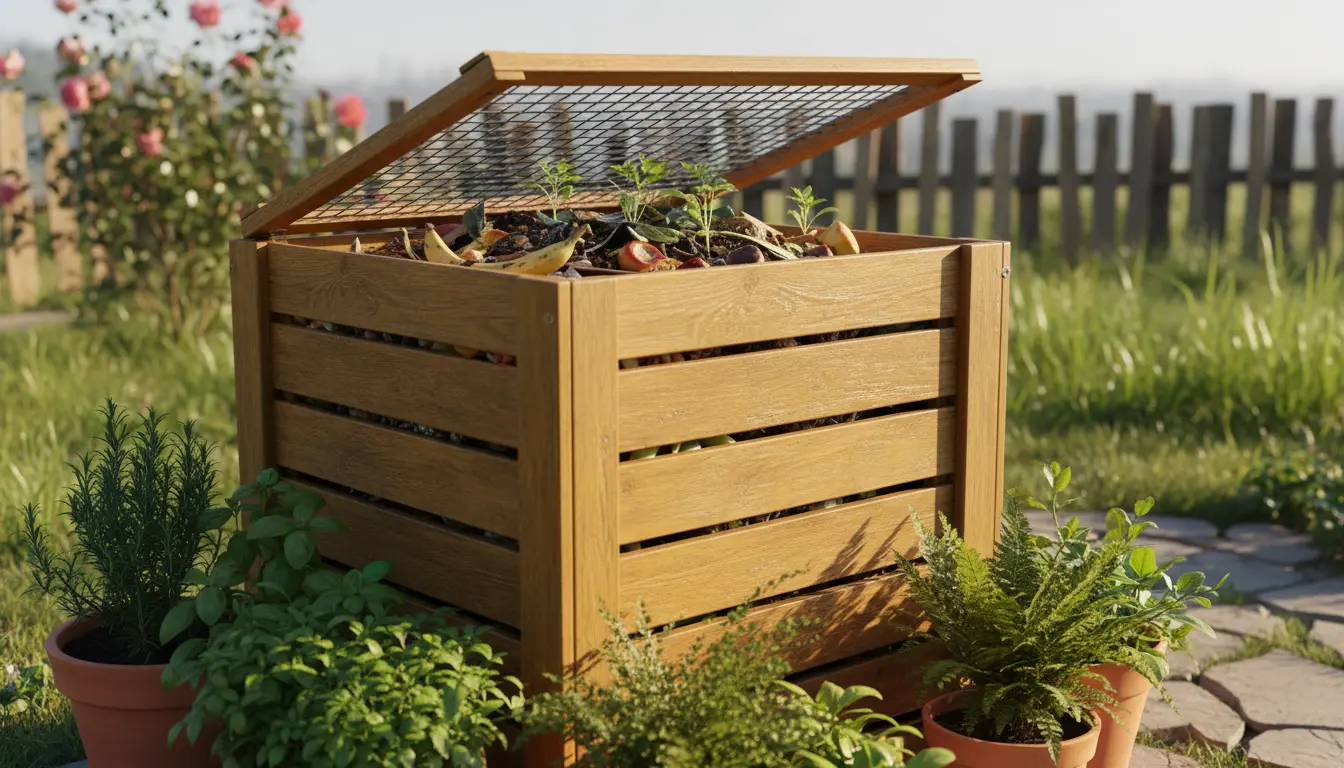
Home composting turns kitchen scraps and yard waste into nutrient-rich soil. This guide gives clear, practical steps so beginners can start composting successfully at home.
Why Home Composting Matters
Composting reduces household waste and returns valuable nutrients to your garden. It saves money on soil amendments and cuts the environmental impact of sending organic material to landfills.
Benefits of home composting
- Reduces landfill waste and methane emissions.
- Produces free, nutrient-rich compost for plants.
- Improves soil structure and water retention.
How to Start Home Composting
Starting home composting is simple when you follow a few basic steps. Choose a suitable container, gather materials, and monitor moisture and airflow.
Step 1: Choose a compost bin
Select a compost bin based on your space and volume of waste. Options include open piles, tumblers, and enclosed bins for small spaces.
- Tumbler: Easy turning, faster composting, good for small yards.
- Stationary bin: Simple and cost-effective for larger yards.
- Bokashi or worm bins: Best for apartments or indoor composting.
Step 2: Collect the right materials for home composting
Balance green (nitrogen) and brown (carbon) materials. A good mix speeds decomposition and reduces odors.
- Greens: vegetable peels, fruit scraps, coffee grounds, fresh grass clippings.
- Browns: dry leaves, shredded paper, cardboard, straw.
- Avoid: meat, dairy, oily foods, pet waste, diseased plants.
Compost Maintenance Tips
Maintain your compost by monitoring moisture, turning to add air, and keeping the right balance of materials. Regular, simple care produces quality compost faster.
How to maintain your compost pile
- Moisture: Aim for damp, not soggy. Add water during dry spells.
- Air: Turn the pile every 1–2 weeks to introduce oxygen.
- Balance: Add browns if pile smells, add greens if decomposition slows.
- Size: Keep active piles between 3x3x3 and 5x5x5 feet for good heat retention.
Troubleshooting Common Compost Problems
Problems are usually signs of imbalance. Simple fixes restore healthy decomposition quickly.
Bad smells
Smells usually mean too much moisture or not enough air. Turn the pile and add dry brown materials such as shredded cardboard or leaves.
Slow decomposition
If materials are not breaking down, the pile may be too dry, too cold, or lack nitrogen. Add water, a scoop of fresh green material, and turn to mix.
Pests
Avoid adding meat, bones, and oily foods. Use a closed bin or secure tumbler and bury food scraps under browns to deter scavengers.
Food scraps and yard waste make up about 30% of household trash. Composting at home can divert this waste and cut your trash output significantly.
Small Real-World Example: Apartment Compost Case Study
Case Study: Laura, a city apartment dweller, started indoor composting with a 10-liter Bokashi bin and a small worm bin on her balcony. She collected all vegetable scraps and coffee grounds for the Bokashi and added the fermented material to a community garden soil pile every two months.
Results: After six months, Laura reduced her organic waste to one small bag per week. The community garden reported improved soil texture and plant vigor from the added material.
How to Use Finished Compost
Finished compost smells earthy and is dark and crumbly. Use it to enrich potting mixes, topdress lawns, or as a garden amendment.
Practical uses for finished compost
- Mix 1 part compost to 3 parts soil for container plants.
- Topdress garden beds with a 1–2 inch layer in spring or fall.
- Blend compost into vegetable beds to boost fertility and structure.
Quick Start Checklist for Home Composting
- Choose the right bin for your space.
- Collect greens and browns separately in the kitchen.
- Keep the pile moist and turn weekly or biweekly.
- Monitor for pests and odors and adjust materials.
- Harvest finished compost after 3–12 months depending on method.
Home composting is a low-cost, high-impact way to reduce waste and improve soil health. With the right container and simple maintenance, most households can produce usable compost within a few months.
If you live in an apartment, consider bokashi or worm composting, or join a local composting program to drop off your sorted organic waste. Start small and adjust the process to fit your routine—composting is flexible and scalable.