
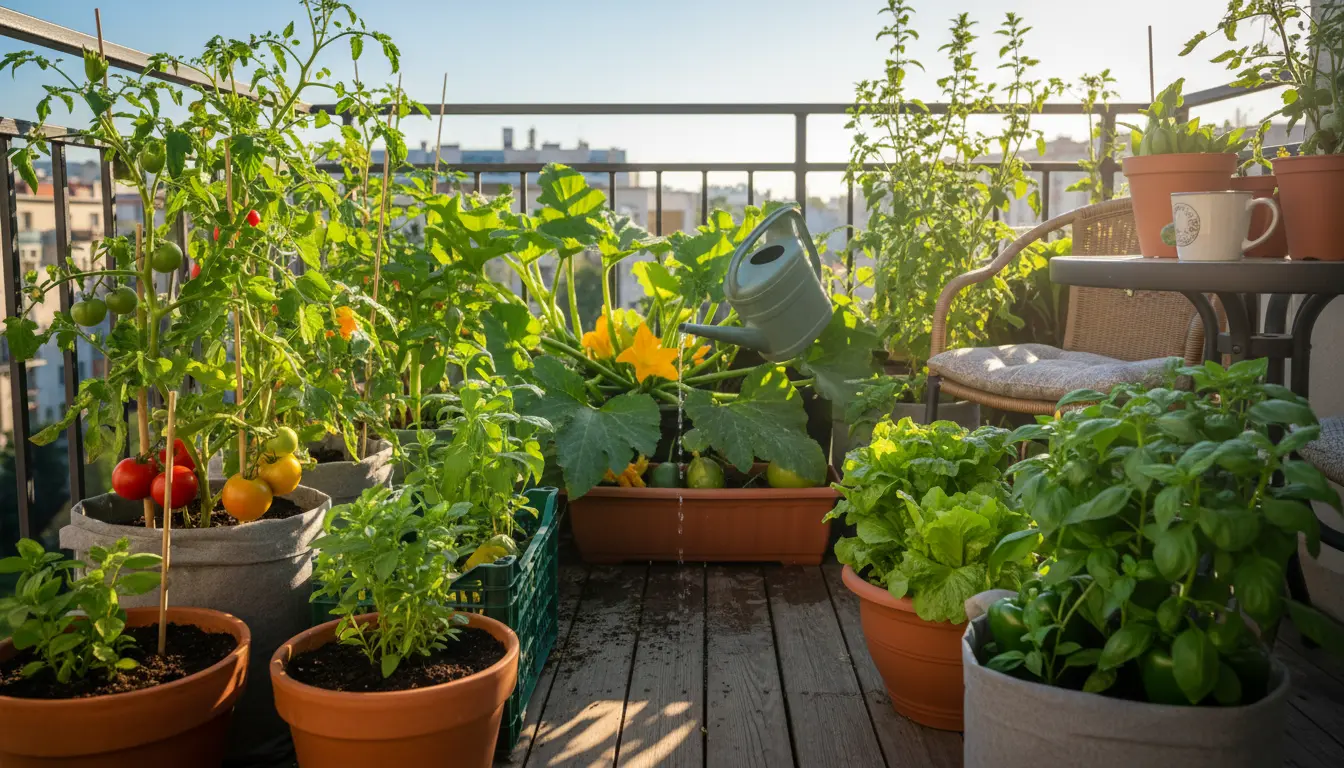
Container vegetable gardening brings fresh produce to small spaces without a yard. This guide explains clear, practical steps to start a container vegetable garden and keep it productive year after year.
Why Choose a Container Vegetable Garden
Containers let you grow vegetables on balconies, patios, and small courtyards. They reduce ground pests, limit weed problems, and let you manage soil quality more easily than in-ground beds.
Container vegetable garden setups work well for beginners, busy people, and urban dwellers who want faster results and lower maintenance.
How to Start a Container Vegetable Garden: Step-by-Step
Follow these practical steps to start a container vegetable garden that fits your space and schedule.
1. Pick the Right Containers
Use pots with drainage holes to prevent waterlogged roots. Sizes matter: choose containers at least 12 inches deep for most vegetables and 5 gallons or larger for tomatoes and peppers.
- Small herbs: 1–3 gallon pots
- Leafy greens: 3–5 gallon pots
- Tomatoes, peppers: 5–10+ gallon pots
2. Choose Good Potting Mix
Use a lightweight, well-draining potting mix formulated for containers. Avoid garden soil—it’s too dense and can compact in pots. Add slow-release fertilizer or compost for steady nutrition.
3. Select Vegetables for Containers
Choose compact varieties or those labeled patio, bush, or container-friendly. Consider sunlight and your climate when selecting crops.
- Best for beginners: lettuce, radishes, spinach
- Fruit crops: cherry tomatoes, patio peppers
- Herbs: basil, parsley, cilantro
4. Position for Sunlight
Most vegetables need 6–8 hours of direct sun. Place containers on a sunny balcony, rooftop, or against a south-facing wall if possible. Use moveable containers to chase sunlight through the day.
5. Watering Routine
Containers dry out faster than beds. Water deeply until water runs from drainage holes, then check daily in hot weather. Use mulch like straw or shredded bark to reduce evaporation.
Best Vegetables for a Container Vegetable Garden
Start with reliable crops that give quick returns and tolerate container conditions well.
- Lettuce and other salad greens: fast-growing and shade tolerant
- Radishes: quick harvest in 3–4 weeks
- Cherry tomatoes: high yield in large pots
- Peppers: compact varieties work well
- Herbs: basil, rosemary, thyme—low maintenance
Care and Maintenance for a Container Vegetable Garden
Consistent care ensures better yields. Keep tasks simple and regular to avoid common problems.
Fertilizing
Feed plants with a balanced liquid fertilizer every 2–4 weeks, or use a slow-release formula mixed into the potting mix. Watch for yellowing leaves that can indicate nutrient deficiency.
Pruning and Support
Provide stakes or cages for tall plants like tomatoes. Pinch out crowded growth to improve air circulation and reduce disease risk.
Pest and Disease Management
Inspect plants weekly for aphids, whiteflies, or fungal spots. Use insecticidal soap or neem oil for small infestations and remove affected leaves promptly.
Common Problems and Solutions in a Container Vegetable Garden
Containers have fewer weeds but different challenges. Here are fast fixes for typical issues:
- Wilting: Water deeply; check drainage holes for blockages.
- Poor growth: Add fertilizer and check pot size—plants may be root bound.
- Yellow leaves: Test for overwatering or nutrient deficiency.
Container soils can heat up faster than ground soil in summer. Light-colored pots or placing containers in partial shade during hottest hours helps protect roots and reduces water loss.
Small Real-World Example: Balcony Tomato Case Study
Sarah lives in a third-floor apartment with a 6-foot-wide balcony. She used two 10-gallon containers to grow two determinate tomato plants and a 5-gallon pot for basil.
By using methodical watering, a daily 15-minute check, and a weekly liquid feed, Sarah harvested 18 pounds of cherry tomatoes over a 4-month season. She saved money on groceries and used compost from her kitchen to refresh soil each season.
Quick Checklist to Start Your Container Vegetable Garden
- Choose containers with drainage and appropriate depth
- Buy quality potting mix and slow-release fertilizer
- Pick container-friendly vegetable varieties
- Place containers where they get 6+ hours of sun
- Set a watering and feeding routine
- Inspect plants weekly and act on pests early
Starting a container vegetable garden is practical and achievable. With the right containers, soil, and simple maintenance, you can enjoy fresh vegetables even in tight urban spaces. Begin with a few easy crops, learn from each season, and scale up as you gain confidence.