
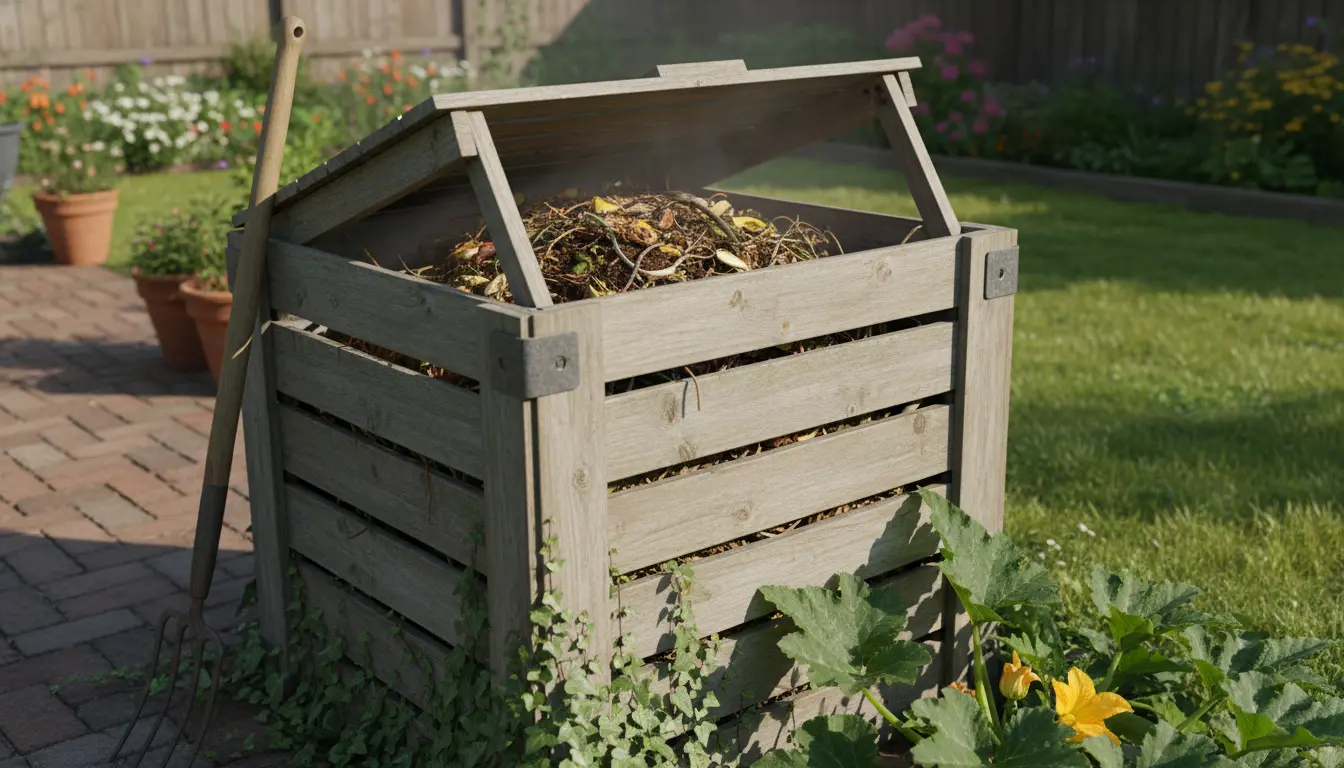
Home composting turns kitchen scraps and yard waste into a useful soil amendment. This guide explains simple, practical steps to start and maintain compost at home.
What is Home Composting?
Home composting is the controlled decomposition of organic materials by microorganisms. It creates humus that improves soil structure and plant health.
Getting Started with Home Composting
Choose a method that fits your space, time, and goals. Options range from a simple pile to enclosed bins or worm composting.
Choosing a Compost System
Select a system based on available room and effort. Open piles work for yards. Tumblers speed mixing and limit pests. Worm bins are ideal for small spaces and kitchen scraps.
Where to Place Your Compost
Pick a level, well-drained spot with partial shade. Close access makes regular additions and turning easier. Avoid placing it too close to the house foundation.
Materials to Compost
Balance carbon rich materials with nitrogen rich ones. Carbon sources provide energy and structure. Nitrogen sources feed microbes that break materials down.
Examples of Compostable Materials
- Greens (nitrogen): vegetable scraps, coffee grounds, fresh grass clippings
- Browns (carbon): dry leaves, shredded paper, straw, cardboard
- Avoid: meat, dairy, oils, diseased plants, pet waste
How to Build and Maintain a Compost Pile
Start with a base layer of coarse material to help airflow. Alternate layers of greens and browns to keep a good balance.
- Layer materials: 2–4 inches of brown then 1–2 inches of green.
- Keep the pile moist like a wrung-out sponge.
- Turn regularly: every 1–2 weeks for hot composting, less often for slow methods.
Turning introduces oxygen and speeds decomposition. If you use a tumbler, rotate according to manufacturer guidance.
Troubleshooting Common Home Composting Problems
Most issues come from imbalance or moisture problems. Identify the cause and make small adjustments.
Bad Odor
A sour or rotten smell indicates too much nitrogen or poor airflow. Add more dry browns and turn the pile to aerate it.
Pests
Raccoons, rodents, and flies are attracted to food scraps. Use an enclosed bin or bury scraps under a brown layer. Avoid meats and oily foods.
Slow Decomposition
If decomposition is slow, check for low moisture, insufficient nitrogen, or large particle size. Chop materials smaller and add greens if dry.
Case Study: Small Balcony Composting
Maria lives in an apartment and started a worm bin on her balcony. She used shredded paper and kitchen scraps and added 1,000 red worms.
Within three months she produced fine, odorless castings she mixed into potted plants. Her tomatoes grew stronger and needed less fertilizer.
Benefits of Home Composting
- Reduces household waste and landfill use
- Creates nutrient-rich soil for gardens and pots
- Improves soil water retention and structure
- Saves money on commercial soil amendments
Composting can reduce household waste by up to 30 percent. Kitchen scraps and yard trimmings are the largest single component of municipal solid waste in many areas.
Quick Tips for Successful Home Composting
- Keep a small counter bin for scraps to make collection easy.
- Chop or shred materials to speed breakdown.
- Monitor moisture and add water or dry browns as needed.
- Use finished compost as a top dressing or potting mix amendment.
Home composting is flexible and scalable. Start small, observe the process, and adjust based on what works in your space.
With a basic understanding of materials and maintenance, you can convert waste into valuable soil in weeks to months. Try a simple bin or worm composter and track results to learn faster.