
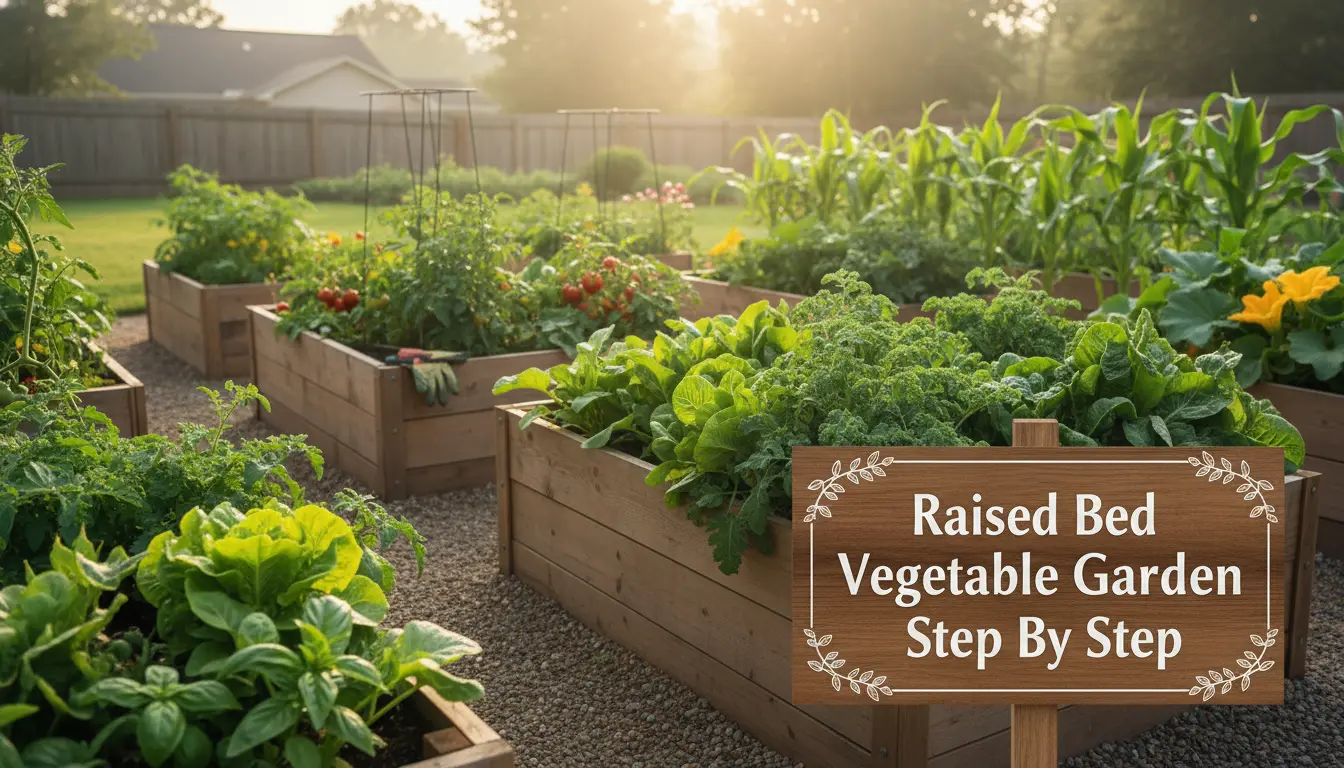
Raised bed vegetable gardens are a practical way to grow food in small yards, poor soil, or for accessible gardening. This guide gives clear steps to plan, build, and maintain a productive raised bed vegetable garden.
Why Choose a Raised Bed Vegetable Garden
Raised beds concentrate soil and nutrients where plants need them most. They warm faster in spring and improve drainage compared with in-ground beds.
Use raised beds when you have compacted soil, sloped ground, or limited space. They also simplify weed control and make harvesting easier.
Benefits of a Raised Bed Vegetable Garden
- Improved soil structure and drainage.
- Better root health and higher yields per square foot.
- Easier access for planting, weeding, and harvesting.
- Flexible location and aesthetic control.
How to Plan Your Raised Bed Vegetable Garden
Planning before building saves time and money. Choose a logical location and think about bed size, orientation, and material.
Choosing Size and Location
Place beds where they get at least 6 hours of direct sun for most vegetables. Locate near a water source to simplify irrigation.
- Typical bed size: 4 feet wide by 8 feet long. This width allows easy reach from both sides.
- Bed height: 8–12 inches is enough for many crops; 12–18 inches is better for root vegetables and improved drainage.
- Orientation: Run long sides north-south to maximize sun exposure for taller crops.
Selecting Soil and Amendments
Use a loose, fertile mix to maximize plant growth. A recommended mix is roughly 60% topsoil or screened garden soil, 30% compost, and 10% coarse sand or perlite for drainage.
For an organic approach, add well-rotted manure and a balanced organic fertilizer at planting time. Test soil pH if you suspect extremes; most vegetables prefer pH 6.0–7.0.
How to Build a Raised Bed Vegetable Garden
Building simple wooden beds or using recycled materials is straightforward. Follow these steps for a durable, functional bed.
- Mark the layout and clear grass or weeds from the area.
- Level the ground slightly or leave natural grade for drainage.
- Assemble bed sides from rot-resistant wood, cedar, composite, or stone. Keep boards no wider than 4 feet for reachability.
- Fill beds with your chosen soil mix in layers, lightly tamping each layer to remove big air pockets.
- Water thoroughly and allow the soil to settle before planting—usually 24–48 hours.
Tools and Materials
- Materials: cedar boards, screws, landscape fabric (optional).
- Tools: saw, drill, measuring tape, level, wheelbarrow, shovel.
Watering, Planting, and Maintenance for Raised Bed Vegetable Garden
Consistent watering and a planting plan will keep beds productive. Mulch and crop rotation reduce pests and disease.
Watering Tips
- Water deeply once or twice a week rather than frequent shallow watering.
- Consider drip irrigation or soaker hoses to save water and reduce leaf wetness.
- Mulch with straw or shredded leaves to conserve moisture and cut weeds.
Planting Strategy
Use succession planting to harvest over a longer season. Plant quick crops like lettuce between slower crops like tomatoes.
Practice companion planting and rotate families each year to help prevent soil-borne diseases and pest buildup.
Troubleshooting Common Issues in Raised Bed Vegetable Garden
Pests, nutrient deficiencies, and water stress are the most common problems. Diagnose issues quickly for small, fixable interventions.
Quick Fixes
- Pests: Handpick, use row covers, or apply appropriate organic controls like neem or insecticidal soap.
- Nutrient deficiency: Add compost tea or balanced organic fertilizer; test soil to confirm needs.
- Overheating: Provide shade cloth during heat waves for sensitive crops like lettuce.
Raised beds warm faster in spring and can extend your growing season by several weeks. They also reduce soil compaction because you don’t walk on the bed surface.
Case Study: Small Backyard Success
Maria converted a 12 by 8 foot section of lawn into three 4×4 raised beds. In her first season she planted tomatoes, kale, carrots, and bush beans.
She used a soil mix of 50% screened topsoil, 40% compost, and 10% perlite. With drip irrigation and weekly compost top-dressing, Maria harvested salad greens for five months and doubled her annual tomato yield the next year.
Key takeaways from her approach: start small, focus on soil quality, and water consistently. Small changes produced steady, reliable results.
Final Tips for a Successful Raised Bed Vegetable Garden
- Start with one or two beds to learn layout and timing.
- Keep records of planting dates, varieties, and problems to improve season to season.
- Use quality compost and rotate crops to maintain soil health.
With modest planning and routine maintenance, a raised bed vegetable garden will yield more food per square foot than a comparable in-ground plot. Start simple, improve your soil, and expand as you gain confidence.