
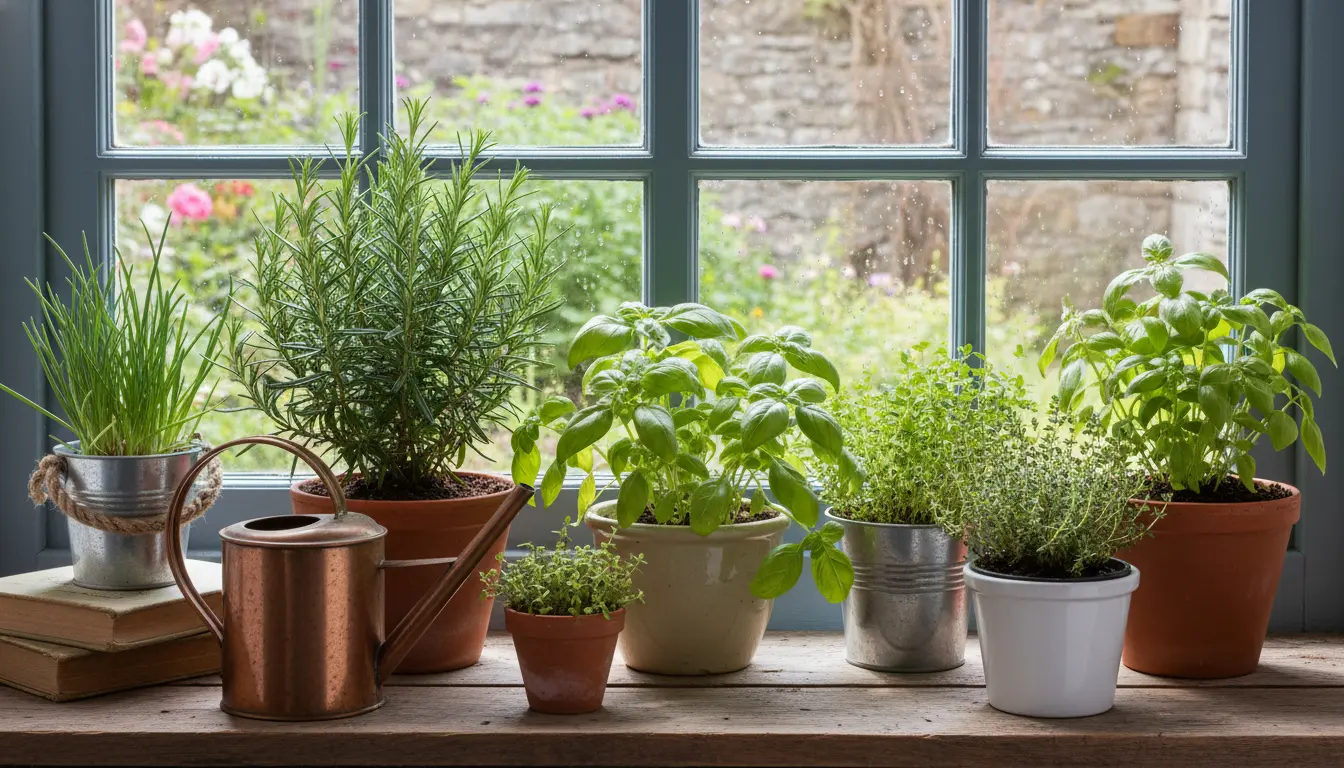
Growing Herbs Indoors: Getting Started
Growing herbs indoors is a straightforward way to add fresh flavor to meals and improve indoor air. This guide explains the basic steps you need to start and maintain a healthy indoor herb garden.
Growing Herbs Indoors: Choosing Plants
Not all herbs perform equally well inside. Choose herbs known to do well in containers and limited light.
- Basil — prefers bright light and warmth.
- Parsley — tolerates moderate light and regular moisture.
- Thyme and oregano — like well-drained soil and bright light.
- Mint — grows fast and tolerates lower light, use a separate pot to prevent spreading.
- Chives — slow-growing and ideal for kitchen windowsills.
Placement and Space for Growing Herbs Indoors
Select a stable location near a south- or west-facing window if possible. A shelf or windowsill with at least 4–6 hours of direct or bright indirect light is ideal.
For apartments or low-light rooms, plan for grow lights. LED grow lights are energy-efficient and work well for small herb setups.
Growing Herbs Indoors: Soil, Pots, and Drainage
Good soil and proper drainage are critical. Use a high-quality potting mix formulated for containers rather than garden soil.
- Choose pots with drainage holes to prevent root rot.
- Use lightweight containers for ease of moving and better root aeration.
- Consider saucers to catch runoff and protect surfaces.
Soil Mix Tips
A typical indoor herb mix contains peat or coco coir, perlite for drainage, and a small amount of compost for nutrients. Avoid heavy soils that compact and retain too much water.
Growing Herbs Indoors: Light and Temperature
Light is the single most important factor. Most culinary herbs need 4–8 hours of good light daily.
- Bright window: Best for basil, thyme, oregano, and rosemary.
- Moderate light: Parsley and cilantro can tolerate less direct sun.
- Low light: Mint and some leafy herbs survive but may be less flavorful.
Maintain indoor temperatures between 65–75°F (18–24°C) during the day. Avoid placing herbs on cold windowsills in winter or near heating vents that dry soil quickly.
Growing Herbs Indoors: Watering and Feeding
Overwatering is a common mistake. Water when the top 1 inch of soil feels dry. Water thoroughly until it runs from the drainage hole, then allow the soil to dry slightly.
- Check pots from the bottom for weight to judge moisture if unsure.
- Use a balanced, water-soluble fertilizer every 4–6 weeks during the growing season.
- Reduce feeding in winter when growth slows.
Humidity Considerations
Many herbs prefer moderate humidity. If indoor air is very dry, group pots together or place a tray with pebbles and water beneath pots to raise local humidity.
Growing Herbs Indoors: Pruning, Harvesting, and Pest Control
Regular pruning encourages bushier growth and prevents legginess. Harvest leaves from the top, and remove faded flowers to keep the plant focused on foliage.
- Pinch or trim the top 1–2 inches regularly for basil.
- Harvest chives by cutting stems near the base.
- For herbs like mint, remove runners to control size.
Monitor for common pests such as aphids, spider mites, and fungus gnats. Use insecticidal soap or neem oil for small infestations and improve airflow to discourage fungal issues.
Small Real-World Example
Case study: A one-bedroom apartment renter set up five 6-inch pots on a sunny windowsill. They started with basil, parsley, mint, chives, and thyme. Within two months, the renter used fresh basil three times a week and cut grocery herb purchases by 40%.
The initial cost was approximately $45 (pots, soil, seeds, basic LED light). The renter estimates break-even in about four months compared with buying fresh herbs at the store.
Growing Herbs Indoors: Troubleshooting Common Problems
Yellow leaves often indicate overwatering or poor drainage. Leggy stems mean insufficient light. Pale leaves can signal nutrient deficiency or overwatering.
- Fix yellowing: Check drainage and allow soil to dry between waterings.
- Fix legginess: Move plants to brighter light or add a grow light.
- Fix slow growth: Feed lightly and ensure correct light and temperature.
Growing Herbs Indoors: Quick Start Checklist
- Select 2–5 herbs suited to your light conditions.
- Use quality potting mix and pots with drainage.
- Place near a sunny window or install an LED grow light.
- Water when the top inch of soil is dry; avoid overwatering.
- Prune regularly and monitor for pests.
Growing Herbs Indoors: Final Tips
Start small and expand as you gain confidence. Keep a simple log of watering and harvesting to learn each herb’s needs.
With basic care, indoor herbs provide fresh flavors year-round and make a productive, low-cost addition to your home.