
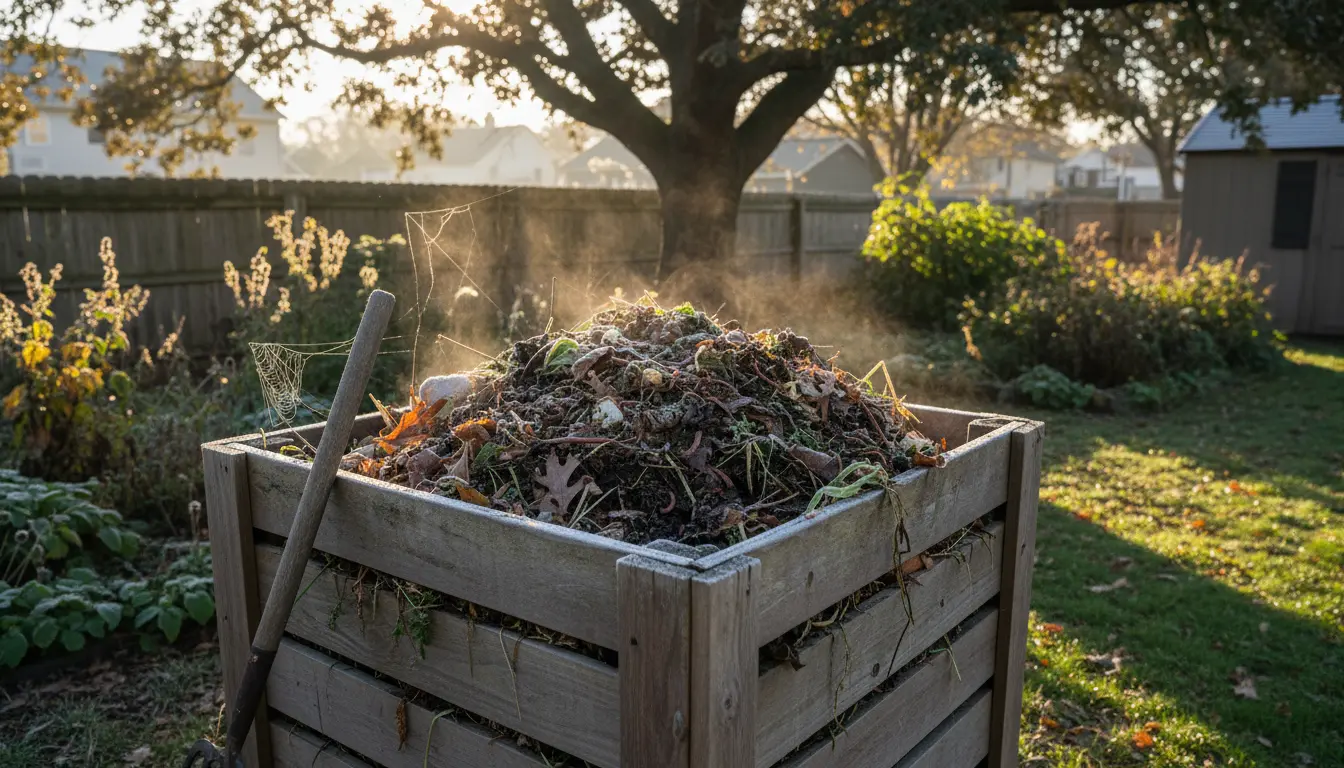
Why Home Composting Matters
Composting turns kitchen scraps and yard waste into rich soil that improves plant health and reduces landfill waste. Home composting saves money on fertilizer and helps close the nutrient loop in your household.
This guide explains easy, practical steps to start home composting, maintain your pile, and troubleshoot common problems.
Choose a Composting Method
Begin by picking a method that fits your space and commitment level. The three most common options are bin composting, tumbler composting, and vermicomposting.
- Bin composting: Simple and suitable for yards. Use a plastic or wire bin to contain materials.
- Tumbler composting: Enclosed drum that you turn for faster mixing and fewer pests.
- Vermicomposting: Uses worms in a bin, good for small spaces and indoor use.
Recommended for Beginners
Start with a basic backyard bin if you have space. It requires minimal upfront cost and is forgiving for mistakes.
Set Up Your Compost Bin
Position the bin on bare soil or a well-drained surface. This allows beneficial organisms and worms to enter the pile and improves drainage.
Pick a partly shaded location to avoid extreme drying or waterlogging.
Balance Greens and Browns
Effective composting depends on the right mix of nitrogen-rich greens and carbon-rich browns. Aim for a loose guideline of roughly 2–3 parts browns to 1 part greens by volume.
- Greens (nitrogen): Vegetable scraps, fruit peels, coffee grounds, fresh grass clippings.
- Browns (carbon): Dry leaves, shredded paper, cardboard, straw, small wood chips.
Layer materials as you add them. Alternate thin layers of greens and browns to maintain airflow and moisture balance.
Maintain Moisture and Aeration
Compost should be as damp as a wrung-out sponge. Too dry and decomposition slows; too wet and it becomes anaerobic and smelly.
- Water lightly during dry spells.
- Turn the pile every 1–2 weeks to add oxygen and speed up decomposition.
- If the pile smells sour, add more browns and turn it immediately.
How to Speed Up Composting
To produce finished compost faster, consider these practical tips:
- Shred or chop materials before adding them to increase surface area.
- Maintain a consistent mix of greens and browns for active microbial activity.
- Keep the pile size at least 3x3x3 feet to retain heat for faster breakdown.
- Use a compost activator or finished compost to inoculate a new pile with microbes.
Troubleshooting Common Problems
Beginner composters often encounter a few recurring issues. Here’s how to handle them:
- Bad smells: Usually from excess moisture or too many greens. Add dry browns and turn the pile.
- Pests: Avoid meat, dairy, and oily foods. Use a closed bin or bury food scraps in the center.
- Slow breakdown: Increase turning, add water if dry, or chop materials smaller.
When Is Compost Ready?
Finished compost is dark brown, crumbly, and smells earthy. It generally takes 3–12 months depending on materials and care.
Screen or sift the compost to remove large pieces, then return those materials to the bin for further decomposition.
Small Real-World Case Study
Example: A two-person household in Portland started a 3-bin backyard system using kitchen scraps and neighborhood leaves. By shredding leaves and turning the bins weekly, they produced usable compost in 5 months.
They saved money on soil amendment and reported healthier container vegetables the following season. Simple changes—like storing scraps in a sealed container and layering browns—reduced odors and pests.
Practical Tips and Checklist
Quick checklist to get started with home composting:
- Choose a bin type: bin, tumbler, or worm bin.
- Find a partly shaded spot on soil.
- Collect greens and browns and keep them separate.
- Layer materials and maintain moisture like a wrung-out sponge.
- Turn the pile every 1–2 weeks.
- Screen finished compost and reuse coarse bits.
What to Avoid
- No meat, dairy, or oily leftovers.
- No invasive weeds or diseased plants unless hot composting.
- Limit large branches unless chipped or broken down.
Final Thoughts on Home Composting for Beginners
Home composting is an accessible way to reduce waste and improve garden soil. Start small, learn by doing, and adjust the mix and maintenance to your local climate and available materials.
With a basic bin and regular attention, you can produce nutrient-rich compost that benefits plants and the environment.