
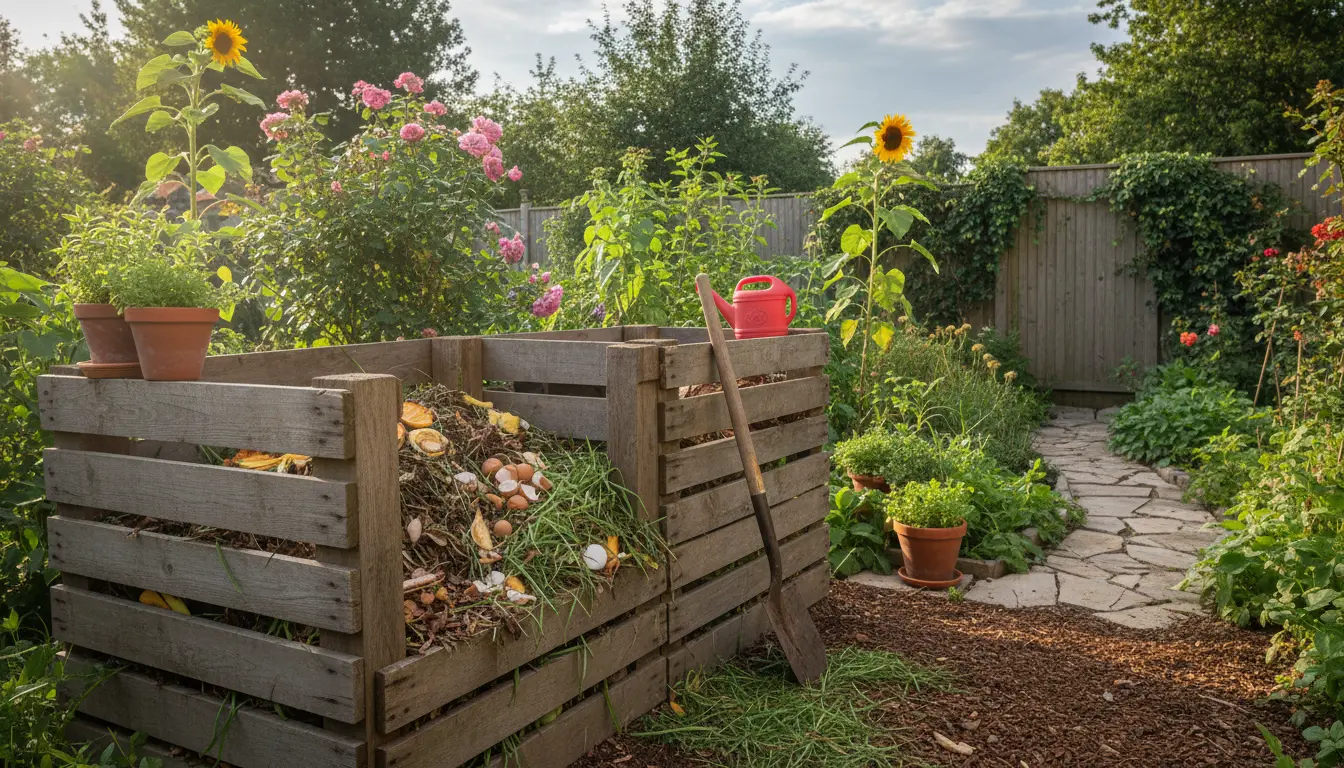
Why Home Composting for Beginners Matters
Home composting reduces household waste and creates nutrient-rich soil for gardens. It is a simple, low-cost way to return organic matter to the soil and cut landfill contributions.
This guide explains the basics of home composting for beginners in plain language and gives practical steps to start composting today.
What You Need to Start Home Composting for Beginners
Start with a few basic items: a container or bin, a spot in your yard, and a mix of green and brown materials. You do not need special equipment to begin.
- Bin options: open pile, DIY wooden bin, or a purchased tumbling composter.
- Green materials: fruit and vegetable scraps, coffee grounds, grass clippings.
- Brown materials: dry leaves, shredded paper, straw, cardboard.
- Optional: garden fork or turning tool, water source, thermometer for large piles.
Choosing a Compost Bin
Pick a bin that matches your space and commitment. Small yards do well with tumblers or contained bins. Larger gardens can use open piles or multiple bays.
Key features to look for are good airflow, drainage, and access for turning or removing finished compost.
Bin Placement and Setup
Place your bin on bare soil to allow beneficial organisms to move in. Choose a level, shaded spot near a water source if possible.
Start with a layer of coarse brown materials to help drainage, then alternate with greens and browns as you add materials.
How to Build and Maintain a Compost Pile
Follow this simple routine to keep the pile active and healthy. Balance, moisture, and aeration are the main factors that determine success.
Step-by-step Process
- Layering: Aim for roughly a 2:1 mix of browns to greens by volume. Too many greens cause odor; too many browns slow decomposition.
- Moisture: Keep the pile as damp as a wrung-out sponge. Add water during dry spells and cover if heavy rain so the pile does not get waterlogged.
- Turning: Turn the pile every 1–2 weeks to add oxygen. Use a fork or tumble the bin to speed up decomposition.
- Size: A 3x3x3 foot pile is a good minimum to retain heat and microbes. Smaller piles still work but decompose more slowly.
What to Compost and What to Avoid
Knowing what belongs in the bin prevents pests and odors. Follow simple rules to keep your compost safe and useful.
- Compost: Fruit and vegetable scraps, coffee grounds, eggshells, yard waste, paper towels, cardboard.
- Avoid: Meat, dairy, fats, bones, diseased plants, pet waste, and anything treated with pesticides.
- Shred or chop large items to speed up breakdown.
Troubleshooting Common Problems
Even simple piles can run into issues. Here are quick fixes for common problems when home composting for beginners.
- Smelly pile: Add more brown material and turn the pile to increase airflow.
- Too dry: Water the pile evenly and mix; cover during dry weather.
- Pests: Bury food scraps, avoid meat and dairy, and use a closed bin or wire mesh around the pile.
- Slow decomposition: Chop materials smaller and check moisture and aeration.
Composting can reduce household waste by up to 30 percent. A balanced compost pile can reach internal temperatures of 130 to 160 degrees Fahrenheit, which helps kill weed seeds and pathogens.
When Is Compost Finished?
Finished compost is dark, crumbly, and smells earthy. It usually takes 2–12 months depending on conditions and how often you turn the pile.
Use finished compost as mulch, soil amendment, or potting mix ingredient at about 10–30 percent by volume.
Small Real-World Example
Case study: A two-person household in a suburban yard started a 3x3x3 foot compost bin. They added kitchen scraps and yard waste in alternating layers and turned the pile every two weeks.
Within six months they had rich compost used to top-dress their vegetable beds. Their weekly trash volume dropped by one bag, and plants grew more vigorously with less fertilizer required.
Simple Routine to Keep Going
Create a short weekly habit to make composting sustainable. Small, consistent actions yield steady results.
- Daily: Collect kitchen scraps in a small counter container and empty into the bin.
- Weekly: Add brown materials, check moisture, and turn if possible.
- Monthly: Monitor the pile temperature and volume. Harvest finished compost from the bottom or side as it becomes ready.
Final Tips for Home Composting for Beginners
Start small and adjust as you learn. Composting is forgiving; mistakes can be corrected with basic steps like adding browns or turning the pile.
Keep a short checklist by your compost area and experiment with different materials to learn what works best for your climate and lifestyle.
With two simple containers, a little attention, and patience, anyone can turn household organic waste into valuable soil in months.