
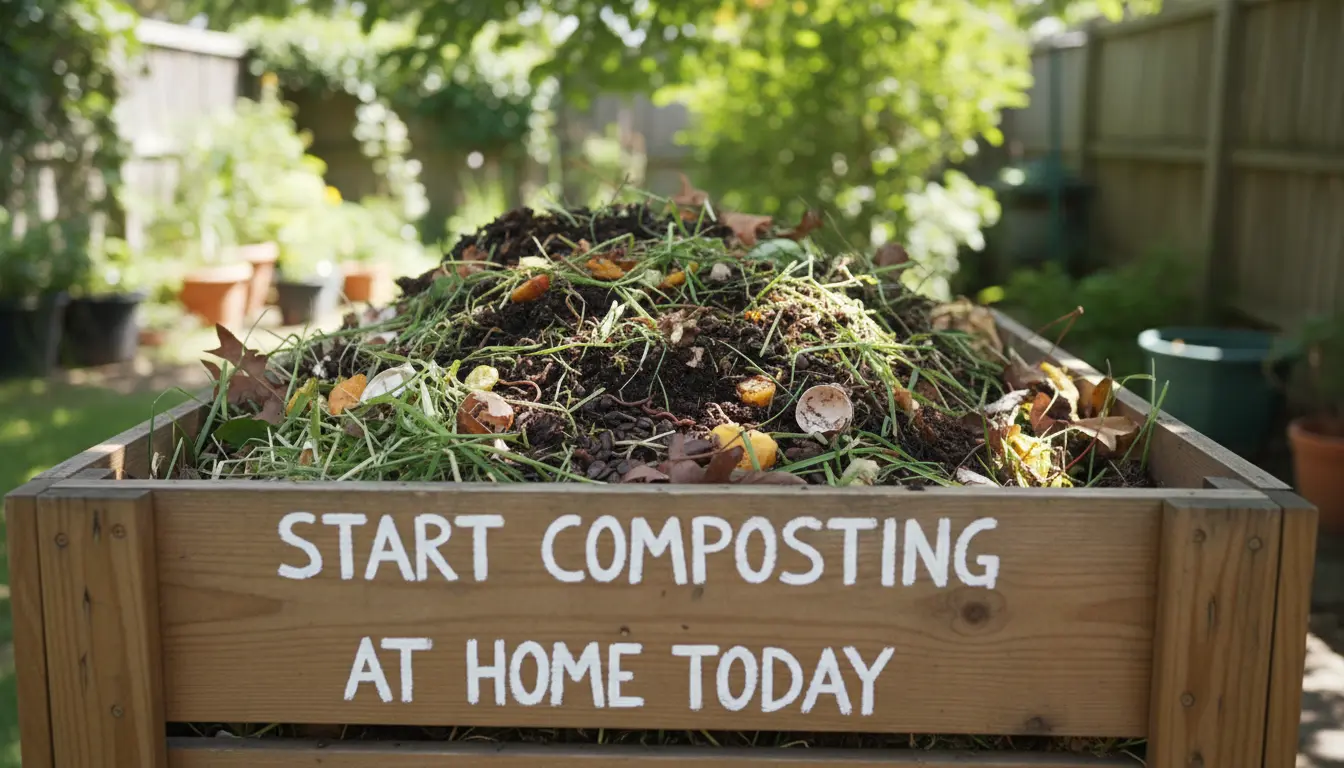
Why start composting at home
Composting at home turns kitchen scraps and yard waste into nutrient-rich soil. It reduces landfill waste and improves garden health with minimal effort.
Beginners can start with simple setups and learn the basics of balance, aeration, and moisture control for reliable results.
Basic supplies for composting at home
You do not need expensive equipment. Start with a bin or pile, a pitchfork or shovel, and a kitchen container for scraps.
- Compost bin or tumbler (or a simple pile)
- Kitchen scrap bucket with lid
- Garden fork or aerator tool
- Optional: thermometer, shredded paper, finished compost storage
What to add and what to avoid
Knowing which materials are safe keeps your compost healthy and odor-free. Use a mix of green and brown materials.
Good items for composting at home
- Greens: fruit and vegetable scraps, coffee grounds, fresh grass clippings
- Browns: dry leaves, shredded paper, cardboard, straw
- Small amounts of garden prunings and flowers
Items to avoid
- Meat, fish, and dairy (attract pests and cause odors)
- Oily foods and large bones
- Diseased plants and invasive weeds with seeds
Step-by-step: How to start composting at home
Follow these practical steps to begin composting within one afternoon.
- Choose a spot: a partially shaded, well-drained area near the garden or garage.
- Set up a bin or mark a pile area. Bins can be open, closed, or tumblers depending on space and preference.
- Start with a 4–6 inch layer of browns to help drainage and aeration.
- Add kitchen scraps and alternate with brown layers. Aim for roughly 2 parts browns to 1 part greens by volume.
- Moisten lightly. Compost should feel like a wrung-out sponge, not dripping wet.
- Turn the pile every 1–2 weeks to add oxygen and speed decomposition.
Troubleshooting common problems
Small issues are normal. Adjust moisture and aeration instead of starting over.
- Bad smell: Too much wet greens or food scraps. Add dry browns and turn the pile.
- Pile too dry: Add water and more greens, then turn to distribute moisture.
- Pests: Avoid meat and dairy. Use a closed bin or bury new scraps in the center of the pile.
- Slow decomposition: Chop materials smaller, increase surface area, and maintain heat by turning.
Composting can reduce household waste by up to 30 percent and can produce finished compost in as little as three months with active turning.
How to use finished compost from home
Finished compost is dark, crumbly, and smells earthy. Use it to enrich garden beds, potting mixes, and lawn top-dressing.
- Mix 1 part compost to 3 parts soil when planting vegetables or flowers.
- Top-dress lawns with a thin layer to improve soil structure and moisture retention.
- Create seed starting mixes by blending fine compost with vermiculite or perlite.
Small case study: One-family composting at home
Case: A two-person household converted food scraps and yard waste into compost using a 60-gallon tumbler. They stored kitchen scraps in a sealed bucket and added them to the tumbler every 3 days.
After 6 months of regular turning and balancing greens and browns, they produced roughly 40 liters of finished compost. Their garden bed yields improved, and weekly garbage volume dropped noticeably.
Tips to speed up composting at home
If you want faster results, follow these proven techniques.
- Chop or shred materials: smaller pieces decompose faster.
- Maintain heat: piles that stay warm break down quicker—aim for 40–60°C (104–140°F) internally if possible.
- Turn frequently: oxygen supports the microbes that decompose organic matter.
- Add compost activators: finished compost, manure, or soil can introduce helpful microbes.
Practical examples for different homes
Apartment dwellers can use a worm bin (vermicomposting) or a small Bokashi system for limited space. Gardeners with yards benefit from larger bins or in-ground piles.
- Apartment: Worm bin under the sink, collect food waste in the bin weekly.
- Small yard: 3-bin system for staging, active composting, and curing.
- Large property: Windrow or layered piles with periodic turning.
Final checklist to begin composting at home
- Choose a bin or method that fits your space.
- Gather brown and green materials before starting.
- Monitor moisture and aeration every week.
- Use finished compost to improve soil and reduce fertilizer use.
With a simple plan and regular attention, composting at home is an effective way to reduce waste and support healthier soil. Start small, learn by doing, and adjust methods to fit your household and garden needs.