
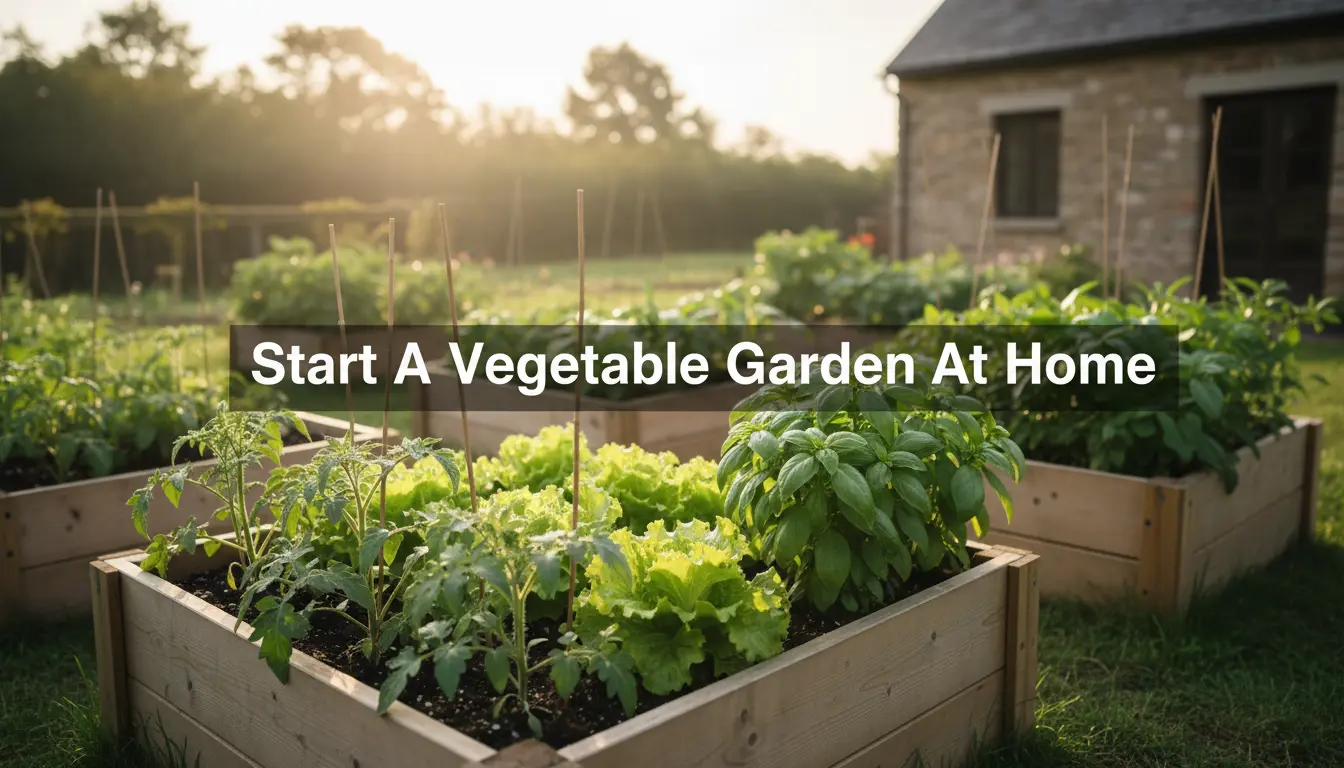
Starting a vegetable garden is a practical way to grow fresh food, save money, and enjoy outdoor activity. This guide gives clear steps you can follow whether you have a backyard, patio, or balcony.
How to Start a Vegetable Garden: Plan Your Space
Decide where to place your garden. Most vegetables need at least 6 hours of direct sunlight daily, so choose a sunny spot first.
Consider these options based on space and effort:
- In-ground beds for large yards
- Raised beds for better soil and drainage
- Containers for balconies and patios
Choose the Right Size and Layout
Start small to avoid overwhelm—one or two 4×4 ft beds or a few large containers are enough for beginners. Use simple square or rectangular beds for easy access and planting.
Plan paths so you can reach all plants without stepping into beds.
How to Start a Vegetable Garden: Prepare Soil and Beds
Healthy soil is the foundation of a productive garden. Test and improve soil before planting to give seedlings the best start.
Follow these steps to prepare soil:
- Remove grass, weeds, and debris from the bed area.
- Loosen soil to a depth of 8–12 inches with a fork or tiller.
- Mix in organic matter like compost or well-rotted manure to improve fertility and structure.
Soil Testing and Amendments
Use a basic soil test kit to check pH and nutrient levels. Most vegetables prefer pH 6.0–7.0.
Add lime to raise pH or sulfur to lower it, following product instructions and retesting after a few weeks.
How to Start a Vegetable Garden: Choose Plants
Select vegetables that match your climate, space, and experience level. Easy starter crops include lettuce, radishes, bush beans, and cherry tomatoes.
Decide between seeds and transplants:
- Seeds are cheaper and offer more variety.
- Transplants (young plants) give a head start and faster harvest.
Timing and Planting Schedule
Check your local last frost date and use it to schedule planting. Cool-season crops (peas, lettuce) go in early spring or fall. Warm-season crops (tomatoes, peppers) go in after frost risk passes.
Create a simple planting calendar with dates for sowing seeds and transplanting seedlings.
How to Start a Vegetable Garden: Watering and Care
Consistent watering is essential—aim to keep soil evenly moist but not waterlogged. Most vegetables need about 1 inch of water per week, more in hot weather.
- Water at the base of plants to reduce leaf disease.
- Use drip irrigation or a soaker hose for efficiency.
- Mulch beds with straw or wood chips to retain moisture and suppress weeds.
Routine Maintenance
Set aside 15–30 minutes a few times a week for weeding, checking for pests, and harvesting. Timely attention prevents small issues from becoming big problems.
How to Start a Vegetable Garden: Pest Control and Disease
Use a layered approach: prevention, monitoring, and targeted control when needed. Strong, healthy plants tolerate pests better.
- Rotate crops yearly to reduce soil-borne disease.
- Use row covers to protect young plants from insects and birds.
- Handpick pests like beetles or caterpillars when practical.
Organic Options
Neem oil, insecticidal soap, and diatomaceous earth can control many common pests. Apply treatments early in the day and follow label directions.
How to Start a Vegetable Garden: Harvesting and Storage
Harvest vegetables at peak ripeness for best flavor and nutrition. Frequent harvesting often encourages more production in plants like beans and zucchini.
Store produce properly: cool and dry for onions, refrigerated for lettuce and herbs, and room temperature for tomatoes until ripe.
Extend the Growing Season
Use cold frames, row covers, or cloches to protect crops from light frost and extend harvest into early spring or late fall.
Small Case Study: Sarah’s Balcony Tomato Project
Sarah started with two 12-inch containers on a sunny balcony. She planted cherry tomato transplants and a few basil plants in late spring.
She watered every other day, used a 5-1-1 liquid feed once a month, and harvested cherry tomatoes for 10 weeks. Her initial investment was $60, and she harvested about 12 pounds of fruit.
Key takeaways: choose compact varieties, monitor watering, and plant companions to improve yield in small spaces.
Quick Checklist to Start a Vegetable Garden
- Choose site with 6+ hours sun
- Decide bed type: in-ground, raised, or containers
- Prepare soil and add compost
- Select easy crops for your climate
- Create a simple watering and maintenance schedule
- Monitor pests and harvest regularly
Starting a vegetable garden is a series of small, manageable steps rather than a single big task. Begin with a small area, learn from a season, and expand as you gain confidence. With basic planning and consistent care, you can grow fresh vegetables at home even with limited space.