
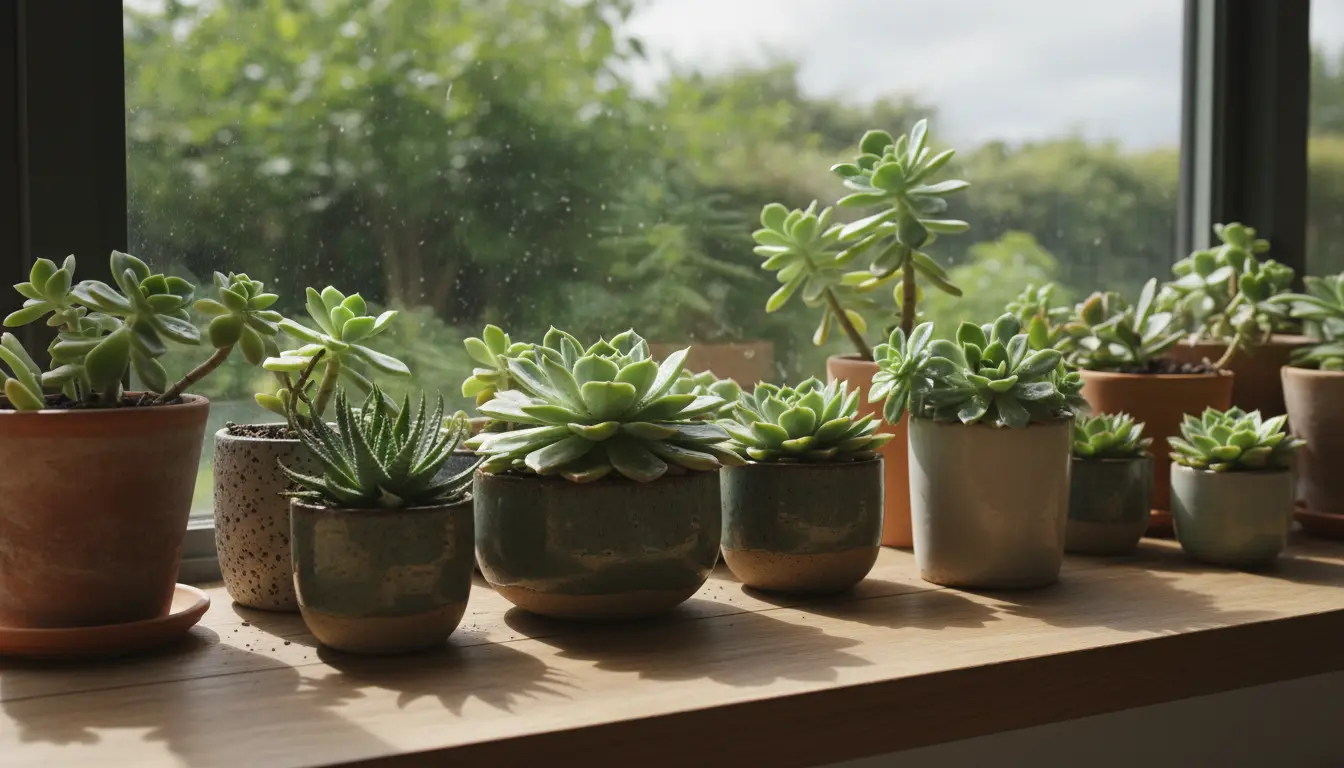
Succulents are popular indoor plants because they are low-maintenance and attractive. Yet many indoor growers struggle with basic care choices that cause stress or rot.
Indoor Succulent Care Basics
Good indoor succulent care focuses on three main needs: light, watering, and soil. Meeting these consistently prevents most common problems.
Light: Key to Indoor Succulent Care
Most succulents need bright, indirect light for 6 to 8 hours a day. Place plants near a south- or west-facing window if possible.
When light is limited, consider a full-spectrum LED grow light on a timer. Rotate pots weekly to keep growth even and prevent leaning.
Watering Tips for Indoor Succulent Care
Succulents prefer a soak-and-dry routine. Water thoroughly until excess drains from the pot, then wait until the soil is nearly dry before watering again.
Use your finger to check the top 1–2 inches of soil. In winter, reduce watering frequency because growth slows down and water needs drop.
Soil and Pots for Indoor Succulent Care
Use a fast-draining cactus or succulent mix. You can also mix regular potting soil with coarse sand or perlite (about 50/50) to improve drainage.
Choose pots with drainage holes. If you prefer decorative pots without holes, keep the succulent in a nursery pot inside the decorative container and remove it to water.
Advanced Indoor Succulent Care: Temperature and Humidity
Succulents generally prefer daytime temperatures between 65–80°F (18–27°C) and cooler nights down to 50–60°F (10–15°C).
They tolerate low indoor humidity well, so avoid placing them in bathrooms or steamy kitchens where humidity remains high.
Fertilizing as Part of Indoor Succulent Care
Feed succulents lightly during the growing season (spring and summer). Use a balanced, diluted houseplant fertilizer or a fertilizer labeled for cacti and succulents.
Apply at half the recommended strength once a month. Do not fertilize during dormancy in fall and winter.
Common Problems and Solutions in Indoor Succulent Care
- Yellow, soft leaves: Usually overwatering. Stop watering, remove rotted parts, repot in dry soil.
- Leggy growth or stretching: Not enough light. Move to brighter location or add a grow light.
- Pests like mealybugs or spider mites: Isolate plant, wipe leaves with alcohol solution, use insecticidal soap if needed.
- Brown or black spots on leaves: Sunburn or rot. Move plant to indirect light and check watering.
Propagation Tips for Indoor Succulent Care
Propagation is one of the easiest parts of succulent care. Use leaf cuttings, stem cuttings, or offsets depending on the species.
Allow cuttings to callus for several days before placing on dry soil. Mist lightly until roots form, then water normally.
Many succulents can survive weeks without water thanks to their water-storing leaves and stems. However, regular care produces the healthiest, most compact plants.
Routine Care Checklist for Indoor Succulent Care
- Light: 6–8 hours bright, indirect light daily.
- Water: Soak-and-dry method; check top 1–2 inches of soil.
- Soil: Use fast-draining mix with perlite or sand.
- Pots: Ensure drainage holes or use inner nursery pot.
- Fertilizer: Light feeding in spring and summer at half strength.
- Rotate plants weekly for even growth.
Small Case Study: Reviving a Neglected Jade Plant
Background: A home office jade had limp, yellowing leaves after months in a shady corner and irregular watering. The owner wanted to try saving it rather than replacing it.
Actions taken: They moved the plant to a bright east-facing window, repotted into a succulent mix, pruned away rotted roots and leaves, and started a strict soak-and-dry schedule. They also set a small grow light on a 6-hour timer for winter weeks.
Result: Within eight weeks the jade produced new firm leaves and steadier upright growth. The owner now rotates the plant and waters only when soil is nearly dry.
Quick Examples: Watering Frequency by Season
- Spring–Summer: Every 7–14 days depending on pot size and temperature.
- Fall: Every 2–4 weeks as growth slows.
- Winter: Every 3–6 weeks; check soil before watering.
Final Tips for Ongoing Indoor Succulent Care
Observe your plants often. Small changes in leaf color, firmness, or posture are early warnings.
Keep a simple care log for each plant: light location, watering dates, repotting, and pest treatments. This helps you learn what each species prefers.
With consistent light, proper drainage, and careful watering, indoor succulent care is straightforward and rewarding. Follow the checklist and adjust for your home conditions to keep succulents thriving.