
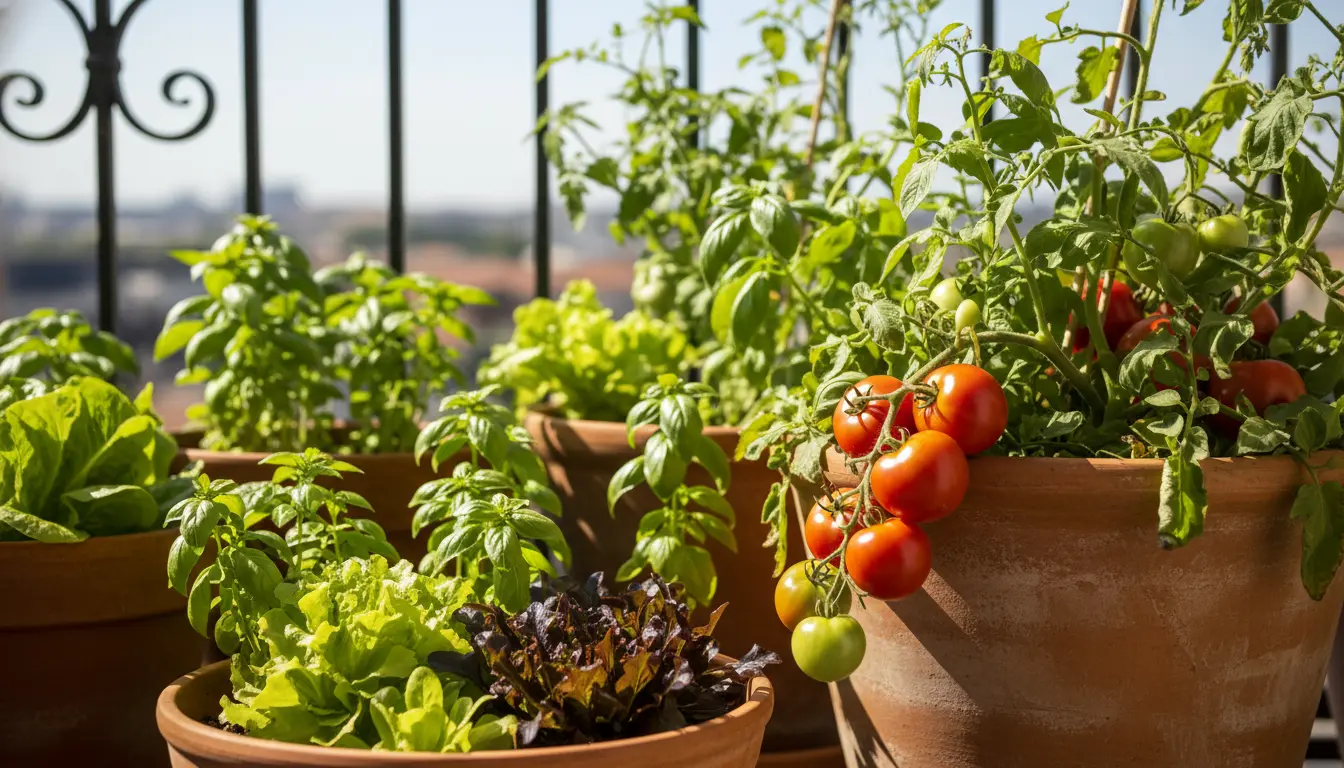
Why start a container vegetable garden
Container vegetable gardens let you grow food in small spaces like balconies, patios, or windowsills. They are more accessible for beginners and reduce soil-borne problems common in open beds.
This guide shows practical steps for planning, planting, and maintaining a thriving container vegetable garden. Follow the sequence to avoid common mistakes and get reliable yields.
Planning your container vegetable garden
Start by assessing light, space, and weight limits. Most vegetables need 6–8 hours of direct sunlight. If sunlight is limited, choose shade-tolerant crops.
Decide how many containers you can manage and where you will place them. Consider access to water and potential wind exposure.
Essential supplies for a container vegetable garden
- Containers with drainage holes (pots, grow bags, half-barrels)
- High-quality container potting mix
- Slow-release fertilizer or balanced liquid feed
- Seeds or seedlings of vegetables suited to containers
- Hand tools, watering can or hose with a gentle nozzle
Choosing containers and soil
Container choice affects root depth and moisture. Use larger containers for bigger vegetables like tomatoes and peppers. Small pots work for herbs and salad greens.
Best containers for a container vegetable garden
- 5–15 gallon pots for tomatoes, peppers, small cucumbers
- 3–5 gallon pots or grow bags for herbs and lettuces
- Shallow trays or window boxes for microgreens and spinach
Soil mix and drainage
Use a loose, well-draining potting mix formulated for containers. Avoid garden soil which compacts and drains poorly in pots. Add perlite or coarse sand if the mix feels dense.
Ensure every container has drainage holes and consider placing saucers or trays under them to protect surfaces.
Plant selection and timing for a container vegetable garden
Pick varieties labeled “container” or “patio” for best results. Compact or dwarf varieties fit smaller containers and produce well.
Vegetables that do well in containers
- Tomatoes (determinate or patio varieties)
- Peppers (bell and chili)
- Lettuces and salad greens
- Herbs (basil, parsley, chives)
- Bush beans and dwarf cucumbers
Planting, watering, and fertilization
Plant seedlings after the last frost date for your area or start indoors and transplant when stable. Fill containers and firm soil gently around roots, leaving space at the top for watering.
Watering tips for a container vegetable garden
Containers dry out faster than ground beds. Check moisture daily by sticking a finger into the soil; water when the top inch feels dry. Water deeply until it runs from drainage holes.
Use mulch on larger containers to reduce evaporation and maintain steady moisture.
Fertilizing schedule
Container plants rely on you for nutrients. Apply a balanced liquid fertilizer every 2–3 weeks during the growing season or use slow-release granules at planting time following label rates.
Watch for signs of deficiency such as yellowing leaves or poor fruit set and adjust feeding accordingly.
Pest control and common problems
Container gardens face fewer soil pests but can attract aphids, slugs, or whiteflies. Inspect plants weekly and tackle issues early.
- Remove damaged leaves and dispose of them away from plants
- Use insecticidal soap for soft-bodied pests
- Apply physical barriers like slug traps or copper tape for slugs
- Rotate crops by moving herbs and vegetables into different containers each season where possible
Maintenance schedule for a container vegetable garden
Consistent, simple routines lead to success. Spend 10–15 minutes daily or every other day checking moisture and pests. Do a deeper inspection weekly to prune, harvest, and feed.
- Daily: Check moisture and remove spent flowers or fruits
- Weekly: Feed light liquid fertilizer and inspect for pests
- Monthly: Replace top inch of soil or refresh mulch if needed
Real-world example: Balcony tomato success
Case study: Sarah, a city renter, grew two determinate tomatoes and basil in 10-gallon pots on her south-facing balcony. She used a commercial container mix, slow-release fertilizer at planting, and weekly liquid feed.
Sarah watered every other day in summer and harvested ripe tomatoes for six weeks. She controlled aphids with insecticidal soap and rotated basil with lettuce in the fall.
Result: Consistent yields and minimal problems, demonstrating that modest effort yields fresh produce in tight spaces.
Many vegetable varieties perform better in containers when pruned and trained. Determinate tomatoes set fruit over a shorter period, while indeterminate types benefit from staking and regular suckering.
Quick troubleshooting tips
If plants are wilting despite regular watering, check root bound conditions and repot into larger containers. Yellow leaves may indicate overwatering or nutrient deficiency.
If flowering without fruit, ensure adequate pollination (gently shake flowers) and stable night temperatures. Adjust feeding and light exposure if growth is leggy or weak.
Final checklist for your first container vegetable garden
- Assess light and space, then choose containers accordingly
- Select container-friendly vegetable varieties
- Use a quality potting mix and ensure good drainage
- Set a regular watering and fertilizing routine
- Monitor for pests and act early
With straightforward planning and weekly care, a container vegetable garden can provide fresh produce and gardening satisfaction even in small spaces. Start small, learn from the season, and expand as you gain confidence.