
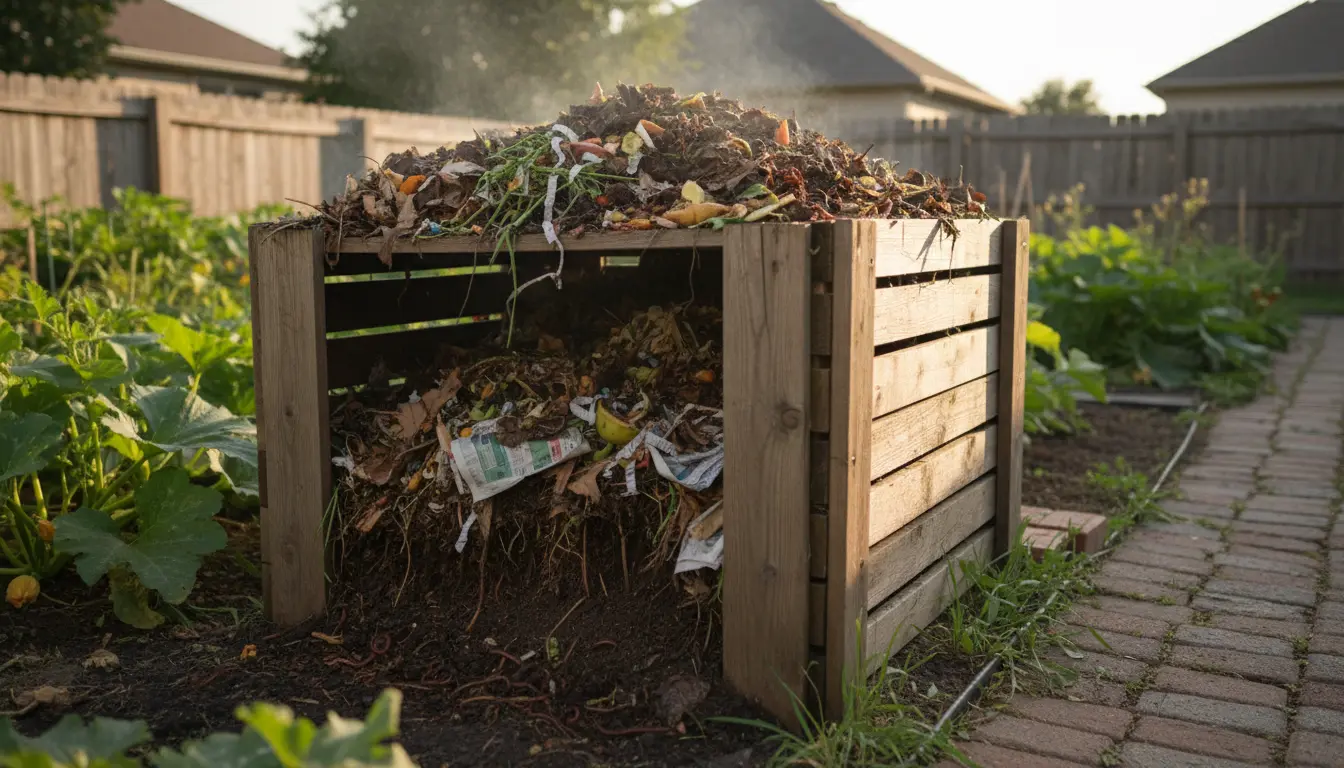
Composting at home turns kitchen scraps and yard waste into healthy soil, reduces landfill trips, and helps your garden thrive. This guide explains practical steps you can follow today, with methods suitable for small yards, apartments, and beginner gardeners.
Getting Started with Home Composting for Beginners
Choose a composting method that fits your space and lifestyle. Common options include a simple heap, a covered bin, or a rotating tumbler.
For small spaces, consider a closed bin or worm composting (vermicompost). These methods control odor and work well indoors or on balconies.
Pick a Location and Container
Place your compost container on soil or a surface that allows drainage. A shaded spot helps maintain moisture and prevents overheating in summer.
- Open pile: Best for large yards and minimal cost.
- Plastic or wooden bin: Neat and pest-resistant.
- Tumbler: Faster turning and quicker compost, ideal for busy households.
Materials: What to Add and What to Avoid
Compost works best when you balance carbon-rich “browns” and nitrogen-rich “greens.” Aim for a mix close to 3 parts browns to 1 part greens by volume.
Good Materials for Home Composting
- Greens: vegetable scraps, fruit peels, coffee grounds, fresh grass clippings.
- Browns: dry leaves, shredded paper, cardboard, straw, wood chips.
- Recurring additions: eggshells (crushed), tea bags (check material), small amounts of garden trimmings.
Materials to Avoid
- Meat, fish, bones, and dairy: attract pests and slow decomposition.
- Oily or greasy food waste: can create odors and repel helpful organisms.
- Diseased plants, invasive weeds, or chemically treated wood: can spread problems or leave residues.
How to Build and Maintain a Healthy Compost
Layer materials: start with coarse browns for airflow, then add greens, and cover with browns. Repeat layers until the bin is full.
Maintain moisture like a wrung-out sponge. Too dry slows decomposition; too wet causes odors. Turn the pile weekly for faster composting and better aeration.
- Turn: every 1–2 weeks for hot composting, every month for slower systems.
- Moisture test: squeeze a handful—if a few drops appear, it’s right.
- Temperature: an active pile can reach 130–160°F (55–70°C); smaller bins stay cooler but still work.
Troubleshooting for Home Composting for Beginners
Common issues include bad smells, slow breakdown, and pest visits. Address each problem quickly with simple fixes.
- Odor: add more dry browns and turn the pile to add air.
- Slow decomposition: chop materials smaller and increase green material or turn more often.
- Pests: use a closed bin or cover food scraps with a layer of browns.
When Is Compost Ready and How to Use It
Finished compost is dark, crumbly, and smells earthy. Depending on method and conditions, it can take 2 months to a year.
Use finished compost to enrich garden beds, topdress lawns, or mix into potting soil. It improves soil structure, water retention, and nutrient supply.
- Vegetable beds: mix 1–2 inches into the topsoil before planting.
- Flower beds: topdress in spring or autumn with a thin layer.
- Containers: blend one part compost to two parts potting mix for better drainage and nutrients.
Diverting food scraps to home compost cuts household waste by up to 30 percent and reduces methane emissions from landfills.
Real-World Example: A Small-Scale Case Study
Sarah, a city apartment dweller, started vermicomposting in a 20-gallon bin under her sink. She added kitchen scraps and shredded paper and fed a small worm colony.
Within six months she produced enough compost to pot herbs and topdress houseplants. Her household reduced garbage volume and saved $20 a month on potting mix purchases.
Key takeaways from her case: consistency, correct moisture, and a balance of greens and browns made vermicomposting effective in a small space.
Quick Checklist for Home Composting for Beginners
- Choose a method: pile, bin, tumbler, or worms.
- Balance browns and greens at roughly 3:1.
- Keep the pile moist and aerated—turn often for faster results.
- Avoid meat, dairy, and diseased plants.
- Use finished compost to improve soil and reduce waste.
Starting composting at home is a low-cost, high-impact way to improve your garden and reduce waste. Begin with small, consistent steps and adjust based on your space and goals.