
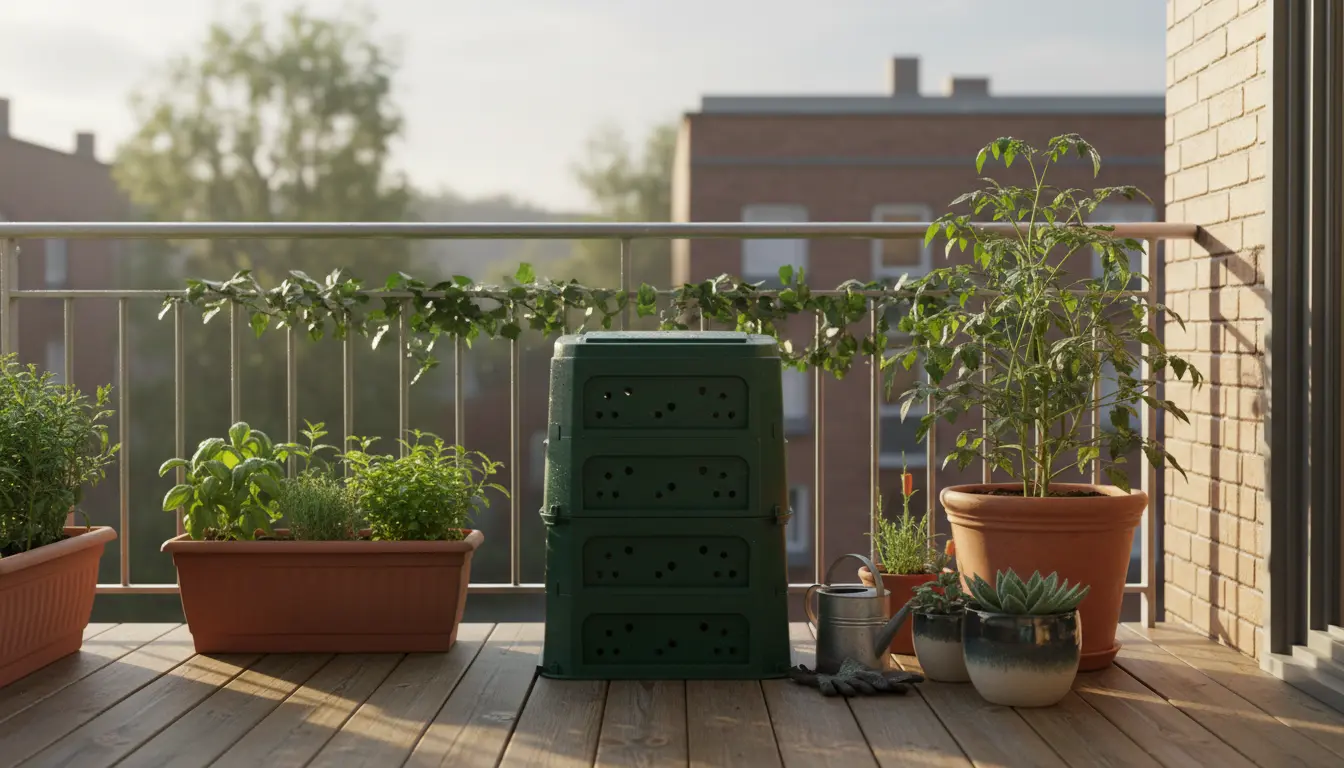
Why Home Composting for Small Urban Gardens Works
Home composting converts kitchen scraps and yard waste into nutrient-rich compost that feeds plants. It reduces waste, saves money on soil amendments, and supports healthier plants in compact spaces.
Small urban gardens have limited space but large potential for composting using compact systems. Choosing the right method is the first step to success.
Choose the Right System for Home Composting for Small Urban Gardens
Selecting a system depends on space, effort, and the types of materials you produce. Common systems for small urban gardens include worm bins (vermicomposting), bokashi, and compact tumblers.
- Worm bins: Great for food scraps and small spaces; quiet and odor-controlled.
- Bokashi: Ferments food waste including meat and dairy; good for apartments.
- Compost tumblers: Faster decomposition and easy turning; requires a small footprint.
- Static bins or layered trench composting: Simple and low-cost for balconies or patios.
How to Pick Based on Your Situation
If you have a balcony, a worm bin or bokashi bucket fits well. If you have a small backyard, a compact tumbler might speed results. Consider odor control, pests, and access when deciding.
Setting Up a Worm Bin for Home Composting for Small Urban Gardens
Worm bins are popular for small urban gardens because they require minimal space and produce excellent compost tea. Use red wigglers (Eisenia fetida) for efficient breakdown.
Follow these steps to set up:
- Choose a container: 10–20 gallon plastic bin with drainage and ventilation holes.
- Prepare bedding: Shredded cardboard, coconut coir, or aged compost moistened to a damp sponge level.
- Add worms: Start with about 1 pound of red wigglers for a small household.
- Feed gradually: Add small amounts of food scraps buried under the bedding every few days.
- Harvest compost: After 3–6 months, separate worms from finished compost or use migration methods.
Feeding and Materials for Home Composting for Small Urban Gardens
Balance ‘greens’ (nitrogen) and ‘browns’ (carbon) for healthy decomposition. In small systems, balance prevents odors and pests.
- Greens: Fruit and vegetable scraps, coffee grounds, tea bags, fresh grass clippings.
- Browns: Shredded paper, cardboard, dried leaves, sawdust (small amounts).
Aim for roughly a 1:2 ratio by volume of greens to browns in small bins. If odors develop, add more browns and reduce wet food until balance returns.
Troubleshooting Common Problems in Home Composting for Small Urban Gardens
Urban composters face common issues like odor, pests, and slow decomposition. Troubleshooting is straightforward with quick adjustments.
- Odor: Increase browns, aerate, and avoid adding meat or oily foods to open bins.
- Pests: Use sealed containers, bury food inside the bin, or switch to bokashi if rodents are an issue.
- Slow breakdown: Chop scraps smaller, maintain moisture, and increase aeration.
- Too dry: Add water and green materials; too wet: add more dry browns and fluff bedding.
Safety and Neighborhood Considerations
Place bins away from shared walkways and keep them clean to avoid complaints. Use lids and traps to deter insects and rodents. Check local regulations if you live in a managed property.
Worm composting can process up to their body weight in food each week. A one-pound colony of red wigglers can often handle a small household’s vegetable scraps efficiently.
How to Use Finished Compost in Small Urban Gardens
Finished compost is a soil conditioner and mild fertilizer. Use it to improve potting mixes, top-dress containers, or as a seed starting amendment.
- Mix 10–30% compost into potting soil for containers to improve water retention and nutrient content.
- Top-dress potted plants with a thin 1/2 to 1 inch layer of compost every 2–3 months.
- Steep compost in water for a few days to create a gentle compost tea for watering plants.
Small Real-World Case Study
Case: A two-person household on a fourth-floor apartment balcony in Portland began a 12-liter worm bin. They fed the bin daily with chopped kitchen scraps and layered shredded cardboard weekly.
After four months they harvested 8 liters of dark crumbly compost and a nutrient-rich liquid from the bin’s drainage tray. They mixed 20% compost into their container potting mix and reported stronger growth in tomatoes and herbs the following season.
Practical Checklist to Start Home Composting for Small Urban Gardens
Use this checklist to move from planning to action quickly. Keep steps compact and achievable for urban living.
- Choose a system: worm bin, bokashi, or tumbler.
- Set up the container: ensure ventilation, drainage, and accessibility.
- Prepare bedding or inoculant depending on the method.
- Start feeding small amounts and monitor moisture and odor weekly.
- Harvest finished compost and apply it to containers and planters.
- Adjust based on feedback: pests, smell, and processing speed.
Final Tips for Successful Home Composting for Small Urban Gardens
Start small and build habits. Regular, small feedings are easier to manage than large batches. Keep records of what you add and how your system responds for steady improvement.
Composting in urban settings is both practical and impactful. With the right system and a little routine, even the smallest garden can turn waste into a valuable resource.