
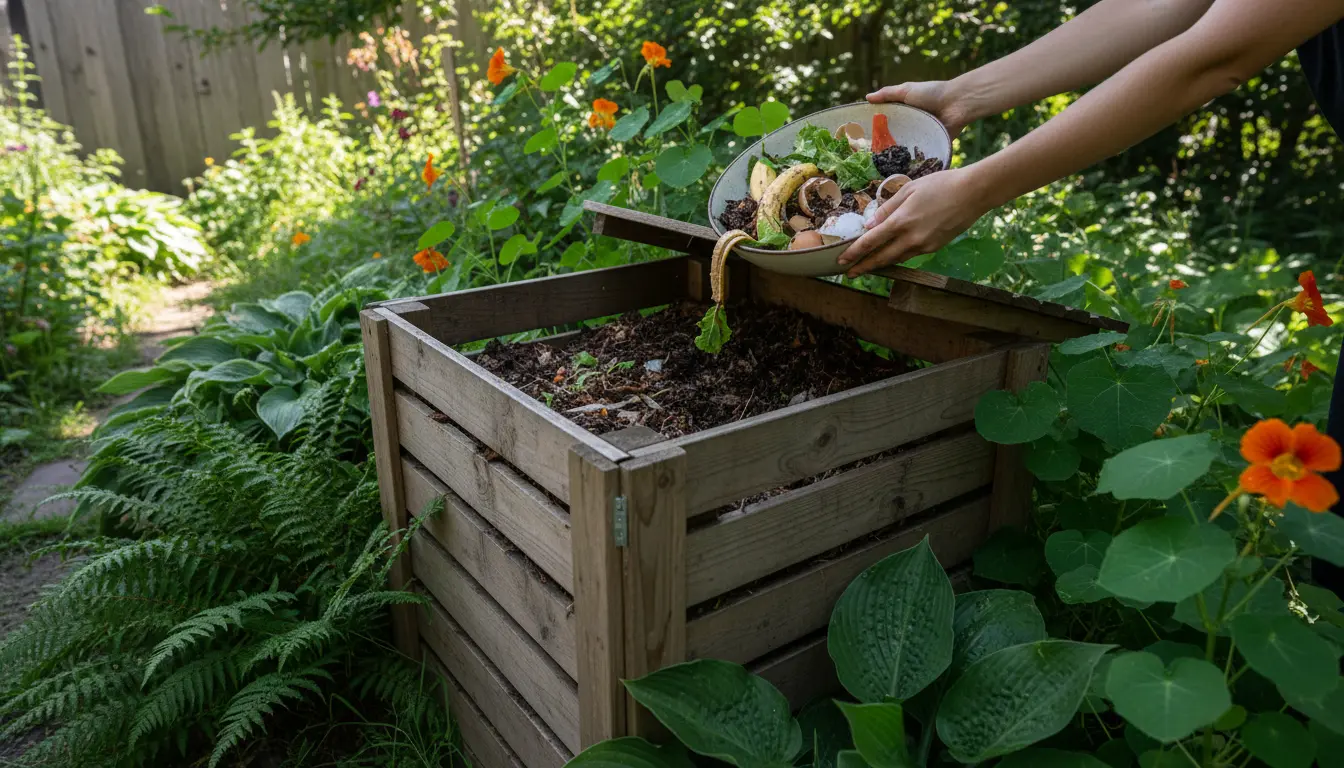
Start Composting at Home Today
Home composting is a simple, low-cost way to turn kitchen and yard waste into nutrient-rich soil. This guide explains how to start home composting for beginners, with clear steps you can follow this weekend.
What Is Home Composting?
Home composting is the natural breakdown of organic materials by microbes, fungi, and small animals. The result is compost, a dark, crumbly material that improves soil structure and feeds plants.
Benefits of Home Composting for Beginners
- Reduces household waste and landfill contributions.
- Produces free, natural fertilizer for gardens and potted plants.
- Improves soil water retention and reduces the need for chemical fertilizers.
How to Start Home Composting for Beginners
Follow these practical steps to get a functioning compost system without special tools or advanced knowledge. Each step uses common materials and basic techniques.
1. Choose a Compost Method
Decide whether you want a compost bin, a compost tumbler, or an open pile. For beginners, a simple bin or tumbling system is easiest to manage and keeps pests away.
2. Select the Right Location
Pick a level, well-drained spot with partial shade. Place the bin within a short walk from your kitchen to make daily additions convenient.
3. Gather Materials: Browns and Greens
Successful composting needs a balance of carbon-rich “browns” and nitrogen-rich “greens.”
- Browns: dry leaves, shredded paper, cardboard, straw
- Greens: vegetable scraps, coffee grounds, fresh grass clippings
A practical ratio is about 3 parts browns to 1 part greens by volume. Adjust if the pile is too wet or smelly.
4. Build and Maintain the Pile
Start with a layer of coarse browns to aid airflow. Alternate green and brown layers and keep the pile moist, like a wrung-out sponge.
- Turn the pile every 1–2 weeks to speed decomposition.
- Keep the temperature warm; a well-maintained pile heats to 120–160°F (49–71°C).
- Cover with a lid or tarp in heavy rain to avoid waterlogging.
What You Can and Cannot Compost
Knowing what to add reduces problems and speeds composting. Add most plant-based kitchen scraps and yard waste; avoid certain items.
Safe to Compost
- Fruit and vegetable scraps
- Eggshells (crushed)
- Coffee grounds and filters
- Tea bags (without plastic)
- Yard trimmings and leaves
Avoid Composting
- Dairy, meat, fish, and oily foods (attract pests)
- Diseased plants or weeds with seeds
- Pet waste from meat-eating animals
- Coal ash or treated wood
Troubleshooting Common Problems
Beginners often face a few predictable issues. Fixes are usually quick and inexpensive.
Problem: Foul Odors
Cause: Too many greens or anaerobic conditions. Fix: Add dry browns, turn the pile, and check drainage.
Problem: Slow Decomposition
Cause: Pile too dry, too small, or lacks nitrogen. Fix: Add water, combine several small piles, or add a nitrogen source like fresh grass clippings.
Problem: Pests or Rodents
Cause: Food scraps exposed or large meat/dairy items present. Fix: Use a closed bin, bury food inside the pile, and avoid prohibited items.
A single household can divert up to 30% of its waste from the trash by composting common kitchen and yard scraps.
How to Use Finished Compost
Finished compost is dark, crumbly, and earthy-smelling. Use it to top-dress lawns, mix into garden beds, or as potting soil amendment.
- Vegetable beds: mix 1–2 inches of compost into the top 6–8 inches of soil.
- Potted plants: blend 10–30% compost into potting mix.
- Lawns: spread a thin layer (less than 1/2 inch) and water in.
Small Real-World Example
A family of four started a 200-liter backyard bin in spring and followed the 3:1 brown-to-green rule. Within six months they had 50 liters of finished compost.
They used it on their vegetable patch and reported larger tomatoes and improved soil texture. Their household waste volume dropped noticeably, saving on trash pickup costs.
Simple Checklist to Start Home Composting
- Choose a bin or tumbler and place it in partial shade.
- Collect browns (paper, leaves) and greens (kitchen scraps).
- Layer materials and maintain moisture.
- Turn the pile every 1–2 weeks.
- Harvest finished compost after 3–12 months depending on conditions.
Final Tips for Home Composting for Beginners
Begin with small, regular additions and learn by doing. Monitor smell and moisture rather than trying to follow strict measurements.
Join local composting groups or community gardens to learn tips specific to your climate and materials.
Home composting is a practical way to reduce waste and improve your garden. With basic steps and a little maintenance, anyone can produce high-quality compost at home.