
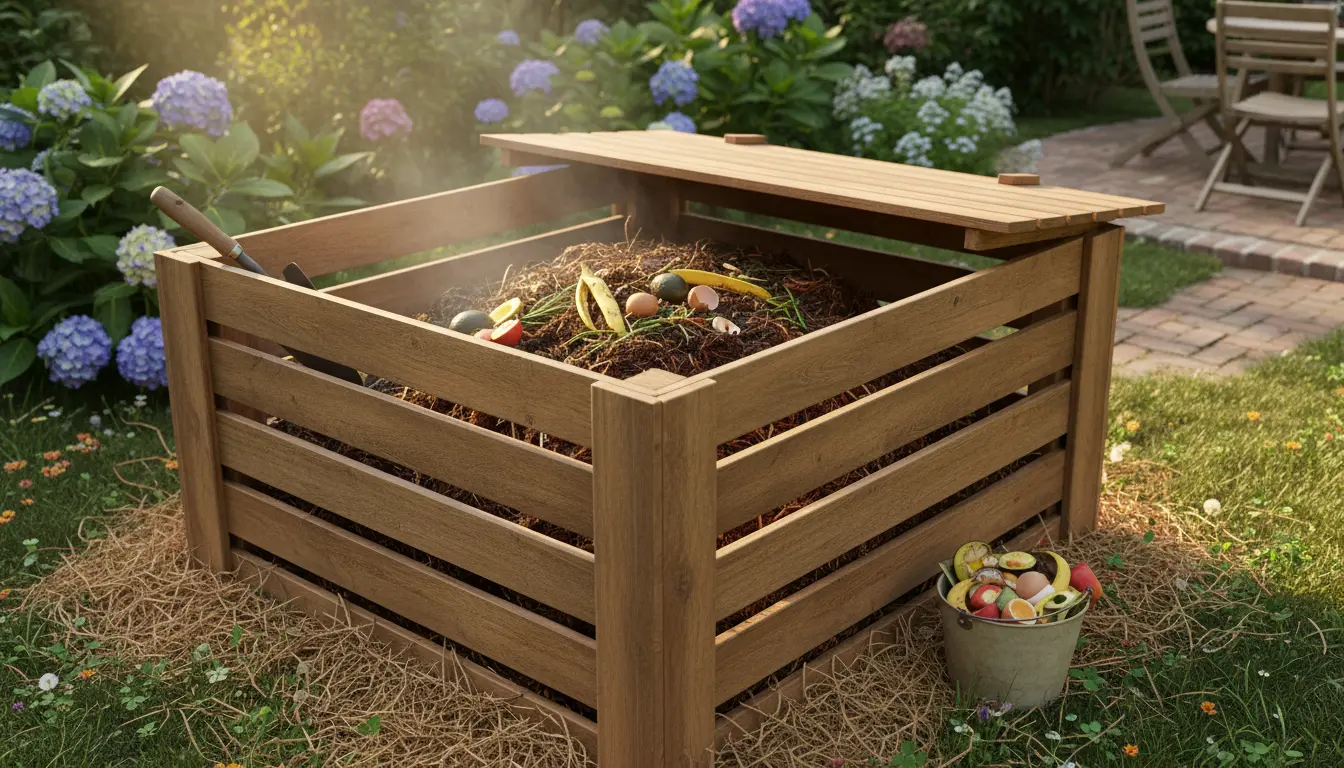
Home Composting: Benefits and Basics
Home composting turns kitchen scraps and yard waste into a rich soil amendment. It reduces household waste, saves money on fertilizers, and improves garden soil structure.
Composting is a biological recycling process that breaks down organic matter using microbes, air, moisture, and time. With a small setup and a little attention, most households can produce usable compost within months.
Why choose home composting
Home composting lowers the volume of trash you send to landfills and reduces methane emissions. It also gives you nutrient-rich compost to improve plant health and water retention in soil.
Home Composting Materials: What to Compost
Successful compost combines ‘greens’ (nitrogen-rich) and ‘browns’ (carbon-rich). Balance is key: aim for a mix that smells earthy and is moist but not soggy.
Examples of greens and browns make it easy to sort your household waste for composting.
- Greens: vegetable scraps, fruit peels, coffee grounds, fresh grass clippings
- Browns: dry leaves, shredded paper, cardboard, straw
- Avoid: meat, dairy, pet waste, diseased plants, oily foods
Quick tips for materials
Chop larger pieces to speed decomposition. Keep a kitchen container with a lid to collect scraps and transfer them daily to the outdoor bin.
Layer greens and browns to maintain airflow and reduce odors.
Home Composting Step-by-Step Setup
Setting up a compost system is straightforward and adaptable to small spaces and large yards. Choose a method that fits your lifestyle and space.
Choose a system for home composting
- Open pile: simple and low-cost for large yards
- Compost bin or tumbler: contained, neat, and faster when mixed regularly
- Worm composting (vermiculture): ideal for apartments or small patios
Basic setup steps
- Pick a level, shady spot with good drainage.
- Start with a 6–8 inch layer of browns to promote airflow.
- Add kitchen greens and a light sprinkle of browns; mix or turn weekly.
- Maintain moisture like a wrung-out sponge—add water or dry material as needed.
Home Composting Maintenance and Troubleshooting
Routine maintenance keeps your compost active and odor-free. Check the pile weekly and make small adjustments.
Signs and fixes
- Bad smell: Too wet or too many greens. Fix by adding browns and turning the pile for aeration.
- Slow decomposition: Insufficient moisture or nitrogen. Add water and some greens or nitrogen-rich material.
- Pests: Avoid food scraps like meat; bury scraps and use a closed bin or tumbler.
When is compost ready?
Compost is ready when it is dark, crumbly, and smells earthy. This usually takes 2–6 months depending on method and conditions.
Sift out larger pieces and return them to the pile so nothing goes to waste.
Adding a handful of finished compost to a new pile can speed decomposition by introducing active microbes. This is called compost inoculation.
Home Composting: Small Real-World Case Study
Maria, a city homeowner, started a 100-liter tumbler on her small patio. She collected kitchen scraps and used dry leaves from a neighbor for browns.
Within four months she produced about 40 liters of finished compost and reduced her weekly trash by nearly half. The compost improved her container vegetables’ growth, especially tomatoes and basil.
Using Your Finished Home Compost
Finished compost can be mixed into garden beds, used as a top dressing, or blended into potting mixes. It improves structure, nutrient content, and water retention.
Apply a 1–2 inch layer around plants or mix 10–20% compost into potting soil for containers.
Common Questions About Home Composting
Can I compost in winter?
Yes. Decomposition slows in cold weather but continues. Insulate the bin and continue adding materials. Active composting resumes as temperatures rise.
Is compost safe for edible gardens?
Fully finished compost is safe for edible plants. Do not use compost made from pet waste or untreated manure directly on roots until it is fully matured.
Final Practical Checklist for Home Composting
- Choose a bin or method that fits your space.
- Balance greens and browns; chop materials for speed.
- Maintain moisture and aeration; turn regularly.
- Troubleshoot odors, pests, and slow breakdown promptly.
- Use finished compost to boost garden health and reduce waste.
Starting home composting takes a little practice, but the long-term benefits for your garden and the environment are concrete. Follow these steps, observe your pile regularly, and adjust as needed to produce rich, usable compost at home.