
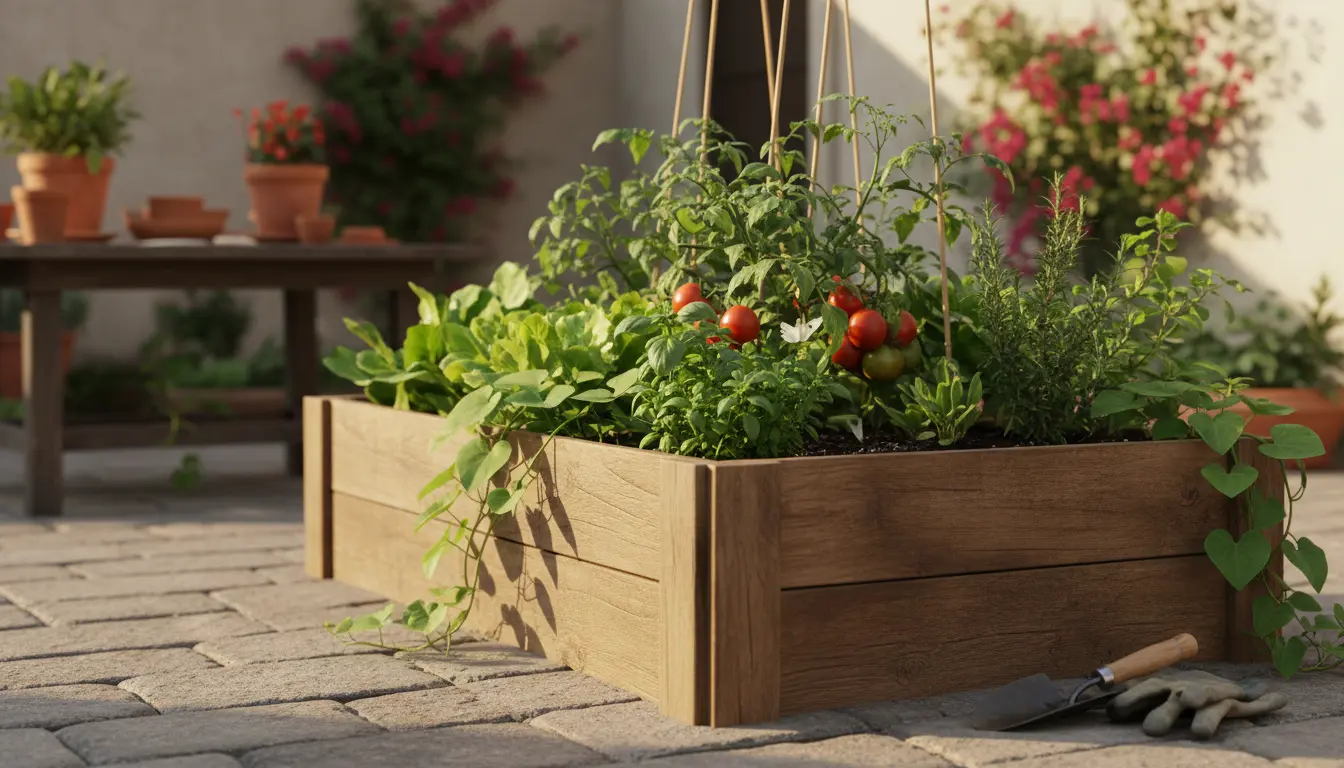
Starting a vegetable garden is rewarding and practical. This guide gives clear steps to help beginners plan, plant, and maintain a productive vegetable garden.
Start a Vegetable Garden: Choose the Right Site
Site selection is the first step when you start a vegetable garden. Pick a spot that gets at least 6 hours of direct sunlight for most vegetables.
Also consider access to water and drainage. Avoid low spots that stay soggy after rain; good drainage prevents root rot.
Sunlight and Microclimate
South-facing locations usually get the most sun. Note any afternoon shade from trees or buildings that could limit light.
Small microclimates, such as warm walls or sheltered corners, can extend your growing season for tomatoes or peppers.
Start a Vegetable Garden: Prepare Soil and Beds
Healthy soil is the foundation of a productive vegetable garden. Test your soil pH and texture before planting to know what amendments you need.
Work in organic matter such as compost to improve structure and fertility. Raised beds are ideal if your native soil is poor or compacted.
Soil Steps for Beginners
- Test soil pH with a simple kit; most vegetables prefer pH 6.0–7.0.
- Add 2–4 inches of compost and mix into the top 6–8 inches of soil.
- Use well-draining soil for containers; choose a quality potting mix.
Start a Vegetable Garden: Selecting Plants
Choose vegetables suited to your climate and season. Beginners should start with easy, reliable crops that produce quickly.
Good beginner plants include lettuce, radishes, green beans, cherry tomatoes, and herbs like basil.
Seed vs Seedlings
Starting from seed is cheaper and offers more variety, but seedlings (transplants) give a faster harvest. Use seedlings for warm-season crops if your season is short.
Planting and Spacing Tips
Follow spacing instructions on seed packets or plant tags. Crowded plants compete for light and nutrients, which reduces yields.
Use rows, blocks, or square-foot gardening layouts. Blocks usually perform better than long single rows because of microclimate and pollinator access.
Watering and Fertilizing Your Vegetable Garden
Consistent watering is crucial, especially during germination and fruit development. Aim for deep, infrequent watering rather than daily shallow sprinkling.
Mulch helps retain moisture and suppress weeds. Use straw, shredded leaves, or compost as a 2–3 inch mulch layer.
Fertilizer Basics
- Use a balanced organic fertilizer at planting time if soil tests show low nutrients.
- Side-dress heavy feeders (corn, tomatoes) with compost or a nitrogen-rich feed mid-season.
- Avoid over-fertilizing leafy crops if you want better flavor.
Start a Vegetable Garden: Pest and Disease Management
Integrated pest management (IPM) works best for beginners. Monitor plants weekly and identify problems early.
Encourage beneficial insects with diverse plantings and avoid broad-spectrum pesticides that kill pollinators.
Common Controls
- Handpick large pests like caterpillars or beetles in small gardens.
- Use row covers to protect young plants from insects and birds.
- Rotate crops each year to reduce soil-borne diseases.
Harvesting and Succession Planting
Harvest vegetables at peak ripeness for best flavor and to encourage continued production. Regular picking often increases yields, especially for beans and greens.
Practice succession planting: sow quick crops like radishes or lettuce between slower plants to maximize space and harvests through the season.
Planting marigolds near tomatoes can help reduce nematode populations in some soils, improving root health and yields.
Small Case Study: Sarah’s Balcony Vegetable Garden
Sarah had only a sunny balcony but wanted fresh salad greens. She started with three 12×12 inch containers filled with potting mix and compost.
Using container lettuce, radishes, and a dwarf tomato, Sarah watered deeply twice a week and mulched with straw. By week eight she had continuous salad harvests and a ripe tomato every 10–14 days.
Practical Checklist to Start a Vegetable Garden
- Choose site with 6+ hours sun and easy water access.
- Test soil and add compost; build raised beds if needed.
- Select easy vegetables for your climate and season.
- Plant with correct spacing and mulch to retain moisture.
- Monitor pests, rotate crops, and use organic controls first.
- Practice succession planting to maximize harvests.
Final Tips for Beginners
Start small and expand after your first season. A few well-tended beds give more produce and learning than a large, neglected plot.
Keep a simple garden journal noting planting dates, varieties, and problems. This record saves time and improves results in future seasons.
With basic planning, good soil, and regular care you can successfully start a vegetable garden and enjoy fresh, homegrown produce even in limited space.