
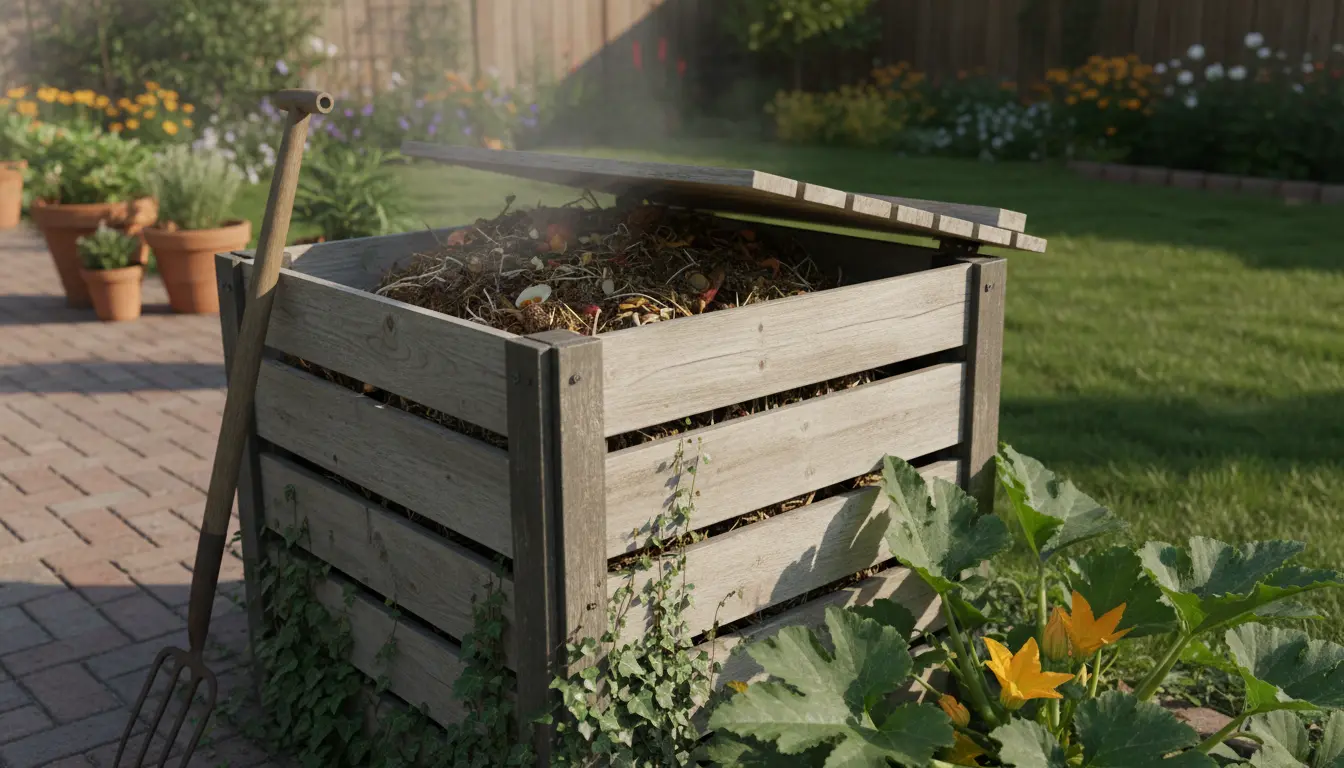
Why home composting matters
Home composting turns kitchen and yard waste into nutrient-rich soil. It reduces landfill waste, lowers household emissions, and improves garden soil naturally.
For beginners, composting is a low-cost way to support plants and cut waste. This guide focuses on simple, practical steps you can follow right away.
Basic principles of home composting
Composting relies on a balance of carbon and nitrogen, oxygen, moisture, and time. Microorganisms break down organic materials when conditions are right.
Remember the simple rule: mix brown materials (carbon) with green materials (nitrogen). Proper balance speeds composting and keeps odors away.
What to compost
Common safe items for home composting include fruit and vegetable scraps, coffee grounds, tea bags, eggshells, leaves, and shredded paper.
Avoid meat, dairy, oily foods, pet waste, and diseased plants in a basic backyard compost pile. These items attract pests or slow decomposition.
Carbon to nitrogen ratio
A practical target is about 25–30 parts carbon to 1 part nitrogen. You do not need exact measurements; aim for roughly three parts brown material to one part green material by volume.
Examples: mix a layer of dried leaves (brown) with a thinner layer of kitchen scraps (green). Add a little soil to introduce microbes.
Setting up your first compost bin
Choose a container or spot in your yard that gets some sun and good drainage. Bins can be purchased or made from pallets or wire mesh.
Start with a 3x3x3 foot pile or a medium-sized bin. That size holds heat well and decomposes efficiently for most households.
Layering method
Layering helps balance moisture and airflow. Start with coarse brown material at the base to allow drainage.
- Base: twigs or straw for airflow
- Layer green scraps about 2–3 inches thick
- Add a 3–4 inch layer of brown materials
- Sprinkle soil or finished compost to introduce microbes
Maintaining your compost pile
Maintenance is simple: keep the pile moist like a wrung-out sponge and turn it every 1–2 weeks. Turning introduces oxygen and mixes materials.
If the pile smells bad, add more brown materials and turn. If decomposition is slow, add water and greens to boost activity.
Troubleshooting common problems
Odor: usually from too much nitrogen or poor airflow. Add dry leaves or shredded paper and turn the pile.
Pests: avoid putting meat, dairy, or oily food in the pile. Use a closed bin or add a layer of soil on top of food scraps.
Slow breakdown: check moisture, add greens and turn more often. Smaller pieces compost faster; chop large materials.
Using finished compost
Compost is ready when it is dark, crumbly, and has an earthy smell. This usually takes 2–6 months depending on conditions.
Use finished compost to enrich garden beds, topdress lawns, or mix into potting soil. Apply a 1–2 inch layer to beds or work it into the top few inches of soil.
Small-scale composter options
Depending on space and needs, choose among these common systems:
- Tumbler: easy to turn and tidy for small spaces
- Open pile: cheapest and works well for large yards
- Worm bin (vermicompost): ideal for kitchens and apartments
Adding crushed eggshells to your compost increases calcium content, which helps prevent blossom end rot in tomatoes and peppers.
Real-world example: The Rivera family
The Rivera family started a 3×3 compost bin in their suburban backyard. They separated food scraps and yard waste into a kitchen caddy for convenience.
Within four months, they harvested dark compost and used it to top-dress their vegetable beds. Their soil held moisture better, and tomato yields improved the following season.
Practical tips for beginners
- Keep a small countertop bin with a tight lid to collect scraps easily.
- Chop or blend large scraps to speed up decomposition.
- Use a kitchen compost pail with compostable liners if you want less cleaning.
- Record what you add and how the pile responds to learn your local balance.
Final checklist for home composting
- Choose a bin and a shady, well-drained spot
- Mix browns and greens roughly 3:1 by volume
- Maintain moisture and turn regularly
- Use finished compost to improve garden soil
Starting home composting is practical and rewarding. With basic balance and regular checks, most households will produce quality compost that improves soil, reduces waste, and supports a healthier garden.