
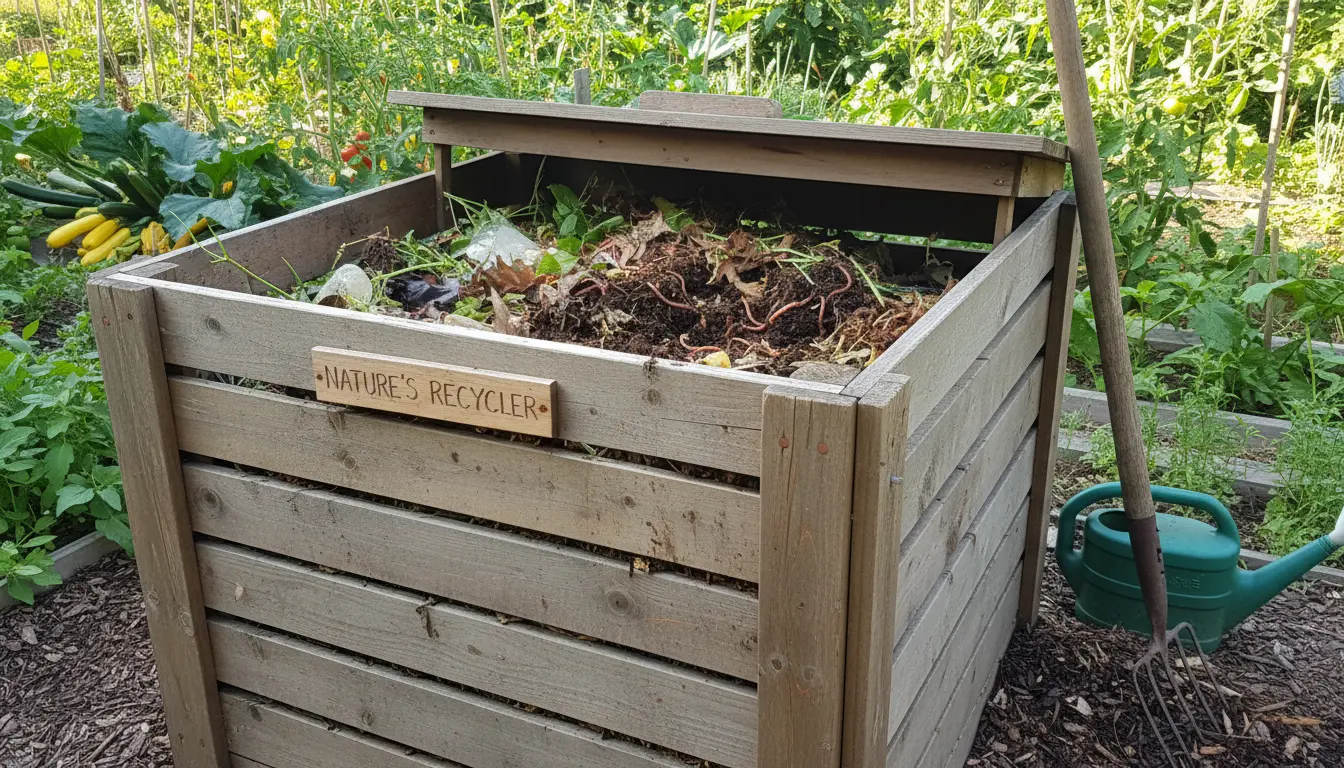
Home composting is a simple way to turn kitchen scraps and yard waste into valuable soil amendment. This guide gives clear, step-by-step instructions for home composting for beginners, with practical tips you can use today.
Why Home Composting for Beginners Is Useful
Composting reduces household waste and improves garden soil. Beginners can start with small systems and expand as they learn what works.
Benefits include less trash, improved soil structure, and more nutrient-rich compost for plants.
How to Start Home Composting for Beginners
The simplest approach uses a contained bin in your yard or a small countertop collector for kitchen scraps. Follow these basic steps to set up your first compost system.
1. Choose a Composting Method
- Backyard bin: Good for yards and larger volumes of waste.
- Tumbler: Easier turning, faster results but higher cost.
- Bokashi: Fermentation method for apartments, handles cooked food.
- Worm composting (vermicompost): Ideal for small spaces and fast nutrient-rich castings.
2. Location and Bin Setup
Place the bin on level ground with some shade. Ensure decent drainage and airflow. For backyard bins, a spot near the garden or water source is convenient.
Start with a layer of coarse material like straw or small branches to help airflow at the base.
3. Add the Right Materials
Balance brown (carbon) and green (nitrogen) materials for steady decomposition. Aim for roughly a 3:1 ratio by volume of browns to greens.
- Greens: fruit and vegetable scraps, coffee grounds, fresh grass clippings.
- Browns: dry leaves, shredded newspaper, cardboard, straw.
Maintenance Tips for Home Composting for Beginners
Regular, simple tasks keep the pile healthy. Turn the pile to introduce oxygen and mix materials. Keep the pile moist like a wrung-out sponge.
Turning and Aeration
Turn a backyard pile every 1–2 weeks for faster decomposition. Tumblers may be turned every few days. For worm bins and bokashi, follow method-specific care.
Moisture and Temperature
Too dry slows decomposition; too wet causes odors. Add water during dry spells and add more brown materials if it becomes soggy.
Active compost piles heat up to 120–150°F (50–65°C). This helps break down materials and reduce pathogens and seeds. Beginners can still compost successfully at lower temperatures with slower results.
What Not to Compost
Avoid adding meat, dairy, oily foods, diseased plants, and pet waste to open backyard piles. These can attract pests or introduce pathogens.
Compost these cautiously with closed systems: bokashi or industrial composting for meat and dairy.
Food scraps and yard waste make up about 30% of household trash by weight. Composting can dramatically cut that number and return nutrients to the soil.
Troubleshooting Common Problems
Beginner composters often face a few predictable issues. Here are quick fixes you can try.
- Bad smell: Add more browns and turn pile to add oxygen.
- Slow decomposition: Chop materials into smaller pieces and maintain moisture.
- Fruit flies: Bury fresh food scraps under brown material or use a lidded counter collector.
- Too wet: Add dry leaves, shredded cardboard, or sit the bin in sunlight to dry slightly.
How to Know When Compost Is Ready
Finished compost is dark, crumbly, and smells earthy. Most backyard methods take 2–12 months depending on materials and management.
Use finished compost as top dressing, mix it into potting soil, or add it to garden beds to improve water retention and fertility.
Small Real-World Example
Case Study: A small city household in Seattle started with a 50-gallon tumbler and a countertop collector. They added kitchen scraps and yard waste, turned the tumbler weekly, and kept the mix moist.
After six months they produced about 40 liters of finished compost. Their vegetable beds showed improved growth and reduced need for store-bought fertilizer.
Practical Checklist for New Composters
- Choose method: bin, tumbler, bokashi, or worm farm.
- Collect materials: set up a small kitchen caddy for scraps.
- Maintain balance: keep 3:1 browns to greens by volume.
- Turn regularly and monitor moisture.
- Use finished compost in garden beds or potted plants.
Next Steps for Home Composting for Beginners
Start small and adjust as you learn. Keep notes on what you add and how often you turn the pile. Over time you will find the rhythm that works with your lifestyle and climate.
Composting is a low-cost habit with long-term benefits for your garden and the planet. Begin with easy steps and expand when you’re comfortable.