
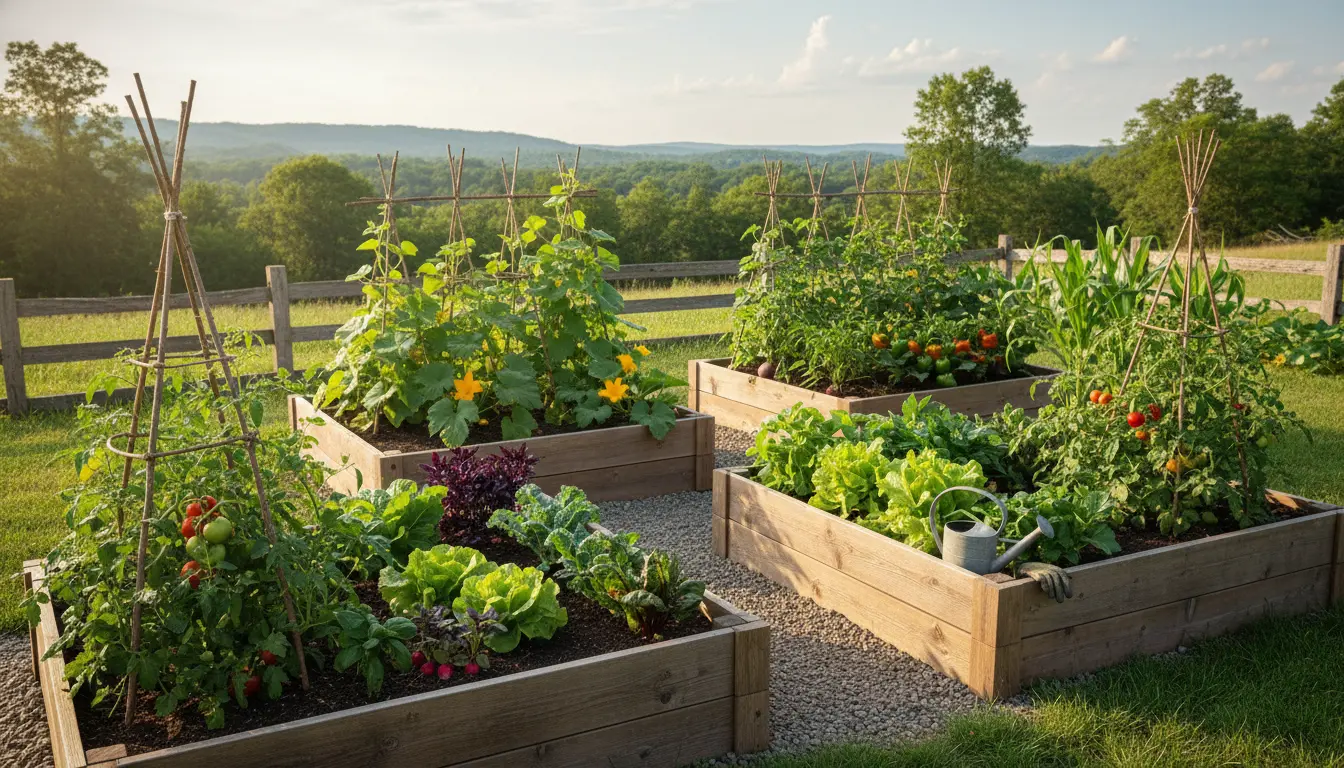
How to Start a Vegetable Garden: Step-by-Step
Starting a vegetable garden is rewarding and can be simple with basic planning. This guide walks you through clear, practical steps to start a vegetable garden at home, whether you have a yard, balcony, or patio.
1. Decide Your Garden Type
First choose the garden type that fits your space and time. Options include in-ground beds, raised beds, containers, or vertical systems.
- In-ground beds: Best for larger yards and deep-rooted crops.
- Raised beds: Easier soil control and drainage.
- Containers: Great for balconies and patios.
- Vertical gardens: Save space for vining plants.
2. Choose a Location to Start a Vegetable Garden
Sunlight and access are key when you start a vegetable garden. Most vegetables need 6–8 hours of direct sun daily.
Also consider proximity to water, ease of access for maintenance, and wind protection. Record light patterns across the day to pick the best spot.
Soil and Preparation When You Start a Vegetable Garden
Healthy soil is the foundation of a productive garden. Test soil pH and texture, and add organic matter to improve fertility and structure.
Use compost, well-rotted manure, or high-quality topsoil to enrich planting areas. If using containers, pick a loose, well-draining potting mix formulated for vegetables.
Soil Prep Checklist
- Remove weeds and debris from the site.
- Loosen soil to at least 8–12 inches for roots to expand.
- Mix in 2–4 inches of compost and a balanced organic fertilizer if needed.
- Level and form beds for good drainage.
What to Plant First
Choose vegetables that match your climate and growing season when you start a vegetable garden. Start with easier crops to build confidence.
Beginner-friendly vegetables include lettuce, spinach, radishes, green beans, bush tomatoes, and herbs like basil and parsley.
Planting Tips
- Sow fast-maturing crops early for quick results.
- Stagger plantings to extend harvests over weeks.
- Follow spacing recommendations on seed packets or plant labels.
Watering and Maintenance
Consistent watering is crucial when you start a vegetable garden. Deep, infrequent watering encourages strong root systems.
Water at the base of plants in the morning to reduce disease risk. Use mulch to retain moisture and suppress weeds.
Pest and Disease Management
Monitor plants regularly for pests and signs of disease. Use cultural practices first: crop rotation, healthy soil, and proper spacing.
- Hand-pick larger pests like caterpillars and beetles.
- Use row covers for seedlings to keep out insects and birds.
- Apply organic controls such as neem oil or insecticidal soap when needed.
Companion Planting and Crop Rotation
Companion planting can improve yields and reduce pests. Pair tomatoes with basil, and plant marigolds near beans to deter nematodes.
Rotate families of vegetables each year. Avoid planting the same crop in the same spot for consecutive seasons to reduce disease pressure.
Seasonal Schedules for Beginners
Plan a simple seasonal schedule based on your climate zone. Start seeds indoors 4–8 weeks before your last frost for warm-season crops.
Cool-season crops like lettuce and spinach can be sown directly in early spring or fall. Keep a calendar for sowing and harvesting dates.
Small Example: Case Study of a 10×10 Raised Bed
Maria had 10×10 feet of backyard space and wanted fresh vegetables. She built a raised bed, filled it with a mix of topsoil and compost, and chose easy crops.
In year one she planted tomatoes along the back, bush beans in the center, and lettuce and radishes in front. She watered deeply twice a week and mulched heavily.
Result: Maria harvested tomatoes for three months and had continuous salads from staggered lettuce plantings. She improved soil each fall with compost and saw better yields in year two.
Practical Checklist to Start a Vegetable Garden
- Choose garden type: in-ground, raised, container, or vertical.
- Pick a sunny location with easy water access.
- Test and amend soil; add compost and organic matter.
- Select easy crops and follow planting schedules.
- Establish a watering plan and mulch to retain moisture.
- Monitor for pests and use integrated controls.
Many common vegetables like lettuce, radishes, and spinach can mature in 30 days or less, giving quick results for new gardeners.
Final Tips for Success
Start small and expand as you gain confidence. A successful vegetable garden grows from consistent care and attention rather than perfect planning.
Keep records each season of what worked and what did not. Adjust planting dates, varieties, and spacing based on real results from your space.
If you follow these simple steps, you will be able to start a vegetable garden that provides fresh produce and a satisfying hobby for years to come.