
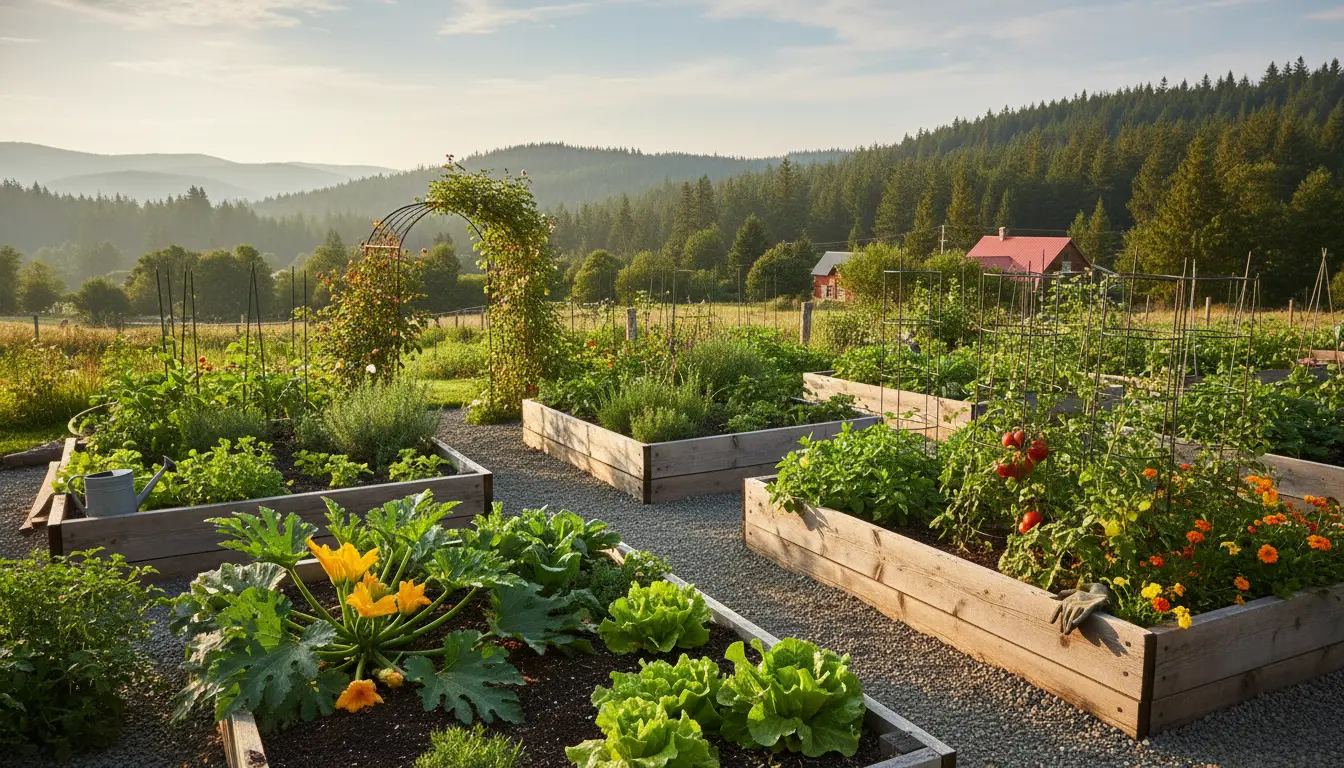
Raised bed gardens are a practical way to grow vegetables and flowers in limited space with better soil control and easier maintenance. This guide explains how to start a raised bed garden, from planning to first harvest, using clear steps you can follow.
Choose Location for Your Raised Bed Garden
Location matters for a raised bed garden. Pick a spot that gets at least 6 hours of direct sun for most vegetables and many herbs.
Also consider access to water, level ground, and protection from strong wind. Plan for walkways at least 18 inches wide so you can reach plants from both sides.
Sun and Drainage
Test sunlight over a day or two to confirm hours of sun. Avoid low spots that collect water; raised beds drain better on slightly elevated ground.
Decide Size and Materials for Your Raised Bed Garden
Standard raised beds are 4 feet wide so you can reach the middle from either side. Length varies with space and budget, while height is often 8–12 inches for annuals and 12–24 inches for deeper-rooted vegetables.
Common materials include untreated cedar, composite boards, or stacked concrete blocks. Avoid treated wood that can leach chemicals into soil when growing edibles.
Popular Dimensions
- 4 x 8 feet bed — good for larger plots and simple layout.
- 4 x 4 feet bed — compact and easy to manage for small yards.
- 2 x 6 feet narrow bed — fits tight spaces and pathways.
Prepare Soil Mix for Your Raised Bed Garden
Filling a raised bed with quality soil is one of the biggest advantages over in-ground gardening. A common mix is one-third topsoil, one-third compost, and one-third soilless mix or aged manure.
Use soil that is loose, drains well, and holds moisture. Avoid using only topsoil from the yard, which can compact and lack organic matter.
Simple Soil Recipe
- 40% screened topsoil or loam
- 40% high-quality compost
- 20% coconut coir or peat-free soil conditioner
Planting Strategy in a Raised Bed Garden
Plan your layout before planting. Taller crops should be placed on the north side so they do not shade shorter plants.
Use tight spacing with square-foot gardening or follow seed packet spacing. Consider succession planting to extend harvests through the season.
Companion Planting Tips
- Tomatoes with basil to help flavor and possibly deter pests.
- Leafy greens in partial shade from taller crops later in the season.
- Marigolds near root crops to reduce nematode pressure.
Watering and Mulching for a Healthy Raised Bed Garden
Raised beds can dry faster than in-ground beds. Water deeply and less frequently to encourage strong root growth. Drip irrigation or soaker hoses work well and conserve water.
Apply 2–3 inches of organic mulch like straw or shredded leaves to reduce evaporation, suppress weeds, and moderate soil temperature.
Maintenance and Fertility in a Raised Bed Garden
Top-dress with compost each spring and monitor nutrient needs with occasional soil tests. Many raised beds remain productive for several seasons with regular organic inputs.
Rotate crop families between beds yearly to reduce disease pressure. Keep an eye out for pests and treat early using organic methods when possible.
Seasonal Tasks
- Spring: Add compost, level soil, and plant cool-season crops.
- Summer: Mulch, water deeply, and harvest regularly.
- Fall: Remove spent plants, add compost, and plant cover crop if desired.
Raised bed gardens can warm earlier in spring, allowing you to plant about 1–3 weeks sooner than in-ground beds in many climates.
Small Real-World Case Study: Backyard Converted to Raised Bed Garden
Sara, a homeowner in zone 6, converted a 10 x 10 foot patch of lawn into three 4 x 2 foot raised beds using cedar planks. She filled the beds with a mix of screened topsoil, homemade compost, and coconut coir.
In her first season she grew lettuce, radishes, beans, and cherry tomatoes. Regular mulching and drip irrigation kept watering time low, and she harvested fresh greens for six weeks of continuous salads.
By year two she added compost annually and began rotating tomatoes to a different bed, which reduced disease and improved yields.
Common Problems and Quick Solutions for Raised Bed Gardeners
- Overheating in hot climates — add shade cloth during peak heat or plant heat-tolerant varieties.
- Rapid moisture loss — increase mulch, add organic matter, and consider water-retaining crystals for very sandy soils.
- Pest pressure — use row covers, hand-pick slugs, and encourage beneficial insects with flowering borders.
Final Checklist to Start Your Raised Bed Garden
- Choose a sunny, level location near water.
- Select bed size and safe materials like untreated wood or blocks.
- Fill with a balanced soil-compost mix and adjust pH if necessary.
- Plan planting layout and irrigation before planting.
- Mulch, monitor moisture, and add compost yearly.
Starting a raised bed garden is a manageable project with big rewards: better soil control, easier access, and often higher yields. Follow the steps above, adapt to your climate, and learn season by season.