
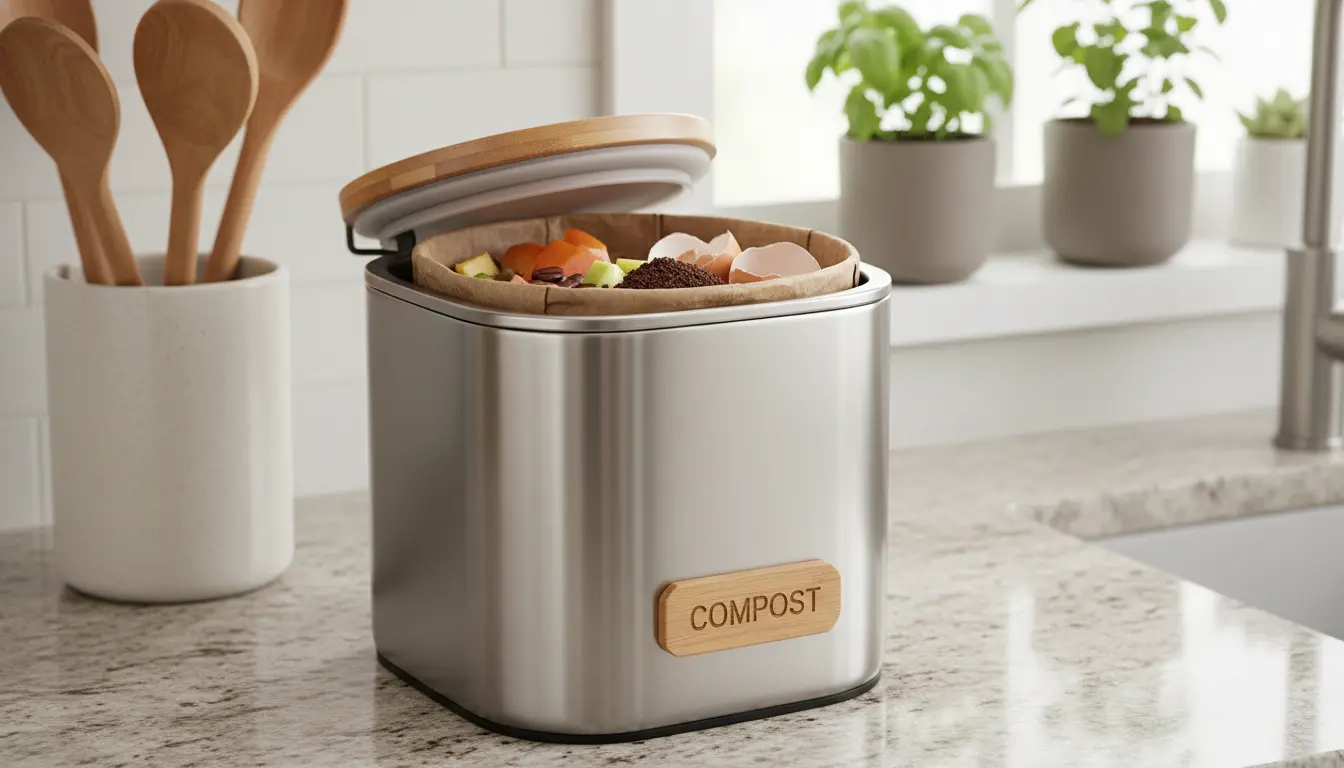
Home composting turns kitchen scraps and yard waste into a valuable soil amendment. This guide gives clear, practical steps to start composting at home, whether you have a backyard, balcony, or small apartment.
Why Home Composting Matters
Composting reduces household waste and returns nutrients to the soil. It lowers methane emissions from landfills and improves garden soil structure and fertility.
For beginners, composting is a low-cost way to support plants, reduce trash bills, and adopt more sustainable habits.
Getting Started with Home Composting
Choose a method that fits your living situation and the amount of organic waste you produce. Each method requires slightly different care and materials.
Choose a Composting Method (Home Composting)
- Bin composting: A closed bin or tumbler is neat and good for small yards.
- Pile composting: An open pile suits larger spaces and produces larger volumes.
- Bokashi: Anaerobic fermenting system for kitchens, including meat and dairy.
- Vermicomposting: Using worms to process food scraps indoors or outdoors.
Materials to Use (Home Composting)
Compost needs a balance of carbon rich and nitrogen rich materials. Aim for a mix rather than only one type.
- Carbon (brown): dry leaves, straw, shredded paper, cardboard
- Nitrogen (green): vegetable scraps, coffee grounds, fresh grass clippings
- Avoid: large meat pieces, bones, oily foods, diseased plants (unless using Bokashi)
Basic Maintenance for Home Composting
Keep the compost moist like a wrung-out sponge and turn it regularly to add air. Aeration speeds decomposition and reduces odors.
Simple maintenance steps:
- Layer browns and greens to maintain balance.
- Turn the pile every 1–2 weeks for hot compost systems.
- Monitor moisture and add water or dry browns as needed.
Troubleshooting Common Issues in Home Composting
Beginners often face smells, pests, slow decomposition, and imbalance problems. Most issues have simple fixes.
Bad Odor
Cause: Too much wet nitrogen material or poor aeration. Fix: Add dry browns and turn the pile to introduce air.
Pests and Rodents
Cause: Exposed meat, dairy, or sweet foods. Fix: Use closed bins or bury scraps in the center; consider Bokashi for kitchens.
Slow Decomposition
Cause: Pile too dry, too cold, or too coarse. Fix: Chop materials smaller, add water, and add nitrogen-rich greens to speed activity.
How to Know When Compost Is Ready (Home Composting)
Finished compost is dark, crumbly, and smells earthy. Particle size will be uniform and original materials unrecognizable.
Typical timeframes:
- Hot composting: 2–4 months with active management.
- Cold composting: 6–12 months with minimal turning.
- Vermicompost: 2–4 months depending on load and worm population.
Practical Uses for Home Compost
Use finished compost to enrich garden beds, improve potting mixes, and topdress turf. It helps retain moisture and provides slow-release nutrients.
- Gardens: Mix 1–3 inches into planting beds.
- Pots: Combine one part compost to three parts potting mix.
- Lawns: Apply a thin layer as a top dressing in spring or fall.
Adding a handful of finished compost to a new compost pile can introduce beneficial microbes and speed decomposition. This is called “inoculating” your pile.
Small Case Study: Apartment Balcony Composting Success
Maria lives in a two-bedroom apartment and started a 10-liter worm bin on her balcony. She used vegetable scraps, shredded paper, and coffee grounds.
Within three months she harvested 8 liters of vermicompost and reduced her weekly trash by half. She uses the compost for balcony herbs and donates extra to a community garden.
Key actions that helped: consistent feeding schedule, keeping the bin shaded, and monitoring moisture weekly.
Quick Checklist to Start Home Composting Today
- Choose a method: bin, pile, Bokashi, or worms.
- Gather materials: balance browns and greens.
- Start with a small volume and scale up as you learn.
- Monitor moisture and aerate regularly.
- Harvest finished compost when dark and crumbly.
Home composting is an achievable step toward sustainable living. With the right method and simple maintenance, most households can produce quality compost and cut organic waste. Start small, learn from what works, and adjust your system to fit your space.