
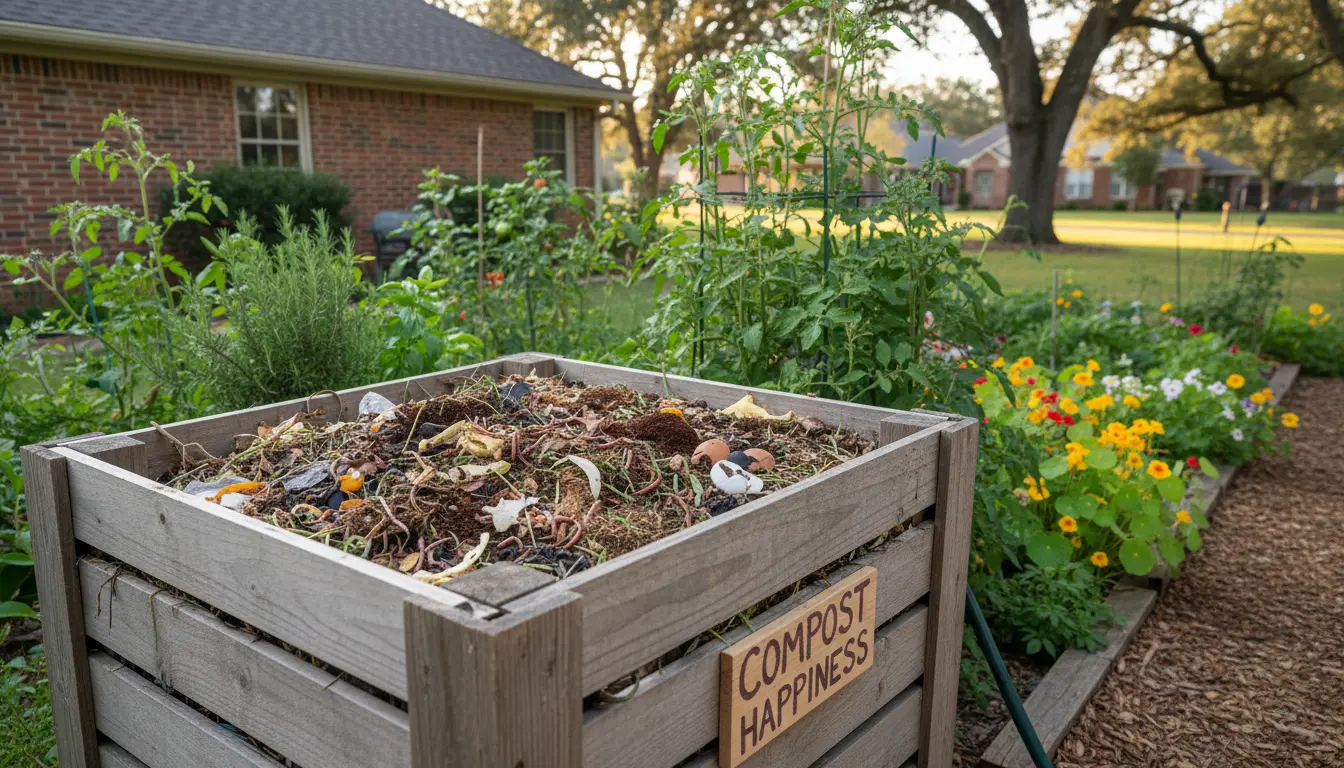
Home Composting for Beginners: Start Here
Home composting converts kitchen and yard waste into nutrient rich soil. This guide walks beginners through simple steps to set up and manage a compost system at home.
Why Choose Home Composting for Beginners
Composting reduces household waste and returns nutrients to your garden. It also saves money on fertilizers and improves soil structure over time.
For beginners, composting is low risk and scalable. You can start with a small bin on a balcony or a larger pile in the backyard.
What You Need to Start Home Composting
Getting started requires basic tools and materials. You do not need fancy equipment.
- Compost bin or a simple container with drainage and ventilation
- Kitchen scraps (fruit and vegetable peels, coffee grounds)
- Brown materials (dry leaves, shredded paper, cardboard)
- Garden fork or turning tool
- Optional: thermometer to monitor internal temperature
Choosing a Bin for Home Composting for Beginners
Select a bin that suits your space: a tumbler for small yards, a stationary bin for larger areas, or a worm bin for indoor use. Ensure the bin has airflow and drainage.
Placement matters: put the bin on soil or gravel to allow worms and microbes to enter. Place in partial shade to keep moisture balanced.
How to Build a Balanced Compost Pile
Balanced compost needs a ratio of green to brown materials. Greens provide nitrogen, while browns supply carbon. Aim for roughly 2–3 parts brown to 1 part green by volume.
Step by Step Home Composting for Beginners
- Layer a base of coarse browns (twigs or straw) to aid drainage.
- Add a layer of kitchen greens (vegetable scraps, coffee grounds).
- Cover greens with a thicker layer of browns (dry leaves, shredded paper).
- Repeat layering until the bin is full, maintaining moisture like a wrung-out sponge.
- Turn or mix the pile every 1–2 weeks to add oxygen and speed decomposition.
Temperature, Moisture, and Turning
Compost breaks down faster when warm. A well-built pile can reach 120–140°F (50–60°C) in active stages, which also kills many weed seeds.
Moisture should be similar to a damp sponge. If it is too dry, add water and greens. If it is too wet and smelly, add more browns and increase turning.
Troubleshooting for Home Composting for Beginners
- Smelly pile: Often too wet or lacking air. Turn the pile and add dry brown material.
- Pile not heating: Add fresh greens and turn to introduce oxygen.
- Slow decomposition: Chop or shred larger materials to increase surface area.
- Pests: Avoid meat, dairy, and oily foods. Use a closed bin if rodents are a problem.
Composting can cut household waste by up to 30 percent. Even small-scale composting on a balcony makes a measurable difference.
What to Compost and What to Avoid
Good items to compost include fruit and vegetable scraps, coffee grounds, eggshells, yard trimmings, and paper products.
Avoid meat, dairy, oils, diseased plants, and pet waste. These items attract pests or slow decomposition.
Quick Reference List
- Greens: fruit scraps, vegetable peels, fresh grass clippings
- Browns: dry leaves, straw, cardboard, shredded paper
- Do Not Compost: meat, bones, dairy, oils, pet feces
How Long Does Home Composting for Beginners Take?
Time depends on method and conditions. Hot composting can produce finished compost in 2–3 months. Cold composting may take 6–12 months.
Turning the pile and maintaining a good green to brown ratio speeds the process. Using a tumbler or chopping materials also helps.
Using Finished Compost
Finished compost is dark, crumbly, and smells earthy. It can be used as a soil amendment, mulch, or potting mix ingredient.
Mix compost into garden beds at a rate of about 1–3 inches on top or incorporate into the topsoil for best results.
Small Real World Example: Apartment Balcony Composting
Maria lives in a city apartment and started a worm composting bin on her balcony. She collects vegetable scraps and coffee grounds and adds shredded paper as brown material.
After four months she harvested rich compost and used it for her potted herbs and tomatoes. Her waste output decreased and plants produced more leaves and flowers.
Case Study: Neighborhood Community Garden
A community garden started a shared compost system using three stationary bins. Volunteers rotated turning duties and tracked green and brown inputs.
Within six months, the garden produced enough compost to enrich several raised beds. The garden reported better moisture retention and healthier crops the following season.
Final Tips for Home Composting for Beginners
- Start small and scale up as you gain confidence.
- Keep a small countertop bin with a lid for daily scraps to make composting convenient.
- Record observations: temperature, smell, and moisture help you learn what works.
- Be patient. Composting is a natural process that rewards regular care.
With basic materials and a little attention, home composting is an accessible way for beginners to reduce waste and build healthier soil. Start with small steps and adjust as you learn.