
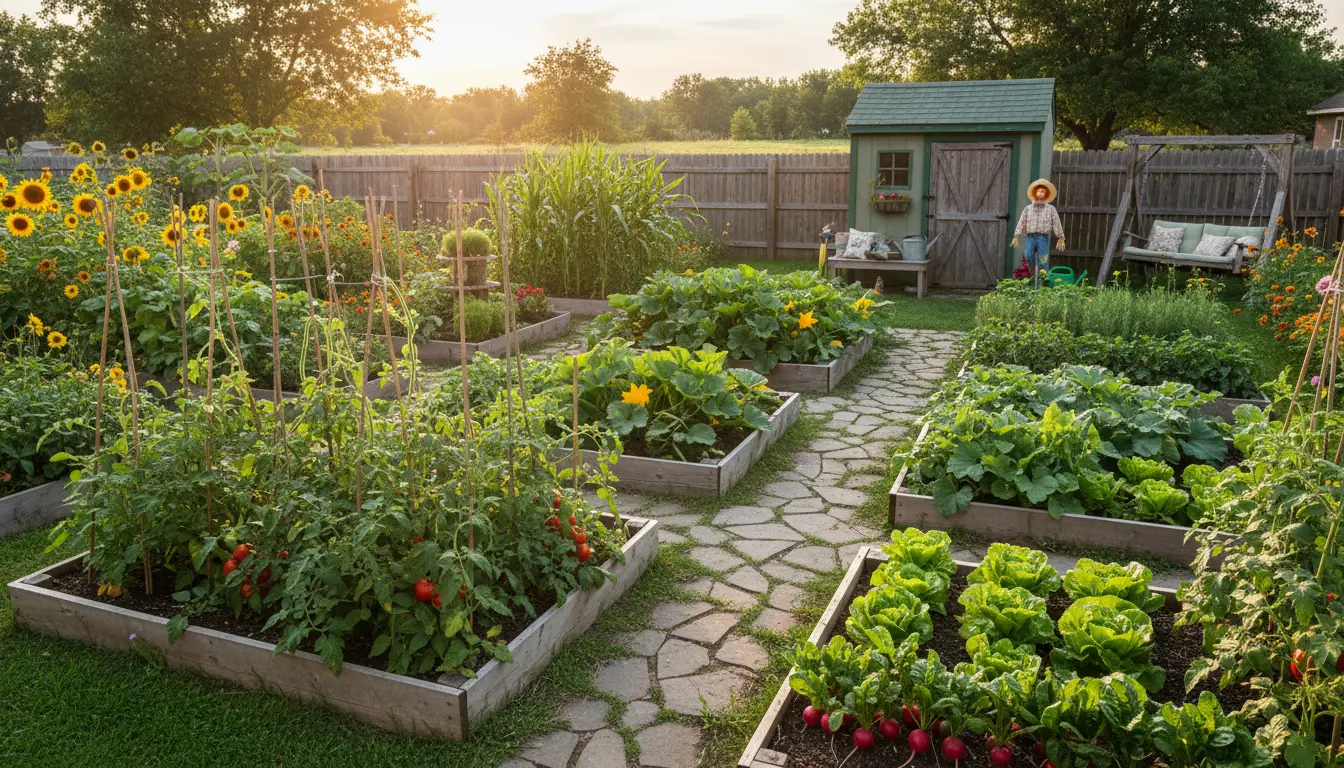
Starting a vegetable garden at home is practical and rewarding. This guide gives clear steps you can follow in a small yard, balcony, or community plot.
Planning Your Vegetable Garden
Good planning saves time and effort later. Decide the size, location, and how much time you will spend each week on maintenance.
Location and Sunlight for a Vegetable Garden
Vegetable gardens need at least 6 hours of direct sun daily. Observe sun patterns for a few days to pick the best spot.
If your yard is shady, choose leafy greens and shade-tolerant herbs. Use containers or raised beds to bring soil closer to sunlight.
Decide Between Beds, Containers, or Rows
Raised beds are efficient for small spaces. Containers work well on patios and balconies. Rows suit larger plots and traditional layouts.
- Raised beds: better drainage and warmer soil
- Containers: portable and low maintenance
- Rows: economical for large plantings
Soil, Beds, and Containers
Healthy soil is the foundation of a productive vegetable garden. Test and improve your soil before planting.
Test and Improve Soil for a Vegetable Garden
Buy a simple soil test kit or send a sample to a local extension service. Aim for a neutral pH (6.0–7.0) for most vegetables.
Add compost to improve texture and fertility. Mix 2–3 inches of compost into the top 6–8 inches of soil for raised beds.
Choosing Soil Mix for Containers
Use a commercial potting mix rather than garden soil for containers. A good mix holds moisture and drains well.
Include slow-release organic fertilizer or feed with liquid fertilizer during the season.
What to Plant First in a Vegetable Garden
Choose easy, fast crops for your first season. These give quick wins and teach basic garden management.
- Leafy greens: lettuce, spinach, kale
- Root crops: radishes, carrots, beets
- Legumes: bush beans, peas
- Warm-season starters: tomatoes, peppers, cucumbers (after frost)
Start with seedlings for slow-growing plants like tomatoes. Direct-sow seeds for radishes and spinach to save time.
Watering, Feeding, and Maintenance
Consistent watering is critical for a healthy vegetable garden. Deep, infrequent watering encourages strong roots.
Watering Schedule for a Vegetable Garden
Water early in the morning to reduce evaporation. Aim for 1–1.5 inches of water per week, adjusting for weather.
Use drip irrigation or soaker hoses to reduce disease risk and water waste.
Fertilizing and Crop Rotation
Feed vegetables with balanced organic fertilizer at planting and mid-season for heavy feeders like tomatoes and corn.
Rotate crops each year to prevent nutrient depletion and reduce pest build-up. Rotate families—solanaceae, brassicas, legumes, and root crops.
Pest and Disease Management in a Vegetable Garden
Monitor plants weekly for pests and signs of disease. Early action reduces losses and chemical use.
- Encourage beneficial insects with flowering herbs and nearby habitat
- Use row covers for young plants to block insects
- Handpick pests like slugs and caterpillars when feasible
- Remove and compost diseased plants to prevent spread
Organic Controls and When to Use Them
Apply neem oil or insecticidal soap for soft-bodied insects. Use Bt (Bacillus thuringiensis) for caterpillars on leafy greens.
Only use stronger pesticides as a last resort and follow label instructions carefully.
Many vegetables can be grown in 12 inches of soil. Raised beds or deep containers make it possible to grow a full vegetable garden on patios and balconies.
Small Real-World Case Study
Maria, a homeowner in Portland, converted a 10 x 6 ft sunny strip into three 4 x 2 ft raised beds. She filled beds with a 60/40 mix of compost and screened topsoil.
In year one she planted tomatoes, bush beans, lettuce, and carrots. She spent about 3–4 hours per week on watering, weeding, and harvesting.
By late summer Maria harvested enough salad greens for her family of four and 12 pounds of tomatoes. Her main success factors were good soil, drip irrigation, and a simple crop rotation plan.
Season-by-Season Checklist for Your Vegetable Garden
- Spring: Test soil, build beds, sow cool-season crops
- Early summer: Plant warm-season transplants, mulch beds
- Mid summer: Monitor water, pinch back vigorous plants, stake tomatoes
- Fall: Harvest leftovers, add compost, plan cover crop or winter mulch
Starting small and learning each season leads to steady improvement. Track what works and adjust planting choices and timing.
Use local resources like extension services and community gardens for region-specific advice. With basic planning and regular care, a productive vegetable garden at home is within reach.