
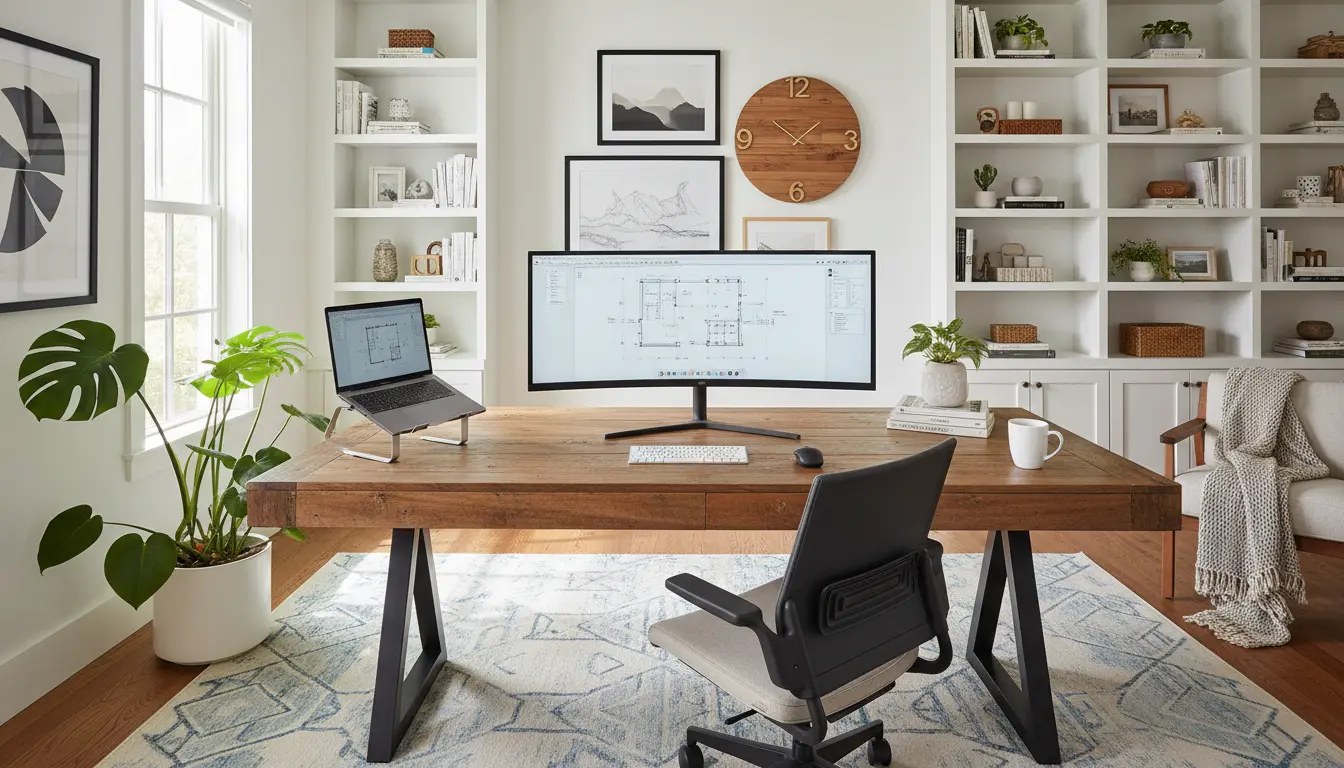
Home Office Productivity Basics
Working from home requires intentional setup and routines to maintain focus and output. Small changes to your environment and habits can yield measurable gains.
This guide offers practical, instructional steps to boost home office productivity with minimal cost and disruption. Follow what fits your job and lifestyle.
Set Clear Daily Goals for Home Office Productivity
Start each day with a short list of clear, actionable goals. Limit the list to three top priorities to avoid cognitive overload and decision fatigue.
Use a simple format: task, estimated time, and desired outcome. That helps you track progress and stay motivated through the day.
How to Plan Your Work Blocks
Adopt focused work blocks of 45–90 minutes depending on task complexity. Shorter blocks work well for creative or intensive tasks, while longer blocks suit deep analytical work.
Between blocks, schedule 10–15 minute breaks to reset attention. Regular breaks prevent burnout and sustain performance over a full day.
Designing Workspace for Productivity
Your physical environment strongly influences concentration and comfort. Organize the workspace to reduce friction for common tasks.
Prioritize three elements: ergonomics, lighting, and clutter control.
Ergonomics and Comfort
- Chair: Choose a chair with good lumbar support or add a lumbar cushion.
- Desk height: Keep elbows at roughly 90 degrees when typing. Use a keyboard tray or adjustable desk if needed.
- Monitor placement: Top of the screen should be at or slightly below eye level to avoid neck strain.
Lighting and Noise
Natural light is best for alertness; position your desk near a window if possible. Use layered lighting—task lights plus ambient light—to reduce eye fatigue.
Manage noise with headphones, white noise, or soft background music. Set expectations with household members about quiet hours.
Tools and Systems That Improve Home Office Productivity
Adopt tools that reduce manual work and keep your focus on priorities. Keep tool selection minimal to avoid app overload.
Essential Tools and Apps
- Task manager: Use a simple app or paper planner to track daily tasks and deadlines.
- Timer: A Pomodoro or interval timer helps maintain focused work blocks.
- Communication channels: Limit messaging apps and set specific check times to avoid constant interruptions.
Reduce Distractions and Maintain Boundaries
Distractions are the main drain on remote productivity. Proactively reduce them with rules and environmental changes.
Practical Steps to Minimize Interruptions
- Set phone to Do Not Disturb during work blocks and allow calls from a short contact list.
- Use browser extensions to block distracting websites during focus times.
- Communicate work hours to family or housemates and use a visible sign or schedule if needed.
Did You Know?
Short, regular breaks during focused work blocks can boost concentration and creativity. Studies show people often perform better working in focused bursts than in long continuous sessions.
Time Management Techniques for Remote Work
Pair your daily goals with one or two time management techniques to keep momentum. Common approaches include Pomodoro, time blocking, and batching similar tasks.
Experiment for one week with a method and review what improved. Keep the best parts and discard what didn’t fit.
Examples of Effective Routines
- Morning: 30 minutes for planning and priority work block.
- Midday: Two focus blocks with a full lunch break away from the desk.
- Afternoon: Lighter tasks, emails, and planning for the next day.
Measure and Improve Your Productivity
Track simple metrics to see if changes work. Metrics can be number of completed priority tasks, hours in focused work, or subjective energy levels.
Review weekly and adjust environment, tools, or schedule based on the results. Continuous small improvements compound over time.
Common Metrics to Track
- Priority tasks completed per day
- Total focused hours per week
- Energy and stress ratings at end of day
Small Real-World Case Study
Case: Maria, a content writer, struggled with long workdays and inconsistent output. She implemented a 60-minute work block routine, moved her desk to face a window, and limited Slack checks to three times daily.
Within three weeks Maria increased her weekly completed articles from two to four. Her subjective energy rating rose and she reduced working evenings by two hours per week.
Final Steps to Improve Home Office Productivity
Start small: pick one environmental change and one scheduling change this week. Track results, then add another tweak the following week.
Consistency matters more than perfection. Routine, clear goals, and a comfortable workspace create a reliable foundation for higher productivity.
Use the tips above to build a practical, personalized home office system that fits your work and life. Small changes applied consistently will have the biggest impact.