
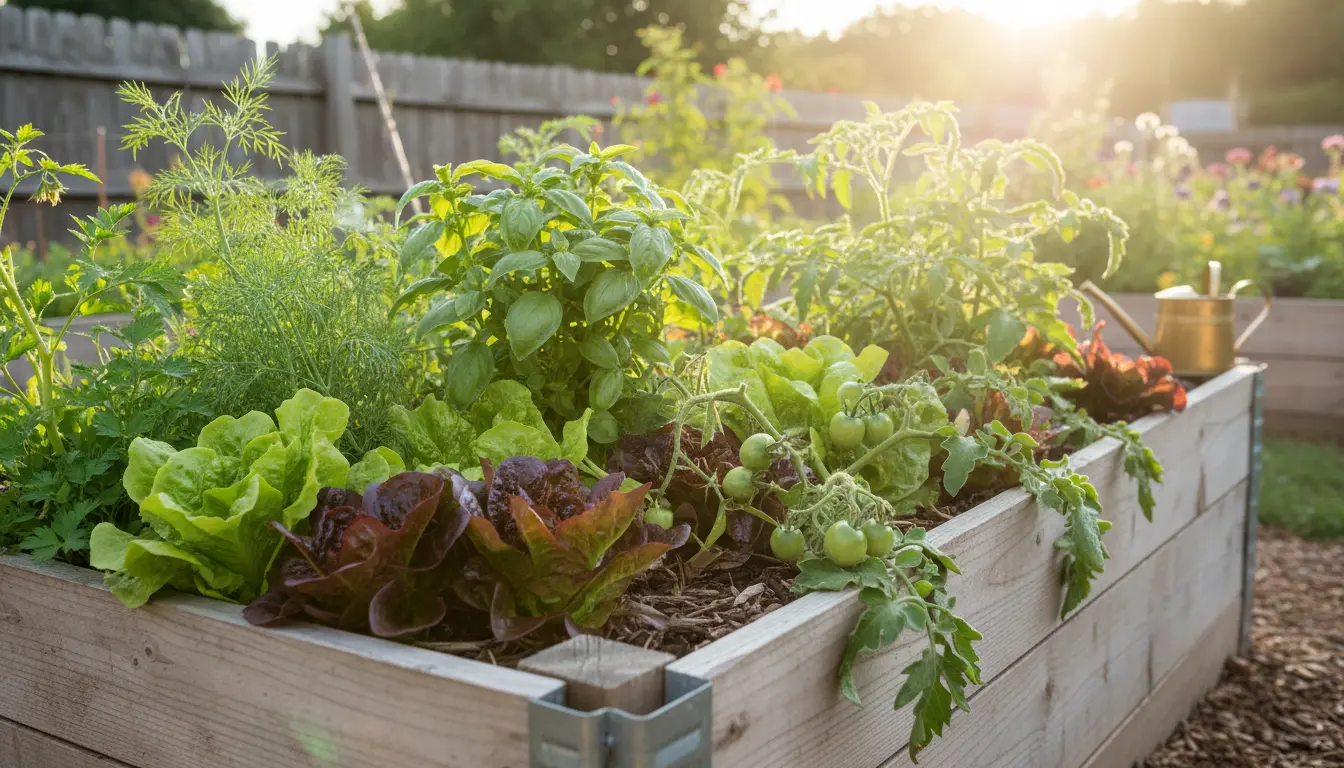
Why Start a Vegetable Garden
Starting a vegetable garden saves money, improves diet, and gives you fresh produce close to home. It also teaches seasonal planning and basic horticultural skills.
This guide explains practical, step-by-step actions to help beginners start a productive vegetable garden with minimal fuss.
How to Start a Vegetable Garden: Choose the Right Spot
Location is the first decision when you start a vegetable garden. Most vegetables need at least six hours of direct sunlight each day.
Look for a flat, well-drained area close to a water source. If ground space is limited, consider raised beds or containers.
Assess Soil and Drainage
Dig a small hole and fill it with water. If the water drains within an hour or two, drainage is good. Heavy clay or compacted soil may require raised beds.
Test soil texture by feeling a moist sample. Sandy soils drain quickly; loamy soils are ideal for most vegetables.
Prepare Soil When You Start a Vegetable Garden
Good soil is the foundation of success. Improve poor soil with organic matter like compost or well-rotted manure.
A basic soil mix for raised beds is two parts topsoil, one part compost, and one part coarse sand or perlite for drainage.
Soil Testing and pH
Use a soil test kit or send a sample to a local extension service. Most vegetables prefer a pH between 6.0 and 7.0.
Apply lime to raise pH or sulfur to lower pH based on test recommendations. Make changes weeks before planting for best results.
Choose Vegetables to Start a Vegetable Garden
Select crops that match your climate, space, and skill level. Beginners should choose fast-growing, forgiving plants.
Examples of easy starters: lettuce, radishes, green beans, cherry tomatoes, and herbs like basil.
Plan for Season and Succession Planting
Know your growing season dates (frost-free date). Start cool-season crops like peas early, and warm-season crops like tomatoes after frost risk passes.
Use succession planting—sow small amounts every 2–3 weeks—to maintain a steady harvest.
Planting: Seeds vs. Transplants
Decide whether to start from seeds or buy transplants. Seeds are cheaper and offer more variety. Transplants give a head start and are easier for beginners.
Follow seed packet directions for depth and spacing. Space plants to allow airflow and reduce disease risk.
Planting Tips
- Water the planting hole before placing the seedling to settle soil around roots.
- Plant tomatoes deeper than they were in their pots to encourage strong roots.
- Mulch around plants to conserve moisture and suppress weeds.
Watering and Nutrients When You Start a Vegetable Garden
Consistent moisture is critical, especially during germination and fruit set. Aim for 1 to 1.5 inches of water per week, adjusting for rainfall.
Use a soaker hose or drip irrigation to deliver water to the root zone and reduce foliar disease.
Fertilizing
Apply a balanced organic fertilizer at planting and side-dress with compost or a low-nitrogen feed as plants grow. Over-fertilizing can reduce flavor and increase foliage at the expense of fruit.
Pest and Disease Management
Monitor plants regularly for pests and disease signs. Early detection allows simpler, less toxic treatments.
Use these practical controls: handpicking, floating row covers, encouraging beneficial insects, and crop rotation to break disease cycles.
Common Problems
- Aphids and caterpillars: remove by hand or use insecticidal soap.
- Blight: improve air circulation, remove affected plants, rotate crops.
- Slugs: use traps, barriers, or organic baits in damp areas.
Harvesting and Ongoing Care
Pick vegetables at peak ripeness for best flavor and to encourage continued production. Frequent harvesting often increases yield.
Keep beds tidy, remove spent plants, and replenish mulch and compost between crops.
Planting marigolds among vegetables can help reduce some soil nematodes and attract pollinators, improving yields without chemicals.
Small Case Study: Backyard Raised Bed Success
Maria, a new gardener in Denver, converted a 4×8 ft patch into a raised bed with compost and store-bought topsoil. She planted lettuce, radishes, bush beans, and cherry tomatoes.
Using drip irrigation and a weekly check, she harvested salad greens in four weeks and tomatoes by mid-summer. Her bed yielded enough for weekly family salads and taught her to rotate beans with leafy greens the next season.
Quick Checklist to Start a Vegetable Garden
- Choose a sunny location near water.
- Test and improve soil with compost.
- Select easy vegetables for your climate.
- Decide seeds or transplants and follow spacing guides.
- Water consistently and mulch to retain moisture.
- Monitor for pests, rotate crops, and feed as needed.
Starting a vegetable garden is practical and rewarding. With the right spot, soil, and simple maintenance, even a small space can produce fresh vegetables all season.