
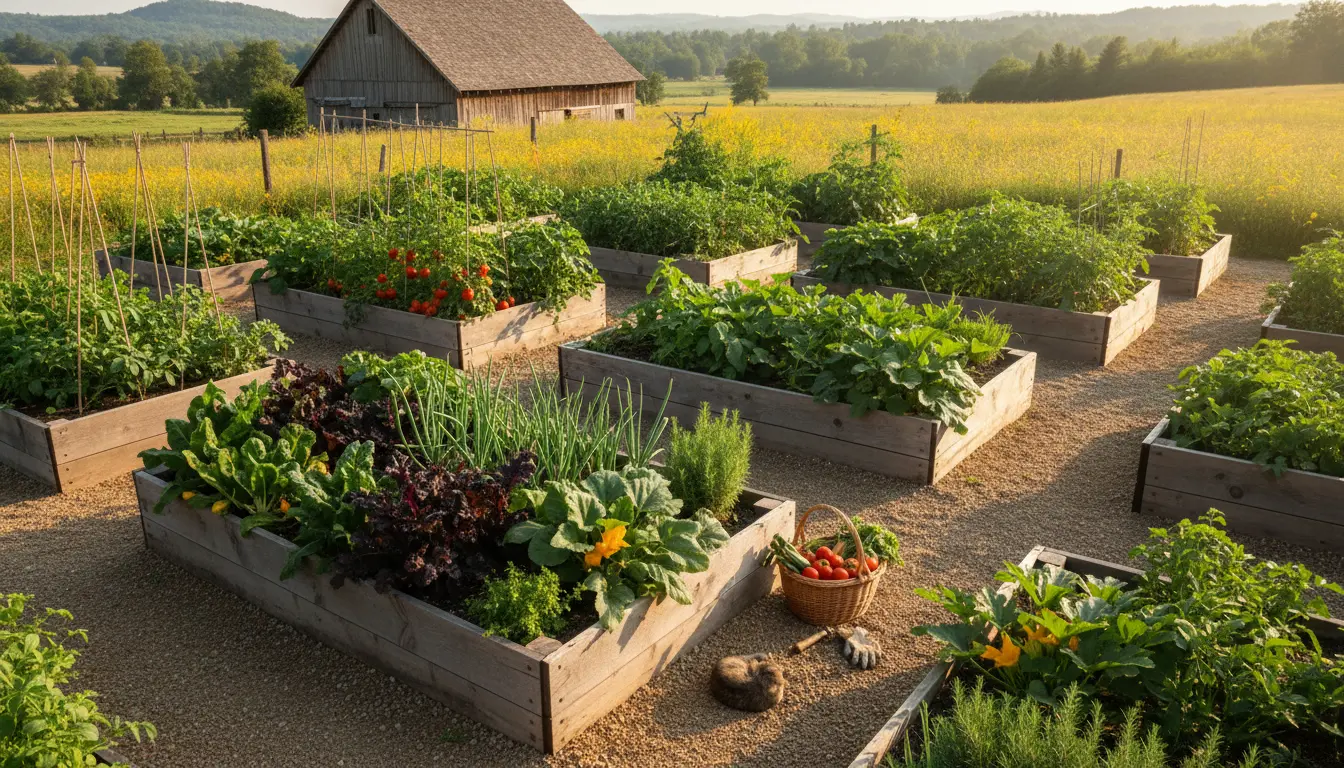
Plan Your Small Vegetable Garden
Starting a small vegetable garden begins with planning. Decide where the garden will go and what you want to grow.
Consider sunlight, space, and access to water when choosing the location.
Choose a Site for a Small Vegetable Garden
Pick a spot that gets at least 6 hours of direct sun for most vegetables. South- or west-facing spaces usually work best.
If ground space is limited, plan raised beds or containers to make efficient use of the area.
Prepare Soil and Containers for Your Small Vegetable Garden
Good soil is the foundation of a productive small vegetable garden. Test the soil if possible or use high-quality potting mix for containers.
For raised beds, mix native soil with compost and a loamy amendment to improve drainage and nutrition.
Soil Mix and Amendments
- Basic raised bed mix: 40% topsoil, 40% compost, 20% coarse sand or perlite.
- Add a slow-release organic fertilizer at planting time.
- Adjust pH only if test results show a strong imbalance.
Choose Vegetables for a Small Vegetable Garden
Select crops that fit your space and climate. Prioritize high-yield, space-efficient varieties to maximize results.
Try compact or container-friendly cultivars if space is tight.
Vegetable Suggestions for Small Spaces
- Leafy greens: lettuce, spinach, Swiss chard — quick and high-yield.
- Root crops: radishes, baby carrots, beets — use deep, narrow containers.
- Vining crops: use vertical trellises for peas and climbing beans.
- Fruit crops: compact tomato varieties and dwarf peppers for containers.
Planting and Layout Tips for a Small Vegetable Garden
Plan rows and spacing to avoid overcrowding. Use succession planting to keep harvests steady.
Interplant fast-maturing crops with slower ones to make continuous use of space.
Example Layout Ideas
- One 4×4 raised bed: front row leafy greens, middle row herbs, back row staked tomatoes.
- Vertical trellis on the north side to prevent shading of other plants.
- Containers: group by water needs to simplify care.
Watering and Fertilizing a Small Vegetable Garden
Consistent moisture is essential. Water early in the day and aim for deep, less frequent watering.
Mulch helps retain moisture and reduces weeds in a small vegetable garden.
Watering Best Practices
- Use drip irrigation or soaker hoses to target roots and save water.
- Check soil moisture with a finger: water when the top 1-2 inches are dry.
- Fertilize lightly every 4-6 weeks with a balanced organic feed during the season.
Pest and Disease Management in a Small Vegetable Garden
Small gardens can be easier to monitor for pests and disease. Early detection prevents spread.
Use integrated pest management: combine physical barriers, beneficial insects, and targeted treatments.
Practical Pest Controls
- Row covers protect young plants from insects without chemicals.
- Hand-pick slugs and large pests in the morning.
- Encourage predators like ladybugs for aphid control.
Raised beds warm faster in spring than in-ground gardens, allowing earlier planting and often longer growing seasons for a small vegetable garden.
Harvesting and Extending the Season in a Small Vegetable Garden
Harvest frequently to encourage more production, especially for leafy greens and herbs.
Use cold frames or row covers to extend the season into early spring and late fall.
Succession Planting Example
- Plant radishes and lettuce early, then replace them with warm-season crops like peppers once they finish.
- Start a second planting of fast greens mid-summer for a fall harvest.
Small Vegetable Garden Case Study
Case: Maria transformed a 6×4 foot balcony into a productive small vegetable garden using two raised containers and vertical supports.
She planted dwarf tomatoes, basil, a row of leaf lettuce, and climbing peas on a simple trellis. With weekly compost tea and drip irrigation, she harvested fresh salad greens all summer and eight pounds of tomatoes.
Her success came from choosing compact varieties, consistent watering, and rotating container crops to keep soil healthy.
Quick Checklist to Start Your Small Vegetable Garden
- Pick a sunny site with easy water access.
- Choose raised beds or containers if ground space is limited.
- Use a good soil mix with compost.
- Select compact, high-yield vegetable varieties.
- Install drip irrigation or water regularly and mulch.
- Monitor pests and use organic controls when needed.
Starting a small vegetable garden is manageable and rewarding. With basic planning, the right soil, and appropriate plant choices, you can grow meaningful amounts of fresh produce even in limited space.