
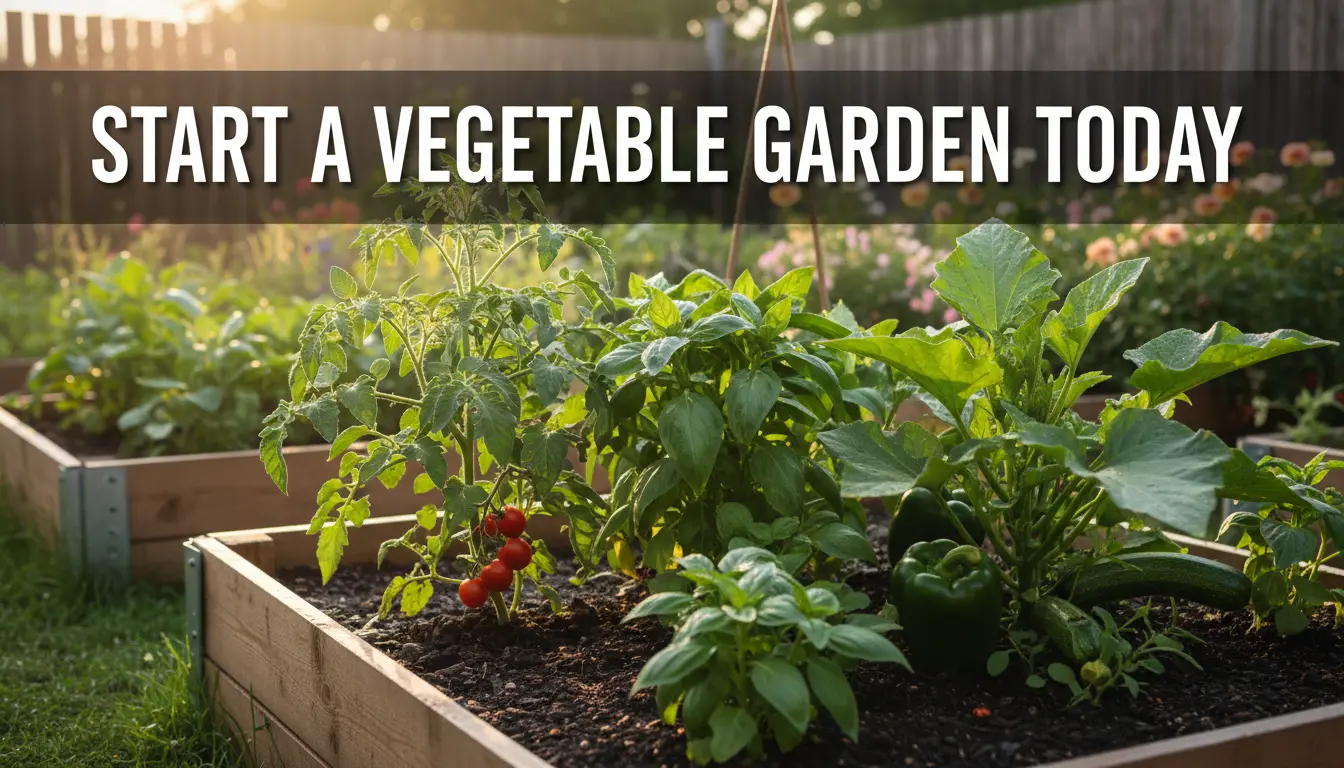
Why start a vegetable garden at home
Starting a vegetable garden at home saves money, improves food freshness, and gives you control over growing methods. It also supports healthy eating and can be adapted to any space from a balcony to a backyard.
This guide gives practical, step-by-step instructions for beginners who want to get consistent results without unnecessary complexity.
Plan before you start a vegetable garden
Good results begin with a simple plan. Assess space, sunlight, and how much time you can commit each week.
Key planning steps include site selection, bed type, and choosing crops suited to your climate.
Site selection to start a vegetable garden
Pick a location with at least 6 hours of direct sunlight for most vegetables. If sunlight is limited, choose leafy greens and herbs.
Consider water access and proximity to your kitchen for convenience.
Choose a bed type
Decide between in-ground beds, raised beds, or containers. Raised beds warm sooner and drain well; containers are ideal for patios.
Use this quick checklist when choosing a bed type:
- Space available (square feet)
- Soil quality and drainage
- Budget for materials
- Accessibility for planting and harvesting
Prepare soil before you start a vegetable garden
Healthy soil is the foundation for productive plants. Aim for loose, well-draining soil rich in organic matter.
Steps to prepare soil:
- Remove weeds and debris.
- Loosen soil to 8–12 inches in beds; use a container potting mix for pots.
- Mix in 2–4 inches of compost or well-rotted manure.
- Test soil pH and adjust if necessary; most vegetables prefer pH 6.0–7.0.
Choose plants to start a vegetable garden
Select a mix of quick-growing and long-season vegetables to keep harvests steady. Beginners often succeed with easy crops.
Recommended starter plants:
- Leafy greens: lettuce, spinach, Swiss chard
- Root crops: radish, carrot, beet
- Nightshades: tomatoes, peppers (start from seedlings)
- Legumes: bush beans, peas
- Herbs: basil, parsley, chives
Companion planting and crop rotation
Companion planting can reduce pests and improve growth. Rotate families (nightshades, brassicas, legumes) annually to reduce disease build-up.
Example companions: tomatoes with basil, carrots with onions.
Planting and spacing when you start a vegetable garden
Follow seed packet or plant tag spacing to avoid overcrowding. Proper spacing improves air circulation and reduces disease risk.
General rules:
- Leafy greens: 4–8 inches apart
- Root crops: 1–3 inches apart (thin seedlings as needed)
- Tomatoes: 18–24 inches between plants
- Peppers: 12–18 inches between plants
Watering and fertilizing your vegetable garden
Water deeply and less frequently to encourage deep roots. Most vegetables need about 1–1.5 inches of water per week, including rainfall.
Use a balanced fertilizer or compost tea during active growth. Avoid heavy nitrogen late in the season for fruiting crops.
Simple watering routine
- Morning watering reduces disease risk.
- Soaker hoses or drip irrigation are efficient choices.
- Mulch with straw or shredded leaves to conserve moisture and suppress weeds.
Pest and disease management when you start a vegetable garden
Monitor plants weekly. Early detection makes pest control easier and reduces lost harvests.
Low-cost strategies:
- Handpick larger pests like caterpillars and slugs.
- Use row covers to protect young plants from insects.
- Encourage beneficial insects with flowering herbs and native plants.
- Remove diseased foliage promptly and rotate crops annually.
Harvesting and continuous production
Harvest early-maturing crops frequently to encourage more production. Pick leafy greens before bolting and harvest tomatoes when fully colored.
Succession planting every 2–3 weeks extends harvest season for crops like lettuce, radish, and beans.
Planting marigolds near tomatoes can reduce root-knot nematode damage. Simple companion plants can provide measurable pest reduction without chemicals.
Small real-world case study
Case: A homeowner with a 10-foot by 6-foot backyard converted a patch of lawn into two 4×4 raised beds.
They filled beds with a mix of topsoil and compost, planted tomatoes, bush beans, lettuce, and basil. Using drip irrigation and mulch, they saw steady harvests all season and reduced watering by 30% compared to their lawn.
Key outcomes: higher-quality produce, lower grocery bills, and a manageable weekly maintenance time of 30–60 minutes.
Quick start checklist to start a vegetable garden
- Choose a sunny site and bed type
- Prepare soil with compost and loosen to planting depth
- Pick 4–6 beginner-friendly vegetables
- Follow spacing and watering guidelines
- Monitor pests weekly and use low-impact controls
- Harvest regularly and plant in succession for continuous yields
Final tips for beginners
Start small and expand as you learn. Keep a simple garden journal with planting dates, varieties, and observations to improve each season.
Enjoy the process: gardening is a skill developed through practice, observation, and small adjustments year to year.