
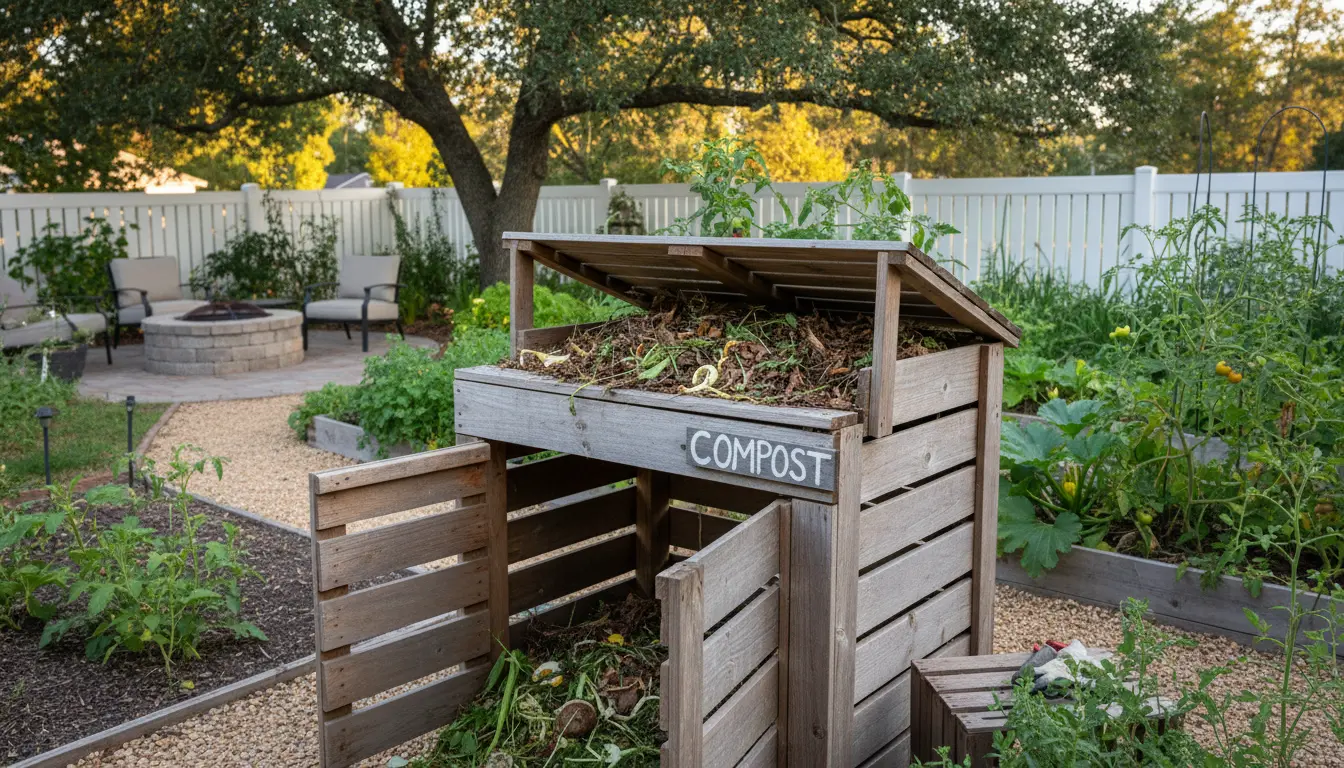
What Is Home Composting and Why It Matters
Home composting is the controlled decomposition of organic kitchen and yard waste into a nutrient-rich soil amendment. It reduces household waste, cuts landfill use, and improves garden soil health.
This guide explains simple, reliable methods for home composting for beginners, practical troubleshooting tips, and a real-world example to help you start composting right away.
Basic Principles of Home Composting for Beginners
Compost works when microorganisms break down organic matter. You provide the right mix of materials, moisture, oxygen, and time.
Focus on three balances: carbon to nitrogen ratio, moisture level, and airflow. When these are right, decomposition proceeds quickly and without odors.
Carbon and Nitrogen
Think of carbon-rich materials as “browns” and nitrogen-rich materials as “greens.” Browns include dry leaves, shredded cardboard, and straw. Greens include fruit and vegetable scraps, coffee grounds, and fresh grass clippings.
A good rule for home composting for beginners is to aim for roughly 3 parts browns to 1 part greens by volume. This helps microorganisms thrive without producing bad smells.
Moisture and Air
Compost should feel like a wrung-out sponge — damp but not dripping. Too dry and decomposition slows; too wet and anaerobic bacteria produce odors.
Turn the pile every 1–2 weeks to introduce oxygen. For small systems, stirring with a pitchfork or rotating a tumbler works well.
Choosing a Compost System
Selecting the right system makes home composting for beginners easier. Choose based on space, effort level, and how fast you want compost.
- Compost bin: Enclosed, tidy, good for backyards. Moderate effort to turn.
- Compost tumbler: Easy to turn and faster breakdown, ideal for small yards.
- Open pile: Low cost, minimal setup, suitable for large yards but can attract pests.
- Bokashi or worm bins: Great for apartment dwellers or those who want fast processing of kitchen waste.
Step-by-Step: Start Composting Today
Follow these practical steps to begin home composting for beginners with confidence.
- Pick a location: Choose a well-drained, accessible spot outside or a sheltered area for indoor systems like worm bins.
- Gather materials: Collect browns (paper, dry leaves) and greens (vegetable scraps, coffee grounds).
- Layer and mix: Start with a layer of coarse material for airflow, then alternate greens and browns in 2–4 inch layers.
- Maintain moisture: Water lightly if the pile is dry or cover during heavy rain to avoid waterlogging.
- Turn regularly: Aerate the pile every 1–2 weeks to speed decomposition and prevent odors.
- Harvest: Finished compost is dark, crumbly, and earthy-smelling. Sift and use in pots, garden beds, or as a top dressing.
Materials to Avoid
- Meat, fish, and dairy (attract pests)
- Diseased plants or invasive weeds
- Pet feces
- Large branches unless shredded
Adding crushed eggshells to your compost provides calcium and helps reduce acidity in finished compost.
Troubleshooting Common Problems
Home composting for beginners can run into simple problems. Here are quick fixes for the most common issues.
- Bad smell: Add more browns and turn the pile to reintroduce oxygen.
- Pile not heating: Add more greens and ensure the pile is large enough (at least 3x3x3 feet for hot composting).
- Pests: Bury food scraps inside the pile and avoid meat or dairy. Use enclosed bins if needed.
- Slow breakdown: Chop materials small, maintain moisture, and turn more often.
Using Finished Compost
Finished compost improves soil structure, water retention, and nutrient content. Mix it into garden beds or use as a top dressing for lawns and potted plants.
For planting, mix 20–30% compost with garden soil to start seedlings or enrich existing beds. Use compost tea (steeped compost in water) as a mild liquid fertilizer for houseplants.
Small Case Study: A Family Starts Composting
Jane and Amir live in a small suburban home and wanted to cut food waste. They bought a 60-gallon compost tumbler and started saving vegetable scraps and dry leaves.
Within three months, they produced dark, crumbly compost and used it to enrich their vegetable bed. Their weekly trash volume dropped by about 30%, and they reported healthier tomato plants the following season.
This simple, low-effort setup worked because they followed basic rules: balance browns and greens, keep moisture right, and turn the tumbler weekly.
Tips for Staying Consistent
- Keep a countertop bin with a tight lid or a small Bokashi to collect scraps easily.
- Store a bag of shredded newspaper or dry leaves nearby for quick browns.
- Set a calendar reminder to turn the pile every 7–14 days.
Conclusion: Make Composting Part of Your Routine
Home composting for beginners is practical and achievable with a small time investment and simple tools. Start small, be consistent, and learn from small adjustments as your pile matures.
With these steps, you can reduce waste, improve your garden, and adopt a sustainable habit that pays back season after season.