
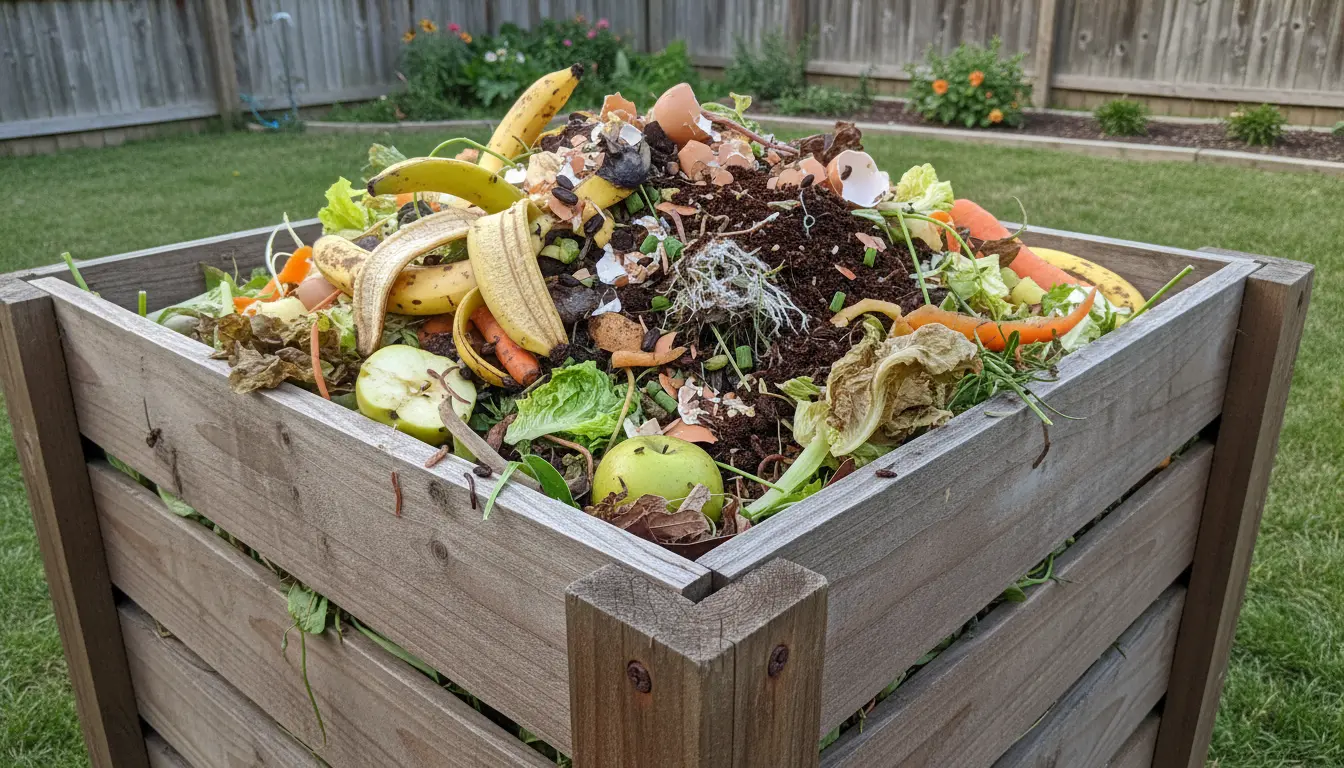
Home Composting Basics
Home composting turns kitchen and yard waste into a useful soil amendment. It reduces garbage, improves soil structure, and feeds plants naturally.
This guide explains simple, practical steps for beginners to start composting at home. Follow the steps and use the troubleshooting tips to keep your pile healthy.
Why Start Home Composting
Composting lowers landfill waste and cuts household odor from food scraps. Finished compost adds nutrients and increases water retention in garden soil.
It also saves money on fertilizers and supports a circular approach to organic waste. Even small efforts like a countertop bin make a difference.
Compost can reduce food waste by up to 30 percent in an average household when used consistently.
Choosing a Compost Bin for Home Composting
Selecting the right bin depends on space, budget, and composting speed. Options include open piles, tumblers, and stationary bins.
Tumblers are tidy and turn easily, while open piles are low cost and suit larger gardens. Balcony or apartment dwellers can use small bokashi kits or worm bins.
Bin options and pros
- Open pile: cheapest, good for large yards.
- Tumbler: cleaner, faster decomposition with turning.
- Worm bin (vermicomposting): ideal for apartments, produces rich castings.
- Bokashi: ferments food waste including meat and dairy, requires finishing in soil.
How to Compost at Home: Step-by-Step
Starting a successful compost pile requires balance and simple routines. Focus on the mix of materials and regular maintenance.
Step 1: Gather materials
Collect “greens” (nitrogen-rich) and “browns” (carbon-rich) materials. Greens include vegetable scraps, coffee grounds, and fresh grass clippings.
Browns include dried leaves, cardboard, paper, and straw. Aim for a mix that looks balanced—neither too wet nor too dry.
Step 2: Build the pile
Start with a layer of coarse browns for airflow. Alternate layers of greens and browns about 2–4 inches thick. Moisten each green layer lightly.
Keep the pile at least 3 feet wide to retain heat but no larger than 5 feet for easier turning. For small bins, fill steadily and turn more often.
Step 3: Maintain and monitor
- Turn the pile weekly if you want fast compost, or every 2–3 weeks for slower decomposition.
- Maintain moisture like a damp sponge—too dry stalls breakdown, too wet causes odor.
- Keep a thermometer if you want to monitor heat; active piles hit 120–150°F when hot.
Troubleshooting Common Home Composting Problems
Beginner composters often face odors, pests, or slow decomposition. Each problem has an easy solution when you balance the pile.
Bad smell
Smelly piles are usually too wet or heavy on greens. Add dry browns, turn the pile, and increase airflow to fix the issue.
Pests and fruit flies
Avoid attracting animals by burying food scraps under browns and using a closed bin if needed. For fruit flies, cover food scraps with newspaper or use a kitchen caddy with a tight lid.
Slow composting
Slow breakdown often means the pile is too cold, dry, or lacks nitrogen. Add fresh greens, water slightly, and turn more often to speed things up.
Using Finished Compost
Compost is ready when it looks dark, crumbly, and earthy-smelling. Screening removes large unbroken pieces before use.
Apply finished compost as:
- Top dressing around plants
- Mixed into potting soil (up to 20%)
- Soil amendment for beds and lawns
Case Study: Small Apartment Compost Setup
Maria, an apartment gardener, started a worm bin on her balcony. She collected coffee grounds and vegetable scraps and added shredded paper as browns.
After three months, she had rich worm castings to mix into her potted herbs. She reduced kitchen waste and saw stronger plant growth within one season.
Quick Checklist for Home Composting
- Choose the right bin for your space.
- Maintain a balance of greens and browns.
- Keep the pile moist but not waterlogged.
- Turn regularly to introduce oxygen.
- Harvest and use finished compost in your garden.
Final Tips for New Composters
Start small and learn by doing—mistakes are part of the process. Keep notes on what you add and how the pile responds to speed up your learning curve.
With regular attention, home composting becomes a simple habit that benefits your garden and the planet.