
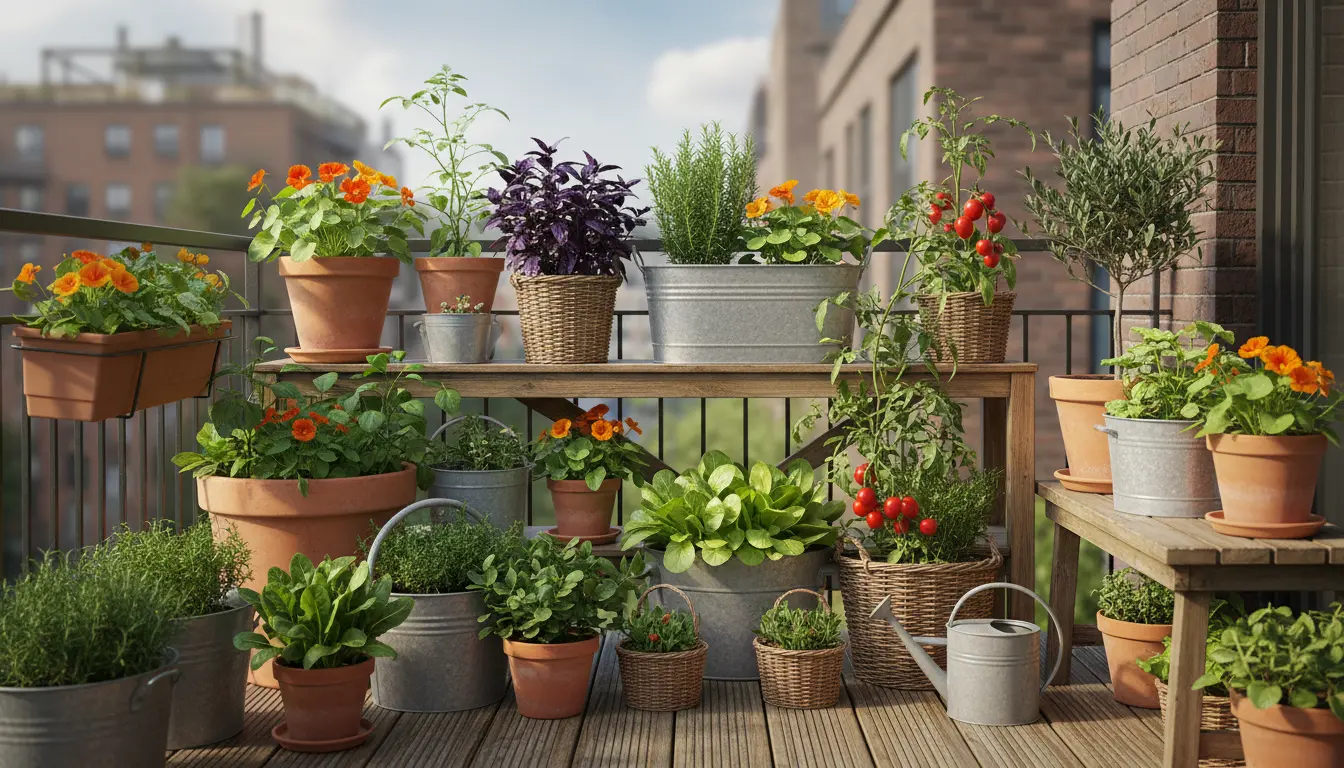
Container vegetable gardening is a practical way to grow fresh produce in small spaces. This guide gives clear, step-by-step instructions for starting and maintaining a productive container garden.
Why Choose Container Vegetable Gardening
Containers let you garden on balconies, patios, or windowsills where in-ground beds aren’t possible. They are ideal for renters, city dwellers, and beginners looking to control soil and pests more easily.
Containers also reduce bending and provide better drainage, making them a low-maintenance option for many gardeners.
Getting Started With Container Vegetable Gardening
Start by assessing space and light. Most vegetables need 6–8 hours of direct sun, so place containers where they will get adequate light.
Next, choose appropriate containers and soil for consistent results.
Choose the Right Containers for Container Vegetable Gardening
Select containers with drainage holes and enough volume for root growth. Common choices include plastic pots, fabric grow bags, and wooden boxes.
- Small herbs: 1–3 gallon containers
- Leafy greens: 3–5 gallon containers
- Tomatoes and peppers: 5–10+ gallon containers
- Root vegetables: deep containers (at least 8–12 inches)
Use Quality Soil Mix
Use a lightweight potting mix formulated for containers rather than garden soil. Good mixes retain moisture but drain excess water to prevent root rot.
Consider mixing in compost or a slow-release organic fertilizer to provide steady nutrition.
What to Plant in Container Vegetable Gardening
Choose varieties suited to containers and your climate. Many vegetables have compact or ‘patio’ cultivars bred for smaller spaces.
- Fast growers: radishes, lettuce, spinach
- Compact fruiting: cherry tomatoes, patio peppers, compact cucumbers
- Herbs: basil, parsley, chives, mint (use separate pots for mint)
Planting Tips
Follow seed packet or plant tag spacing. Overcrowding reduces airflow and increases disease risk. Plant at the right depth and water immediately after planting.
Watering and Fertilizing in Container Vegetable Gardening
Containers dry out faster than in-ground beds. Check soil moisture daily in warm weather and water when the top inch feels dry.
Use a watering can or drip system to water at the soil level and avoid wetting leaves to reduce disease pressure.
Feeding Schedule
Apply a balanced liquid fertilizer every 2–4 weeks or a slow-release granular fertilizer at planting. Adjust feeding for heavy feeders like tomatoes and peppers.
Pest Control and Disease Management
Inspect plants regularly for pests and signs of disease. Early detection is key to keeping problems small and manageable.
- Hand-pick large pests (slugs, caterpillars)
- Use insecticidal soap for soft-bodied insects like aphids
- Ensure good air circulation and avoid overhead watering to reduce fungal disease
Common Troubleshooting
Yellow leaves may indicate overwatering or nutrient deficiency. Wilting can be from both under- and overwatering, so check soil moisture first.
Stunted growth often signals poor soil fertility or root-bound plants; repot into larger containers if needed.
Many compact tomato varieties yield as much as full-size types when grown in 10-gallon containers and cared for properly. Good soil and steady feeding make a big difference.
Harvesting and Season Extension
Harvest vegetables at peak ripeness to encourage further production. Regular picking of greens and fruits typically increases total yield.
Use lightweight frost cloths or move containers to protected spots to extend the growing season in cooler climates.
Simple Case Study: Balcony Tomato Success
Maria, an apartment gardener, grew five cherry tomato plants in 10-gallon fabric pots on a sunny balcony. She used a premium potting mix, slow-release fertilizer, and a weekly liquid feed during fruiting.
By pruning suckers and ensuring consistent moisture, she harvested a steady supply from July to the first frost. Her setup demonstrates that limited space can still produce substantial yields with the right approach.
Quick Checklist for Container Vegetable Gardening
- Assess light and space before buying plants
- Choose containers with good drainage and the right volume
- Use a quality potting mix and add compost or fertilizer
- Water regularly and check moisture daily in heat
- Feed plants on a consistent schedule and monitor for pests
- Harvest promptly to encourage more production
Final Tips for Success
Start small and learn from each season. Keep records of what works—variety names, watering frequency, and fertilizer rates—to refine your approach.
Container vegetable gardening is flexible and forgiving. With attention to soil, water, and light, anyone can grow healthy, productive plants in tight spaces.